Plan subjects, formats and stories together so that a shoot supports your website, posts and newsletter. Includes a small repurposing plan.

Reuse works when material supports several relevant purposes. Plan framing and messages before production. Change the angle of the next piece rather than simply resizing the previous one.
One subject can answer several questions
Start with a genuine customer question. In an illustrative ceramics studio, the question might be how a mug becomes comfortable to hold. That can lead to a process photograph, an explanation of the shape and a note on material choice. Each piece answers a different part of the question instead of repeating the same sales message.
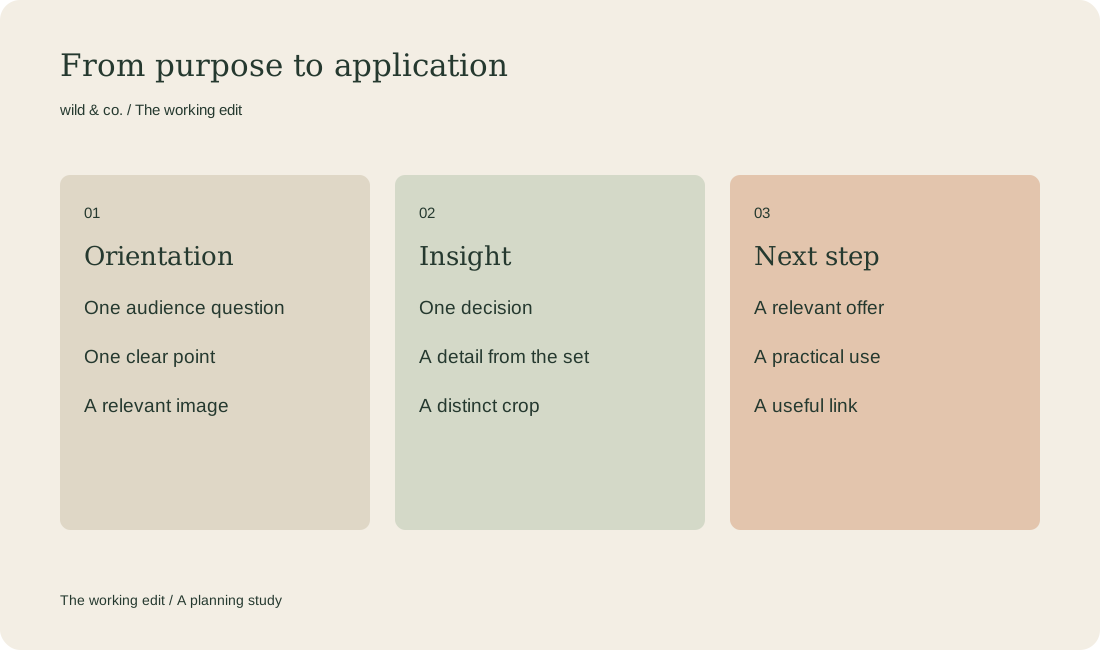
Write intended use into the shot list
Decide where material will appear before the shoot. You may need a quiet landscape image for the website, a portrait frame for a story and close details for an explanatory post. Capture those variations deliberately. A strong square image cannot always become a wide header later. Leave space for type and keep essential details away from awkward crops.
One question, three formats
Give each format a distinct purpose
Sort material by the job it does: orientation, process, a decision or a next step. One piece can answer a question while another explains how the result is produced. Use details that the first piece could not cover. The series then feels connected without asking people to read the same post repeatedly.
- Website: explain the offer and process.
- Post: answer one specific question.
- Story or short clip: show an actual working step.
- Newsletter: connect observations and explain them at a calmer pace.
Build a modest example sequence
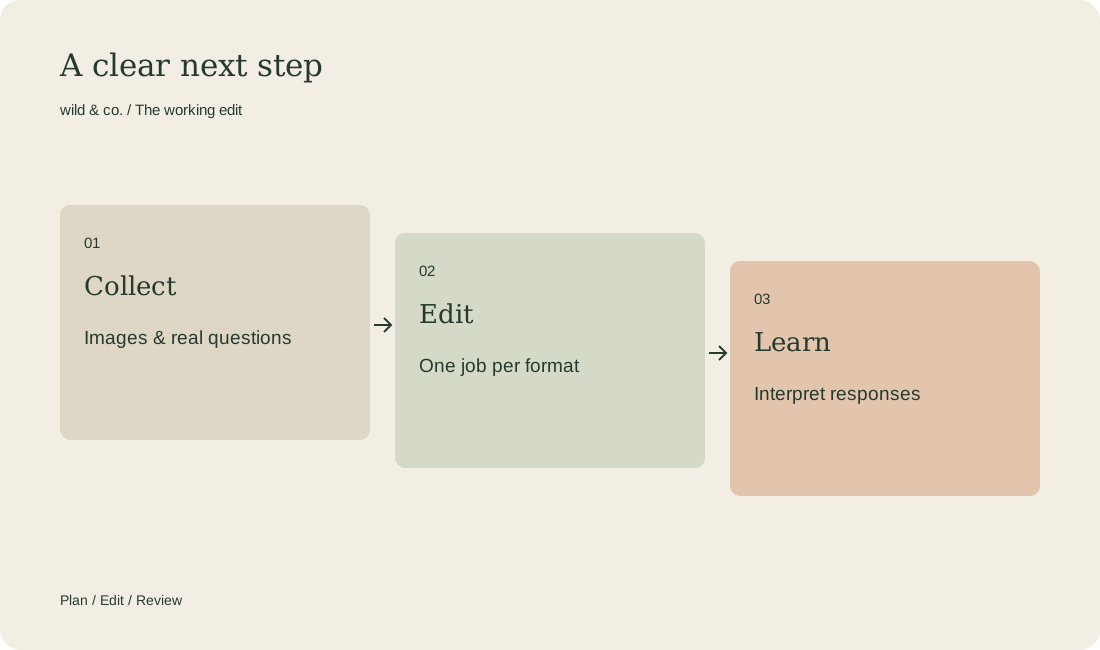
The fictional ceramics studio first shares an overview of the making process. A detail then explains a handle decision. Another image explores glazing, and a newsletter brings the decisions together. The sequence follows the subject rather than a supposed algorithm trick. Publish more slowly if that fits your production and audience conversations better.
Make the archive usable
Organise material by theme, format and intended use. Note what has been published and which uses have been agreed. Keep originals separate from exports. Consistent file names help when several people work with the same material. Every good photograph does not need an immediate post; a small, well-organised archive is a useful outcome in itself.
Check whether reuse remains useful
Review relevant questions, replies and enquiries. Reach alone does not show whether the material supports the right people. An explanation that reduces confusion may be valuable without dramatic numbers. Update old content when the offer or facts change. Repurposing means developing the thought rather than repeating it indefinitely.