Choose a collaboration through audience fit, then plan deliverables, approvals, use and measurement. Includes a campaign worksheet.

Choose a collaboration around the audience, content and task. Agree deliverables, use and approvals before production. A large following cannot replace a suitable creator or a useful brief.
Define what should change
More attention is an understandable starting point but an imprecise assignment. Should the campaign explain a new offer, attract event visitors or show a product in use? Choose a specific focus and timeframe. Describe the people you want to reach. Those decisions shape the content, platform and type of collaboration.
Review fit before follower count
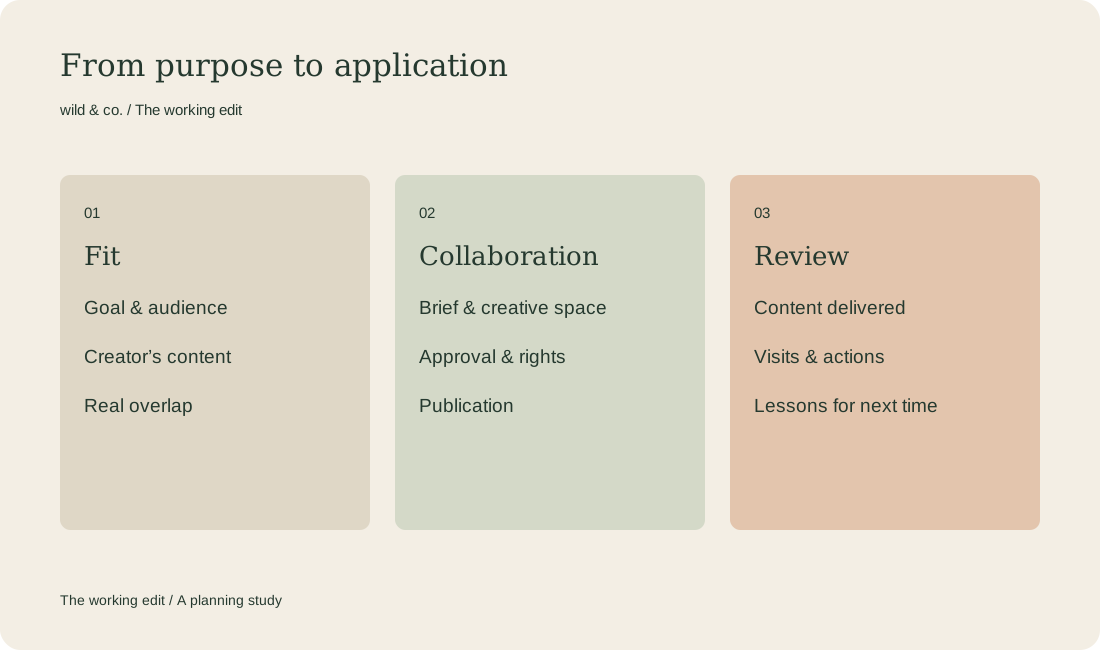
Look at a creator’s subjects and the conversations around them. Language, daily context, community and earlier partnerships should fit the task. Ask for relevant audience information rather than comparing public totals alone. A smaller, suitable community may make more sense for a particular assignment than a large account focused elsewhere. That is a selection decision rather than a guarantee of results.
Your campaign agreement
Give direction without removing the creator
Explain the product, objective, important facts and boundaries. Which claims must be correct, which subjects need to appear and where can the creator decide? A script that removes every personal characteristic can make a collaboration interchangeable. A brief with no clear task can produce material that misses the point.
- Objective, audience and one central message.
- Agreed formats, quantities, platforms and dates.
- Accurate product information and required approvals.
- Creative freedom and a named contact.
Agree deliverables, use and disclosure
Record what will be produced and published, how feedback works and how the brand may use the material. Publishing on a creator’s profile and reusing content in advertising are different assignments. Clarify fees, additional costs, approvals and required disclosures before work begins. Check applicable requirements and platform rules with the people involved; this guide does not replace legal advice.
Coordinate production and publication
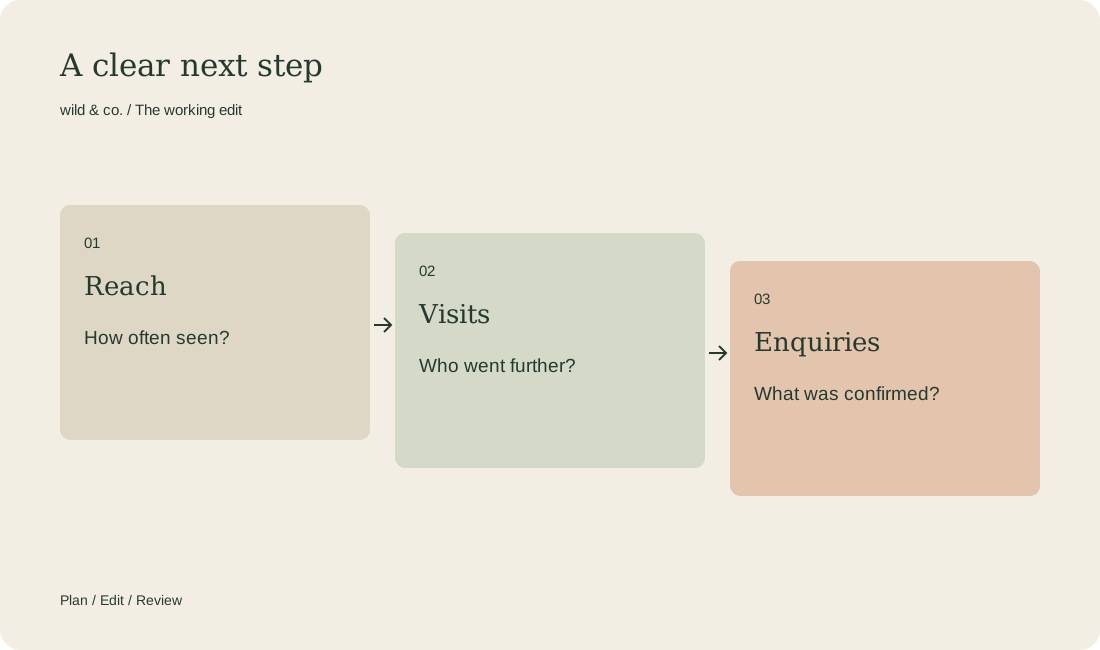
Allow time for questions, product delivery, drafts and necessary corrections. Gather factual feedback in one place. Review accuracy, links and agreed requirements without unnecessarily smoothing away the creator’s style. Make sure the destination page works and enquiries will be answered. Strong content cannot repair a broken purchase or contact journey.
Review the campaign against its purpose
An explanatory campaign needs different evidence from a registration drive. Agree reports and timing in advance. Distinguish platform reach, website visits and confirmed actions. Test clicks, consent choices and different measurement methods can affect the numbers. An honest review records observations, limitations and decisions for next time. A single collaboration does not establish a dependable revenue forecast.