What belongs in a creative brief for branding, a website or content? Seven practical questions, an illustrative example and a worksheet you can download.

A useful brief explains the problem, the people and the practical boundaries. It gives creative work direction without prescribing every answer. Use this guide to gather the decisions that matter.
“We just want it to look good.” We understand the ambition. But good-looking tells us little about the people a brand needs to reach, the change a website should support or the situations new photographs need to work in. A creative brief turns a feeling into a shared task. That does not require a forty-slide presentation or answers to questions you have never considered. A few honest, specific observations are more useful than pages of polished agency language. The direction can be clear while the creative solution remains open.
Start with the situation, rather than the deliverable
Explain why the project has become necessary. Has your offer changed? Do people understand your services only after a conversation? Do the existing photographs belong to an earlier version of the business? These are useful starting points. “We need a new website” describes a possible response. It may be exactly the right one, but clearer copy or a better structure might need attention first. Once the underlying difficulty is understood, the creative task can be defined with considerably more purpose.
Write down something you regularly notice in your work. Which question comes up repeatedly? What do you find yourself explaining again? Where do customers hesitate? A concrete example gives us something to discuss and, later, something to test against the proposed solution. It does not represent research into an entire audience. It does, however, make the assumptions behind a project easier to identify and investigate.
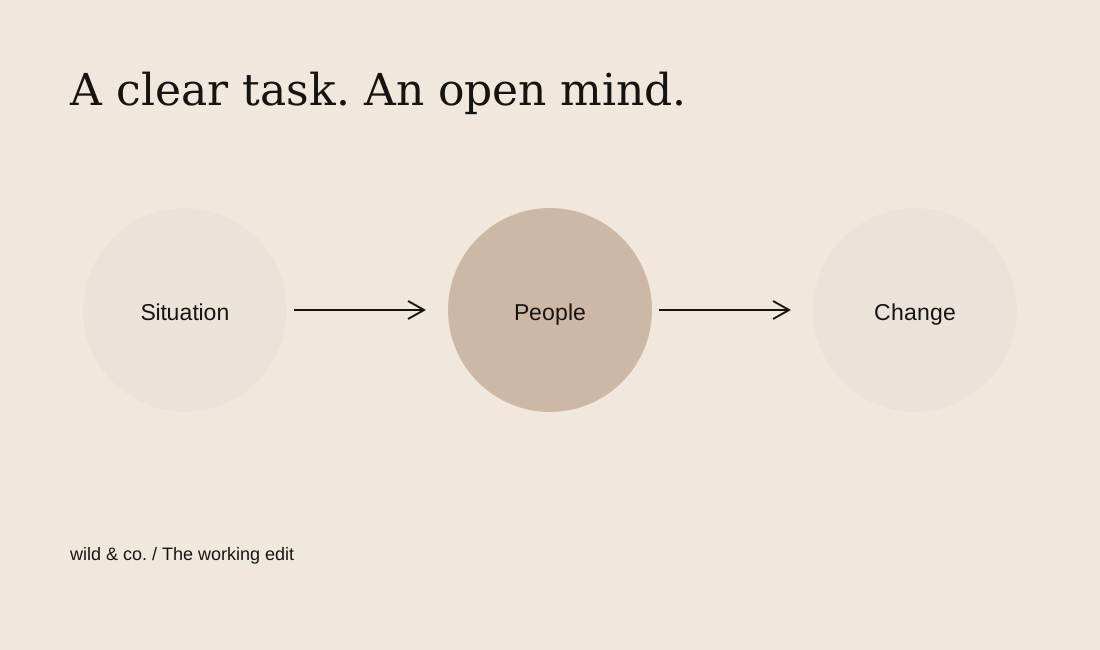
Who needs to understand what you are saying?
An audience description is more useful when it describes a situation than when it consists only of ages and postcodes. What is the person looking for? What do they already know? What uncertainty is keeping them from taking the next step? A freelance photographer planning a first website will have different concerns from an established team preparing an international relaunch. Describe a typical encounter with your offer: where it happens and what the person should understand or be able to do there. This gives design a practical job.
Your creative brief
Choose a goal you can recognise later
“More modern” suggests a preference. “Our three service areas should be distinguishable without someone explaining them” describes a task. Consider the specific change the new presence should support: clearer orientation, consistent materials for the team or suitable imagery for defined uses. If numerical outcomes matter, agree a starting point, a dependable way to measure and an appropriate period. Design alone cannot guarantee enquiries or revenue. A useful brief therefore distinguishes the effect you hope to support from the work we can actually create and assess together.
Define the first release and what can wait
Branding might include a logo family, colour palette and image direction, but also templates, packaging or a practical guide for colleagues. For a website, page types, languages, forms and integrations help define the scope. For a shoot, discuss subjects, formats and intended use. List what the first release genuinely requires and what could follow. An extra idea can be a very good idea. It still deserves a visible decision before a small addition quietly becomes a second project inside the original one.
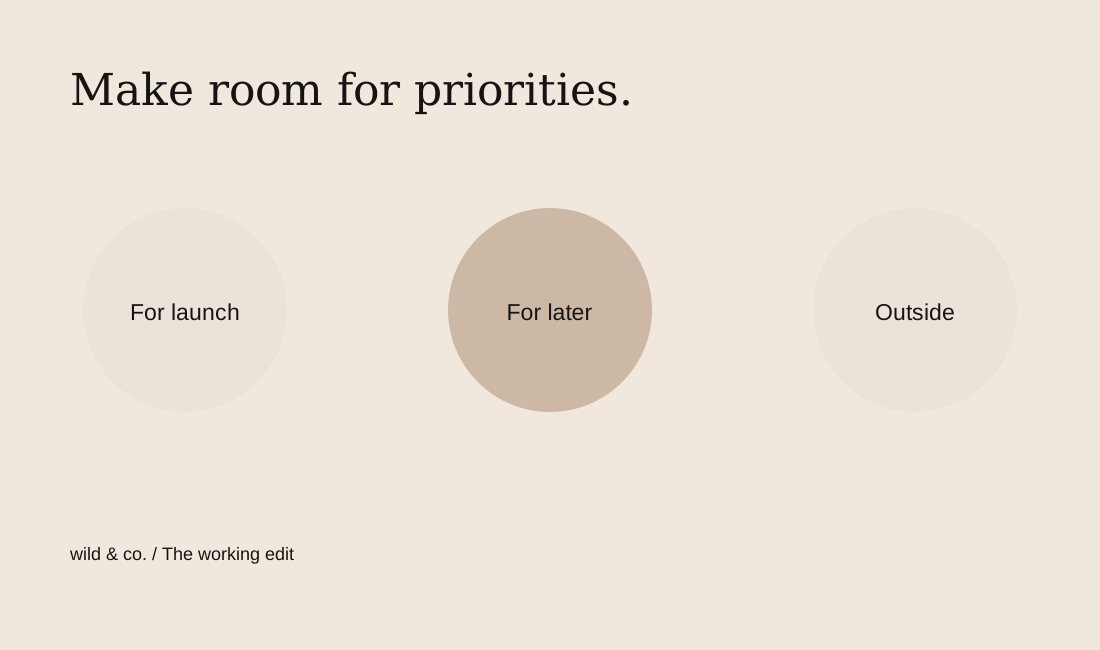
- For launch: the applications the presence needs in order to work.
- For later: worthwhile extensions with their own priorities.
- Outside the project: responsibilities already held by somebody else.
Share references and explain what attracts you
A moodboard is not a shopping list of other people’s design. When you share a reference, identify what matters: its lighting, sense of space, clear navigation or confident typography. A short explanation of what you want to avoid can be equally useful. The purpose is to develop an original direction for your brand. An existing visual identity or another studio’s work is neither a template to copy nor automatic evidence that the same choices will suit your particular applications.
Gather the material that already belongs to your business as well: existing copy, logos, colour specifications and photographs. Mark what needs to stay, what may be questioned and what will definitely change. An outline of image permissions and approvals helps with production planning. There is no need to transform a chaotic archive into a perfect asset library before getting in touch. An honest explanation of what exists and what remains uncertain is a useful beginning.
Make room for budgets, dates and decision-making
A budget range helps establish priorities and a suitable approach. A fixed publication date should have a reason, such as an event, a product release or an agreed printing deadline. Include the dates when material and approvals can realistically be available. If timing is open, say so. Invented urgency rarely improves a collaboration. Also agree who gathers feedback and who can make a final decision. Different perspectives are valuable. Contradictory comments delivered separately, without anyone resolving them, mostly make the work harder for everyone involved.
An example of a useful, imperfect brief
An imaginary ceramics business might explain its task like this: “Our handmade everyday objects currently look like unrelated items in the shop. New visitors should be able to distinguish the three collections and understand materials and care. For launch, we need an image direction, product descriptions and a revised shop structure. Packaging can follow. We have permission to use the existing product photographs, and another shoot day is possible. Two people will make the decisions together.” This is not a completed strategy or a claim about a real client. It is a workable basis for a more specific conversation.
You do not have to solve the brief alone before contacting a studio. Bring what you know and make the unanswered questions visible. A good conversation will sharpen the task afterwards; that is part of its purpose. Use the worksheet below to collect your thinking and download it as a text file. Your entries remain in the current browser tab unless you choose to download them. Completing the worksheet does not send anything to us.