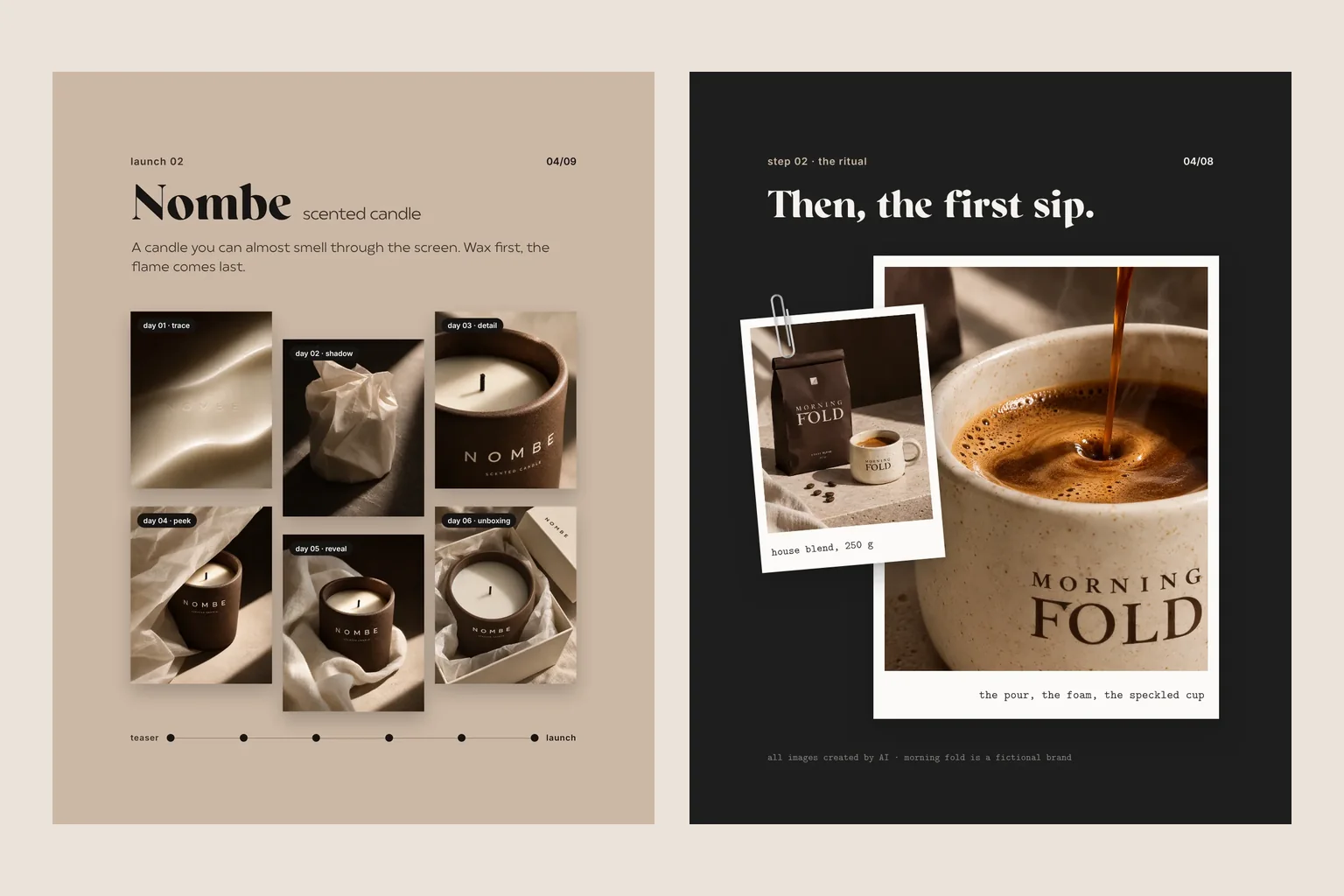
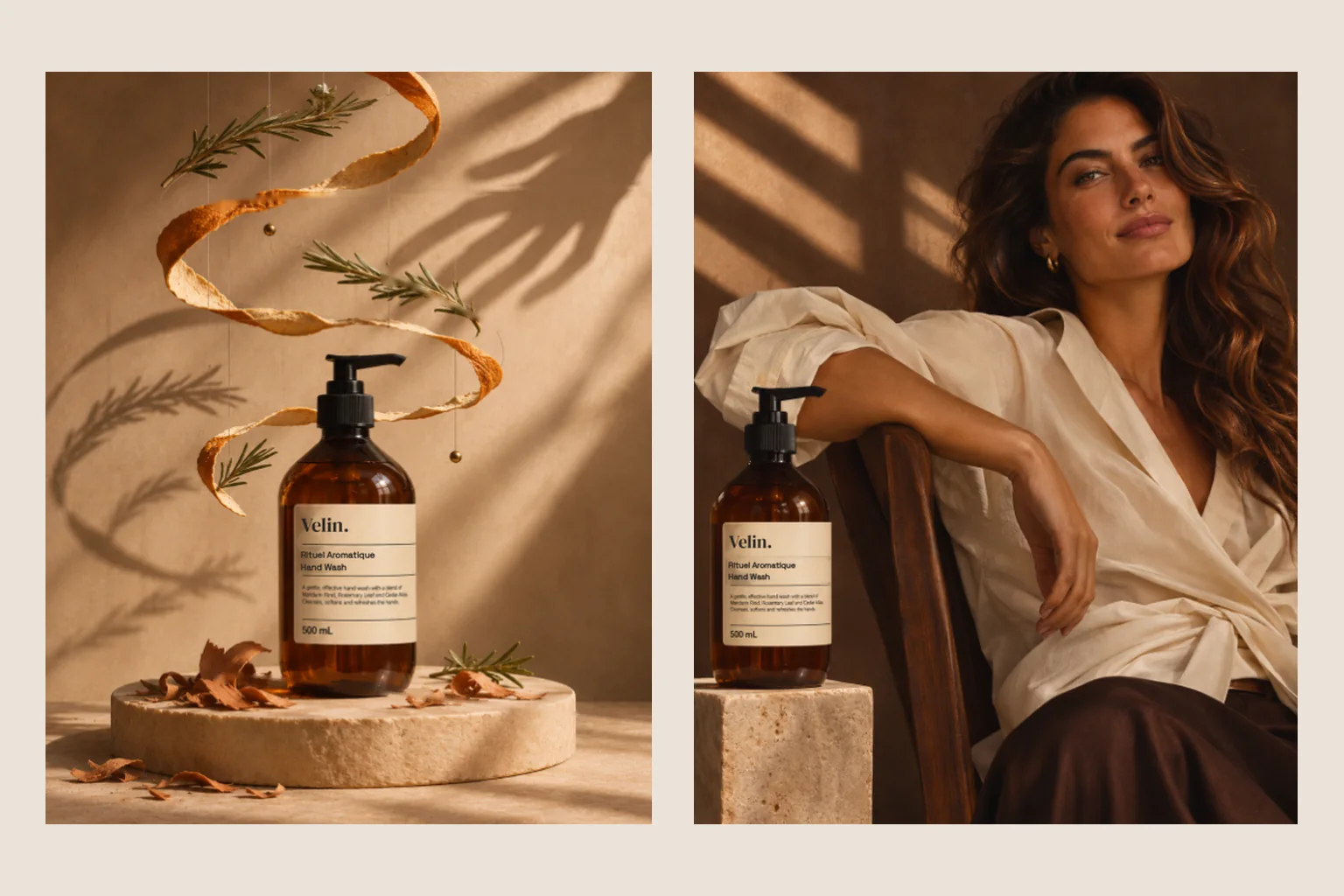
How to build a product launch over six days without showing the product on day one. With a sequence, image ideas for every day and an example with six invented brands.
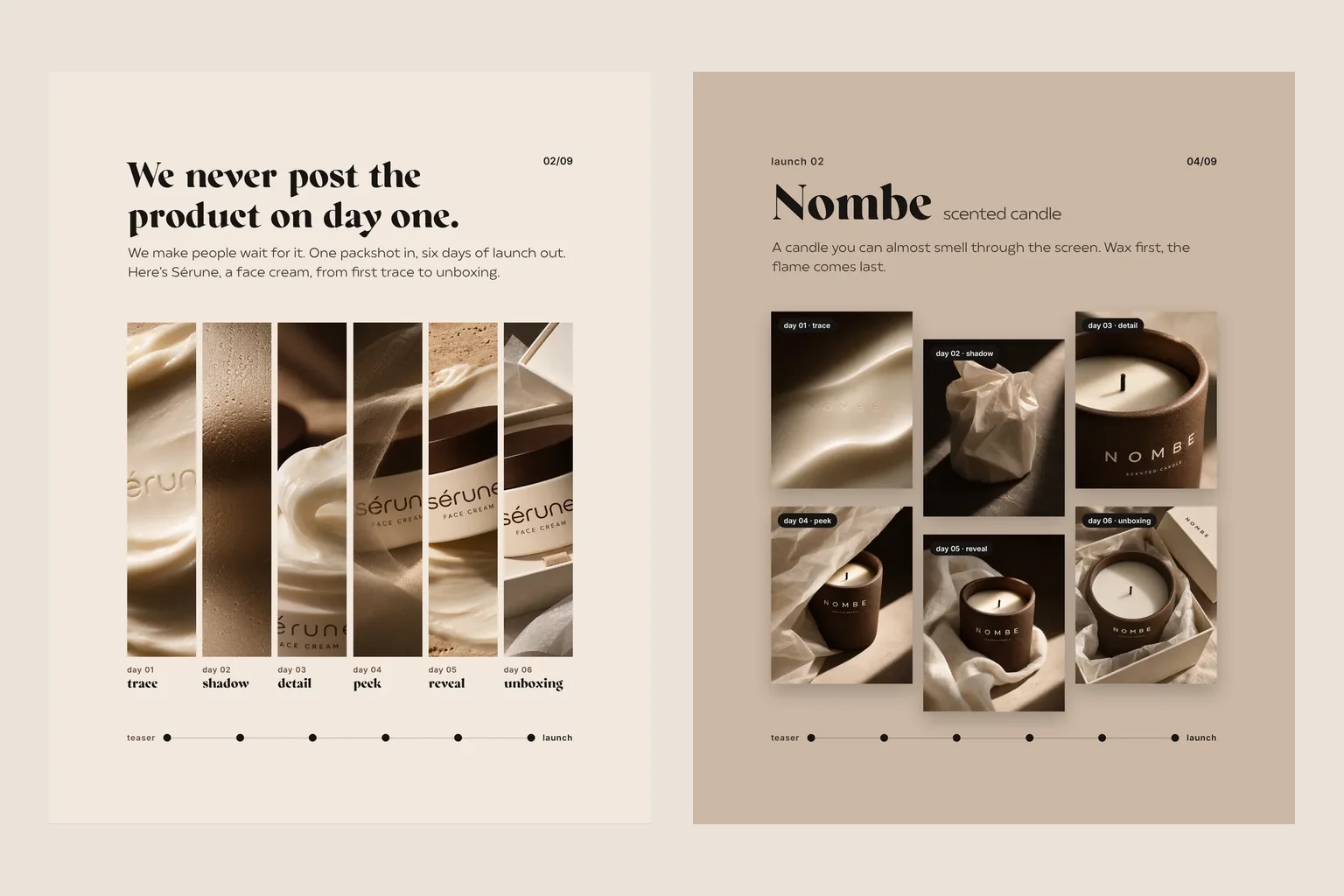
A teaser campaign builds curiosity before the product is seen: trace, shadow, detail, peek, reveal and unboxing, one step per day. With AI product imagery you can plan the whole sequence before the product can be photographed.
A new product is ready and you'd love to show it right away. Understandable. But a single launch post is scrolled past in seconds. A teaser campaign does the opposite: it shows almost nothing at first and builds curiosity over several days. By reveal day, people are already waiting. In this guide we show the sequence we use, with our independent study of six invented brands as the example.
Why a launch with teasers works better
Curiosity beats any product description. Anyone who sees only a trace on day one wants to know what's behind it and comes back the next day. Each post reveals a little more, the comments start guessing, and the product gets a small story before it can even be bought.
What matters is that every teaser comes from the same visual world. Light, colours and materials have to suit the product from day one. Otherwise the reveal feels like a break rather than a resolution.
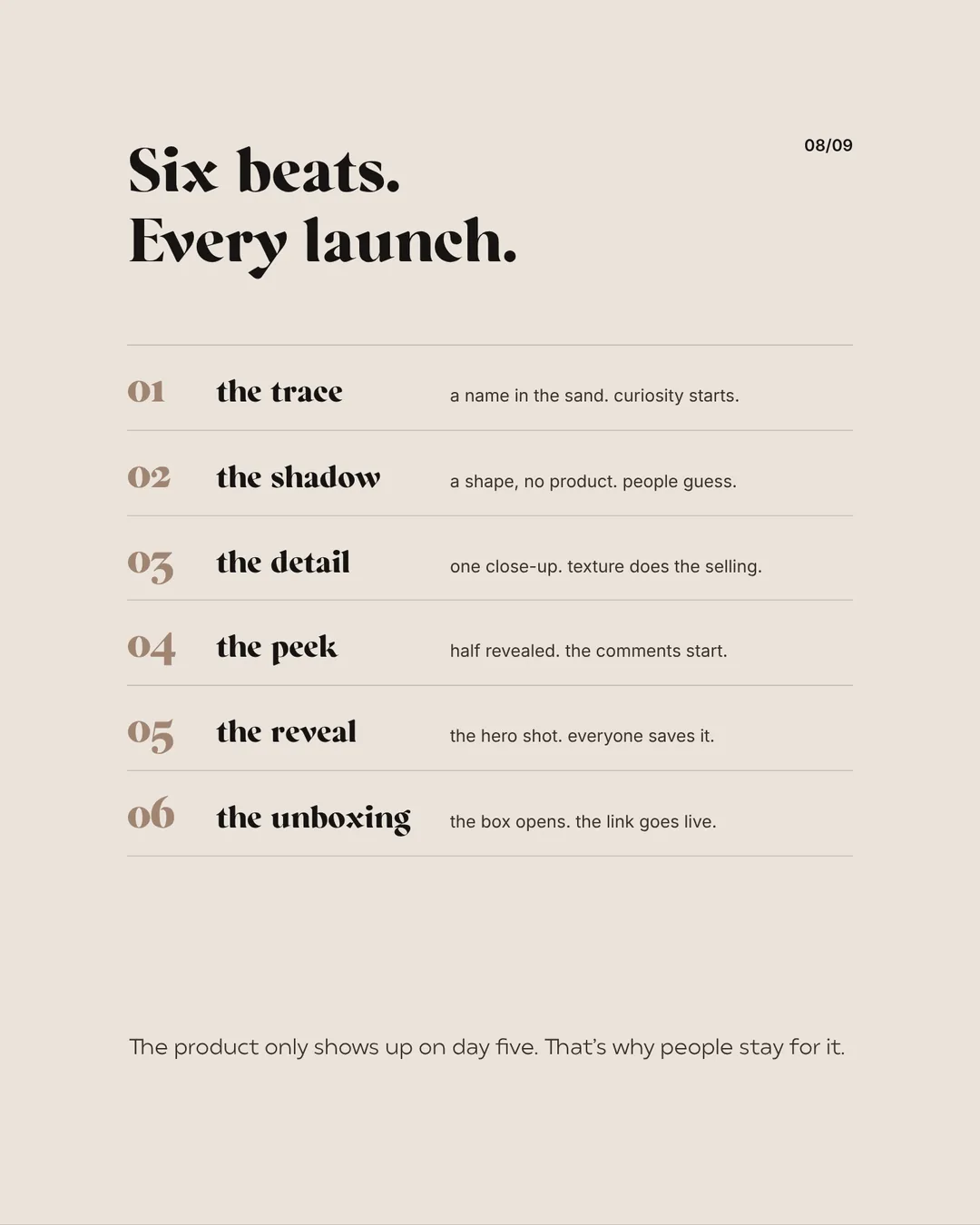
The six days at a glance
- Day 1, the trace: a name in the sand, an imprint, a hint.
- Day 2, the shadow: a shape, but no product yet.
- Day 3, the detail: one close-up where texture does the selling.
- Day 4, the peek: half revealed, the comments start.
- Day 5, the reveal: the hero shot everyone saves.
- Day 6, the unboxing: the box opens, the link goes live.
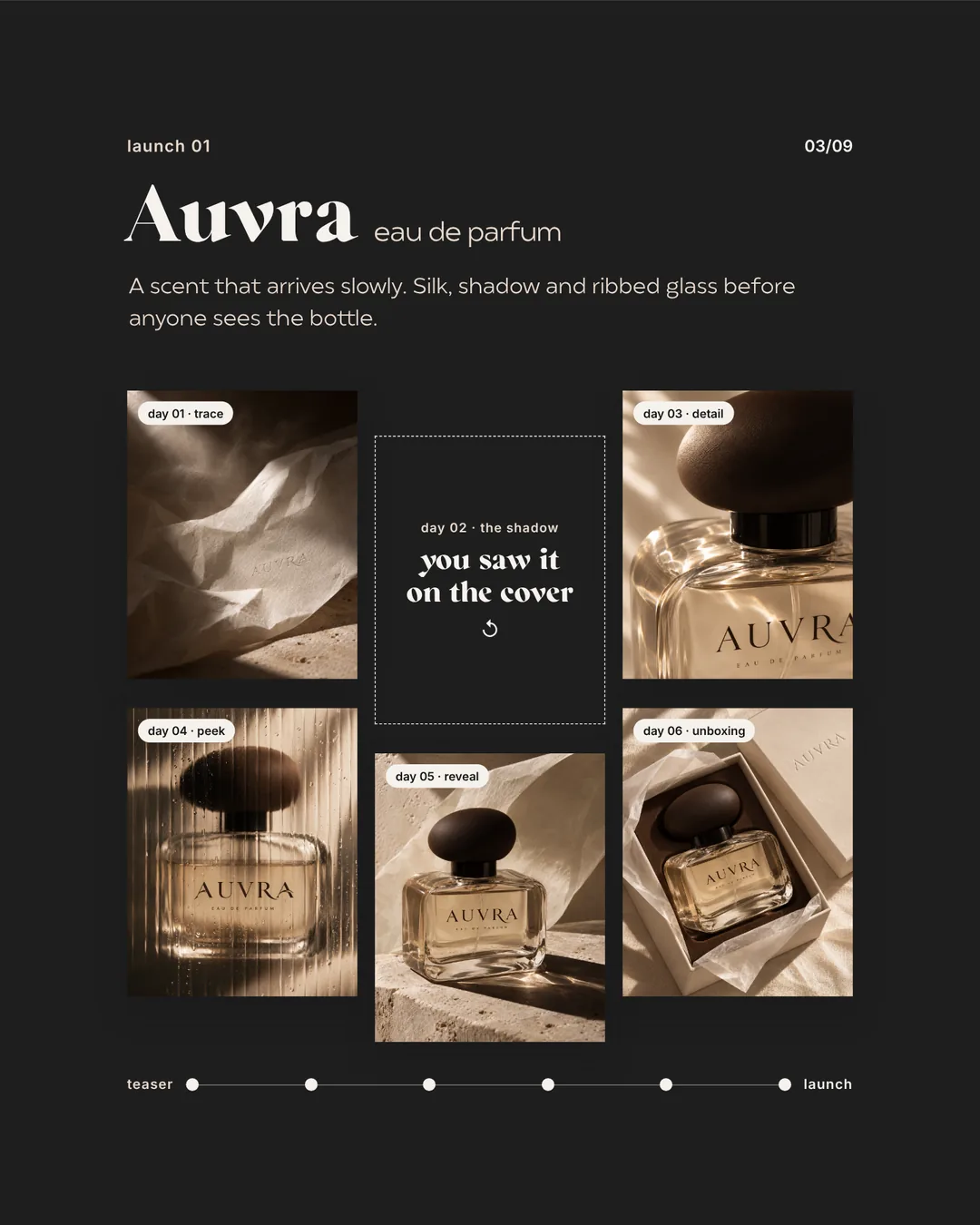
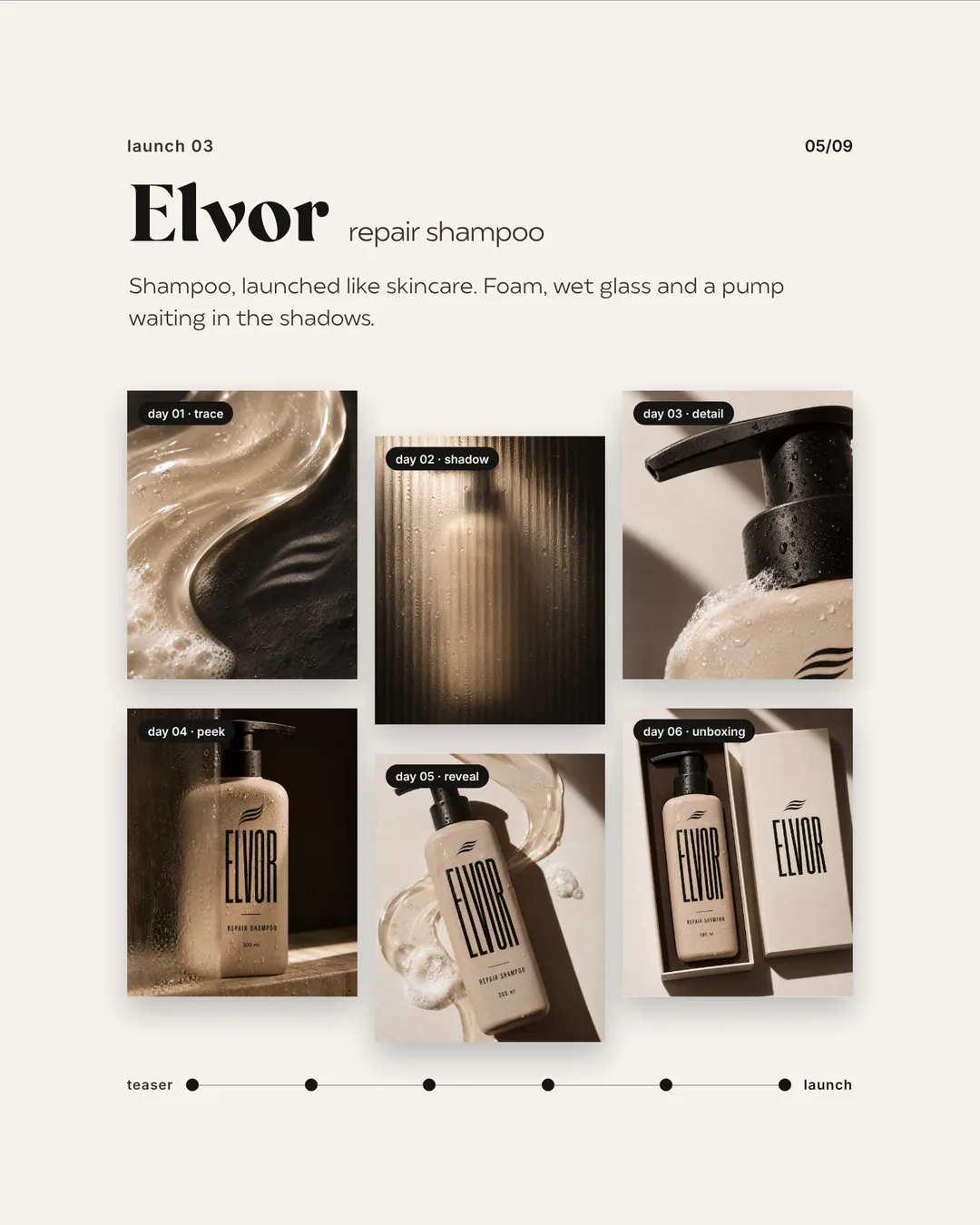
For our study we played this sequence through six times: with Sérune, a face cream, Auvra, an eau de parfum, Nombe, a scented candle, Elvor, a repair shampoo, Minoa, a toothpaste, and Morva, a coffee roaster. All the brands are invented and every image was made with AI.
Your teaser week
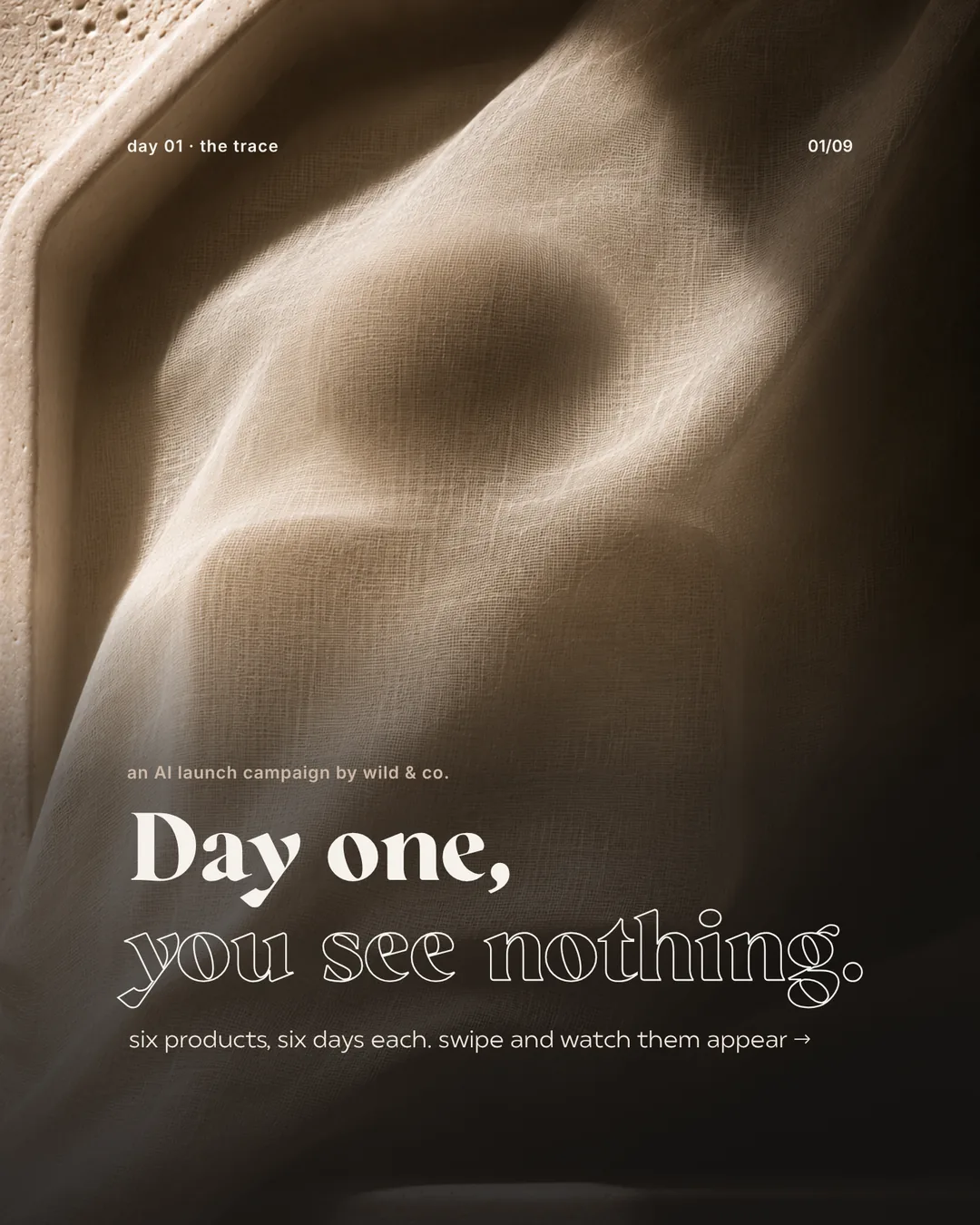
Days 1 and 2: trace and shadow
At first you show the world, not the product. For the fragrance it's crumpled tissue with an embossed name, for the candle a glow on wax. The shadow on day two gives away the silhouette. Look closely and you sense the shape, nothing more.
These first images are the hardest because they have to work without the product. A clear crop, very little text and a strong mood help. A short line in the caption is enough, such as: “Something new is coming.”
Days 3 and 4: detail and peek
Now it gets specific. The detail shows what makes your product special: the texture of a cream, ribbed glass, foam on wet glass. Day four brings the half view, behind frosted glass or cropped in the light. This is when most comments arrive, because everyone wants to guess.
Days 5 and 6: reveal and unboxing
On day five you show the product in full, in its best light and with room for the name. You'll reuse this hero image for your website, shop and ads. Day six brings the unboxing: the packaging opens and the link is live. Now the caption is allowed to sell.
A tip: prepare a story format for every day as well. A countdown sticker in your stories reminds people to come back on launch day.
How AI makes the teaser phase possible
Many brands know the dilemma: the teasers should run before the product can be photographed, often before the final packaging exists. With AI product imagery you can plan and design the whole sequence in advance. One packshot becomes the visual world, the teasers and the hero image, all in the same light.
For what this looks like in practice and what is allowed, see our guide to spec ads with AI. If you want to plan your own launch, everything about AI imagery and AI video for your brand is on our service page.
What to agree before you start
- Which product details must be exact: shape, colour, label, material?
- Which mood suits your brand, and which colours carry the whole sequence?
- When is launch day, and will the link really be live by then?
- Which formats do you need each day: post, story, Reel, website?
- Who answers the comments once the guessing starts?
With these answers, six images become a story people look forward to finishing.