Check content, redirects, forms and Google access before a website launch. A practical checklist for the published site, with clear priorities.

A site is ready when people can find essential information, make contact and follow old links to useful destinations. Test these journeys on the published domain rather than only in a preview.
Define what must work on day one
Choose the main action: an enquiry, a booking or a purchase. Follow the journey from entry page to confirmation. Identify the content and approvals it requires. An extra animation can wait; an undelivered enquiry cannot. Separate genuine launch conditions from later improvements so that everyone understands what being ready means.
Complete content and responsibilities
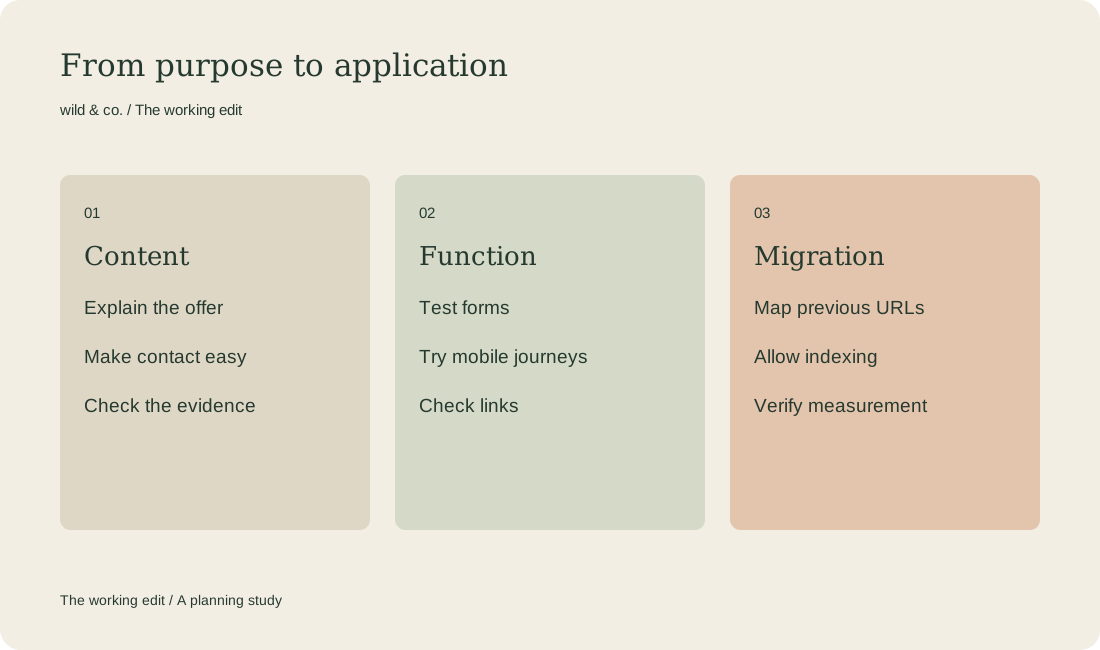
Check offers, any published prices, contact details and provider information. Images need suitable permissions and useful alternative text. Give every page a clear job. Ask one person to review the whole site for duplicate, conflicting or outdated statements. Then assign responsibility for future updates.
- Who maintains the offer and contact details?
- Who receives enquiries and checks delivery?
- Who manages the domain, hosting and account access?
- Who reviews links and search reports after launch?
Your launch checklist
Give old addresses suitable destinations
For an existing business, old page addresses are part of the project. Map important URLs to suitable new pages and configure permanent redirects. A previous service page should lead to its replacement rather than automatically to the homepage. Pages without a replacement need a helpful error response. Keep the mapping and test it again after the domain change.
Test forms through to actual delivery
A success message in the browser is only part of the evidence. Check required fields, failure states and one clearly labelled real enquiry. Confirm delivery in the intended inbox or system. Test spam protection, confirmation messages and newsletter unsubscribe separately. Keep test submissions distinguishable from genuine enquiries in your reporting.
Review mobile use, privacy and search access
Test important journeys on narrow screens, with a keyboard and with reduced motion. Review imagery, loading and essential links. Statistics should follow the consent implementation. Check robots.txt, canonicals, language alternatives and the sitemap, then register the correct domain in Search Console. An accepted sitemap does not guarantee full indexing or rankings.
Observation continues after publication
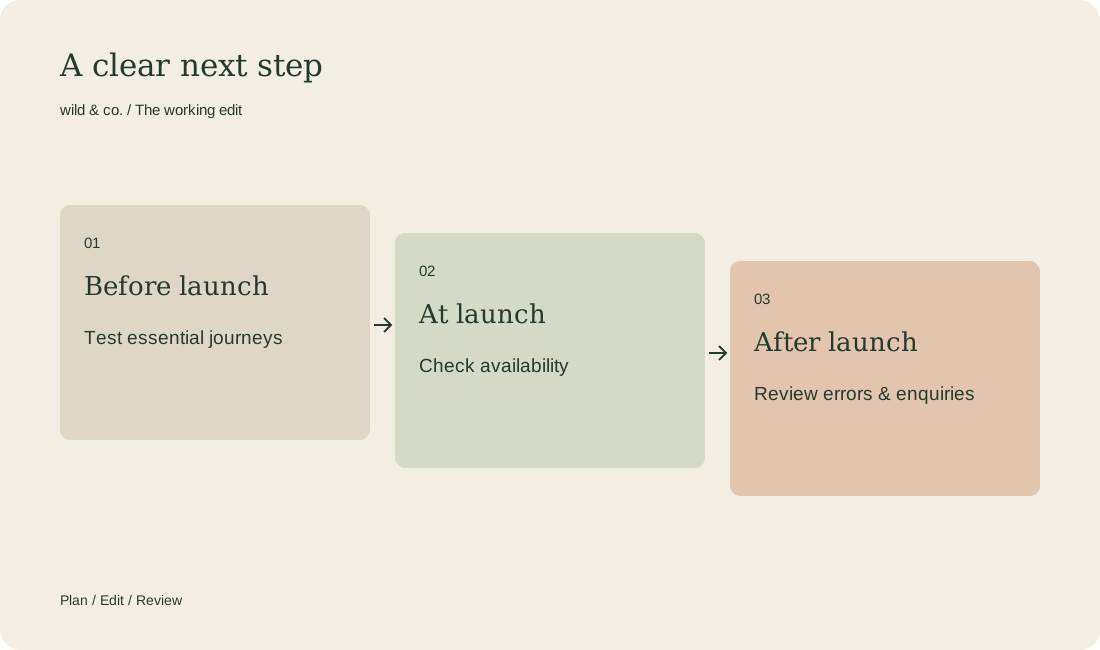
Recheck the actual domain, forms and redirects shortly after launch. Then review search messages, missing pages and the quality of enquiries. Compare periods only when the data is sufficiently complete. Record what has been fixed and what can wait. A reliable website grows from ongoing care rather than a single publication event.