Black Friday is the loudest week of the year. Here is how a small or premium brand can plan a campaign from the first teaser to the day after, with an offer that fits and pictures instead of percentage signs.
A Black Friday campaign starts with the offer, not the post. Plan four phases: teasers, save the date, the day itself and the days after. Give every channel its own job and find a picture idea that works without a percentage sign. Premium brands have more graceful options than a deep discount.
By late November, inboxes fill up with exclamation marks and every feed seems to run the same red banner. If you run a small or premium brand, the question comes round every year: take part or sit it out? And if you take part, how do you avoid vanishing in the noise or cheapening the brand you have worked hard to build? Black Friday 2026 falls on Friday 27 November. Start planning a few weeks ahead and there is enough time for a campaign that actually looks like you.
What makes a Black Friday campaign work
A good Black Friday campaign is not a discount code with a graphic attached. It is a short story told over several days: it hints, it announces, it delivers on the day and it says thank you afterwards. Large retailers often compete on price that week. Smaller brands tend to win on closeness, a clear idea and pictures people actually stop scrolling for. That is good news, because those are all things you control.
Decide the offer before the posts
The offer shapes everything else, from tone to imagery to channels, so settle it before anyone opens a design file. It should suit your margins rather than mirror whatever competitors are doing. A few options:
- A clear discount on selected products rather than the whole range.
- A gift with purchase, such as a case, a sample or free engraving.
- A limited set or colour that is only available that week.
- Early access for newsletter subscribers and regular customers.
- A donation per order to a cause that fits your brand.
- No sale at all, with a story about why you are sitting it out.
Write down how long the offer runs, who it is for and what is excluded. It sounds dull, but it saves a lot of back-and-forth in your DMs on Friday evening.
Your Black Friday plan
The timeline: four phases, not one day
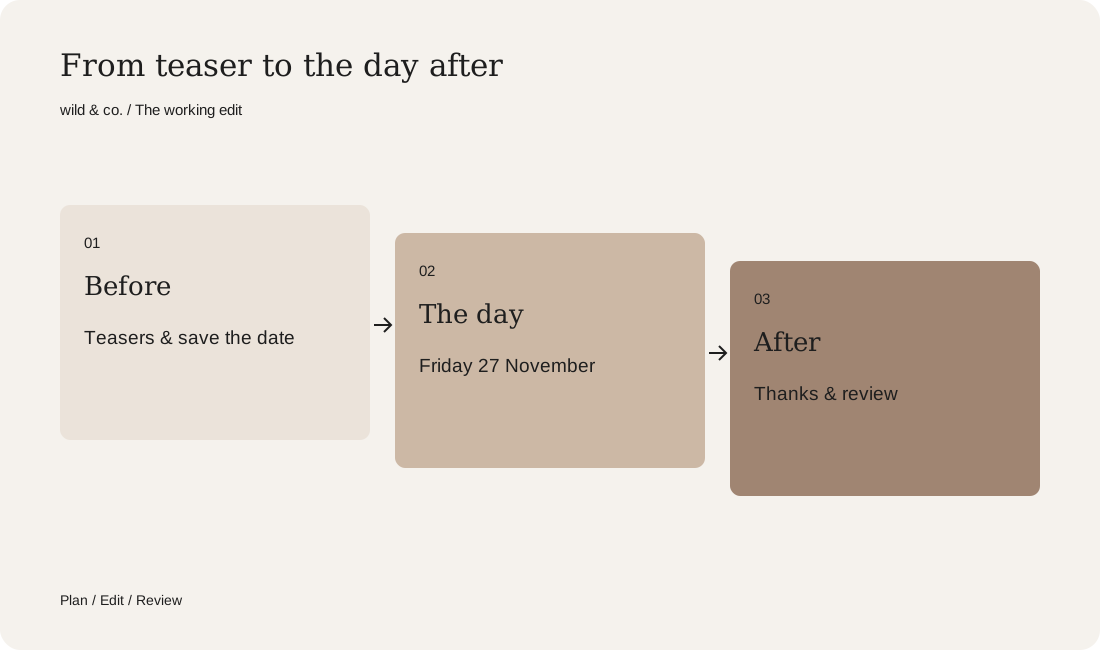
Most Black Friday campaigns do not fail on the idea. They fail because everything gets made on Thursday night. Split the campaign into four phases and give each its own content:
- Teasers, roughly two weeks ahead: hints, details, a mood. No offer yet.
- Save the date, a few days before: the date, the time, where it starts and how to get in early.
- The day itself, Friday 27 November: the offer, clear and simple, on every channel at once.
- Afterwards: thank people, flag the last chance, look after orders and review what worked.
If the offer runs over the weekend to Cyber Monday, plan for that too, otherwise your channels go quiet on Saturday while the sale is still live. Note which posts, stories, emails and ads go out in each phase and who signs them off. Afterwards, a thank-you email, quick replies to delivery questions and a short review of what landed set up next year.
Teasers and save the date: the days before
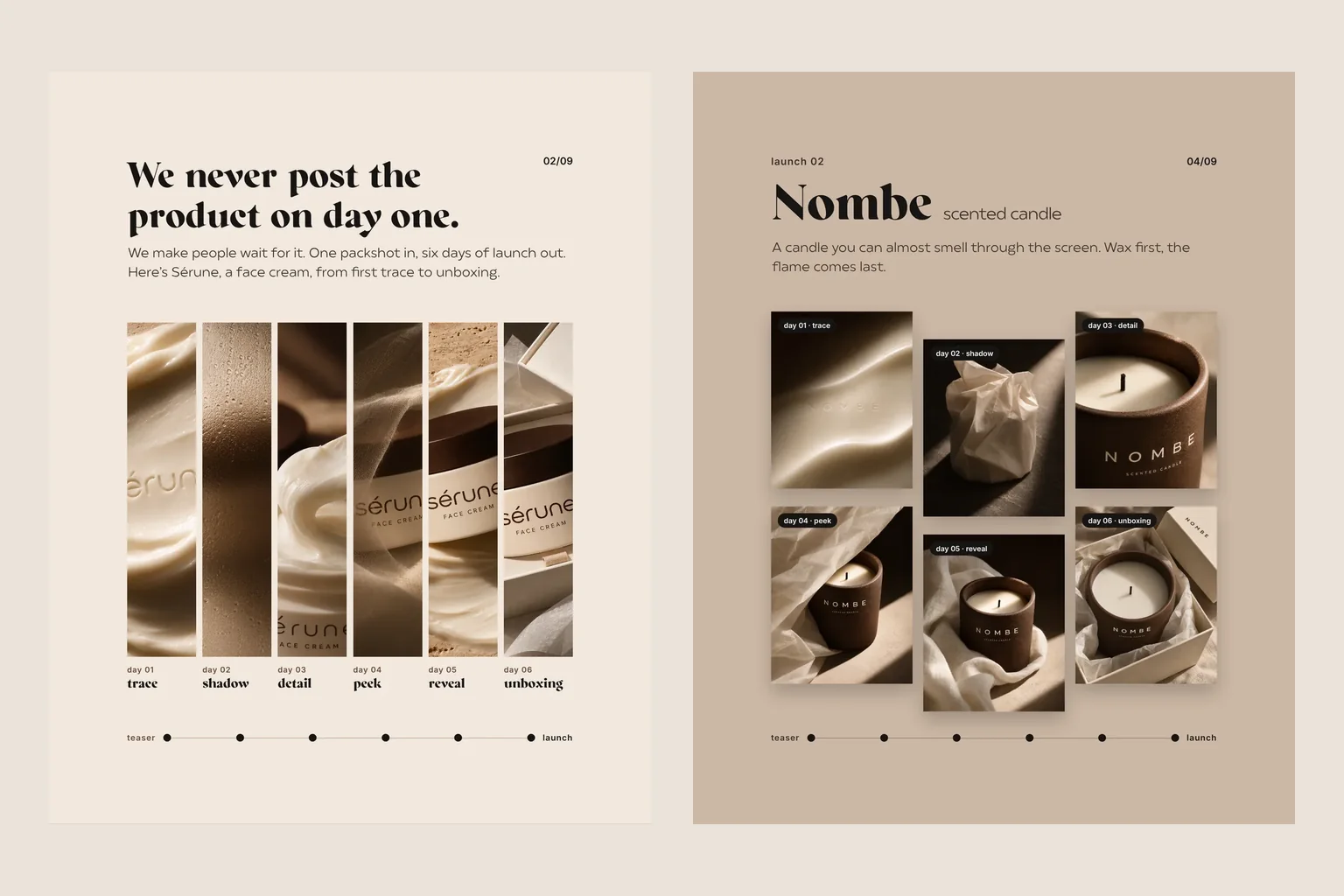
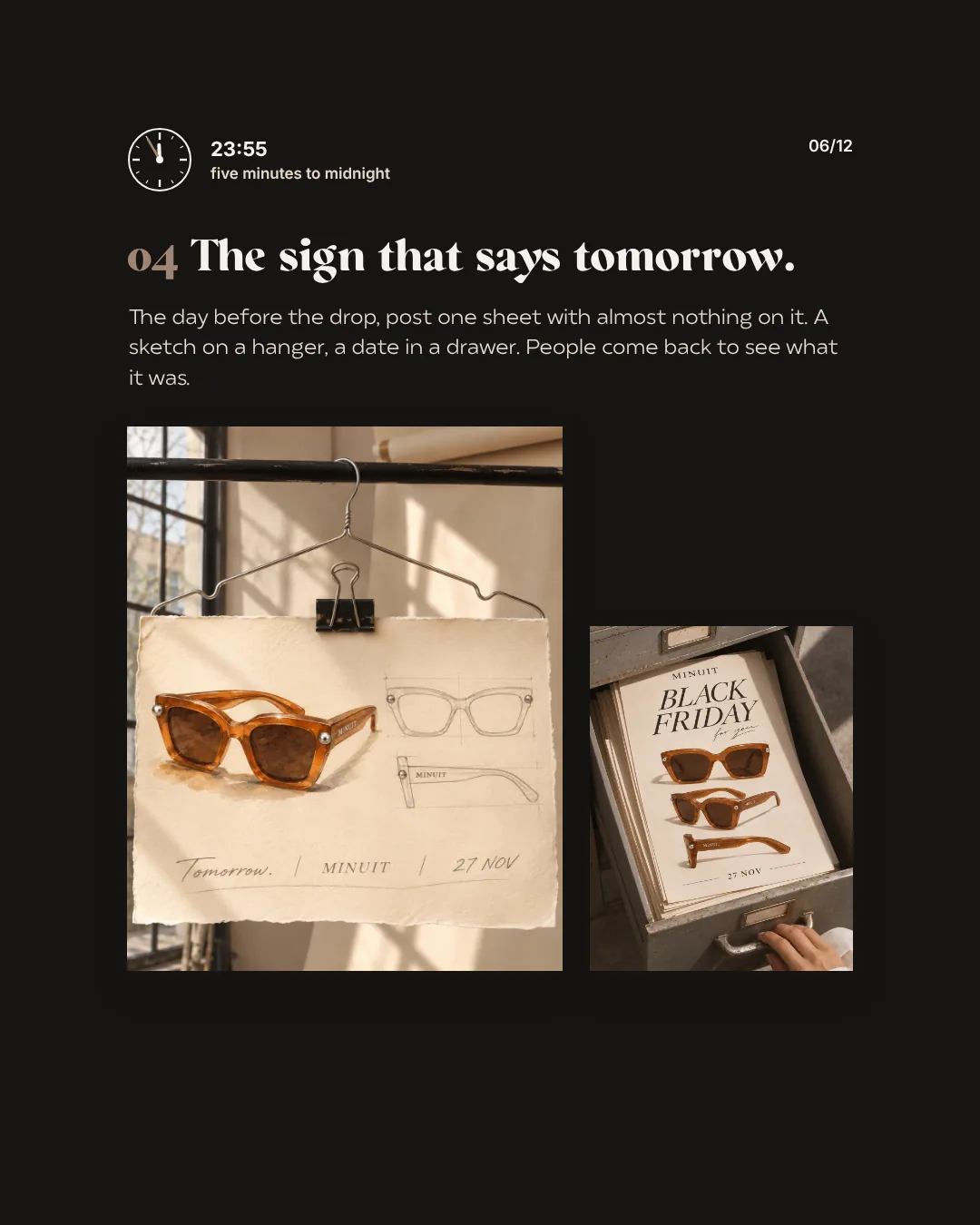
Good teasers give little away and show a lot: a detail of the product, a corner of the packaging, a date on a scrap of paper. For Minuit, an eyewear label we invented, the save the date is a sketch on a clothes hanger with just three things on it: ‘Tomorrow’, the brand name and ‘27 Nov’. A save the date needs nothing more. What matters is that your teasers look like a series, so people recognise them as they scroll. Our guide to building a teaser campaign walks through such a sequence day by day.
Use these days to gather people as well: a reminder in your stories, a nudge towards the newsletter, a countdown sticker. Anyone who signs up beforehand is already there when the doors open.
Give every channel its own job
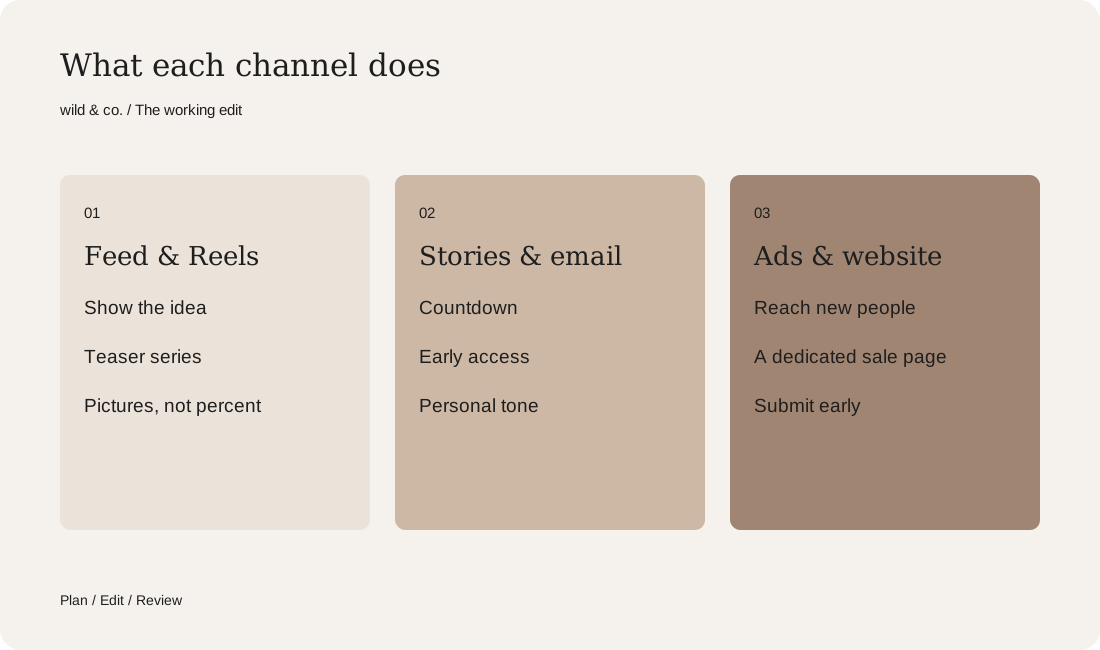
When every channel says exactly the same thing, people tune out quickly. Give each one a distinct role:
- Feed posts and Reels carry the idea and the images people save and share.
- Stories handle the countdown, reminders and questions, several times on the day itself.
- The newsletter explains the offer in full, with early access and a personal tone.
- Ads take your images to people who do not know you yet and remind recent visitors to your site.
- Your website needs a dedicated page or a clear banner, so nobody has to hunt for the offer.
Start your ads early. During Black Friday week a great many brands advertise at the same time, so placements are hotly contested, and new ads are reviewed before they run. Allow plenty of lead time and prepare separate versions for feed and stories.
Standing out without shouting
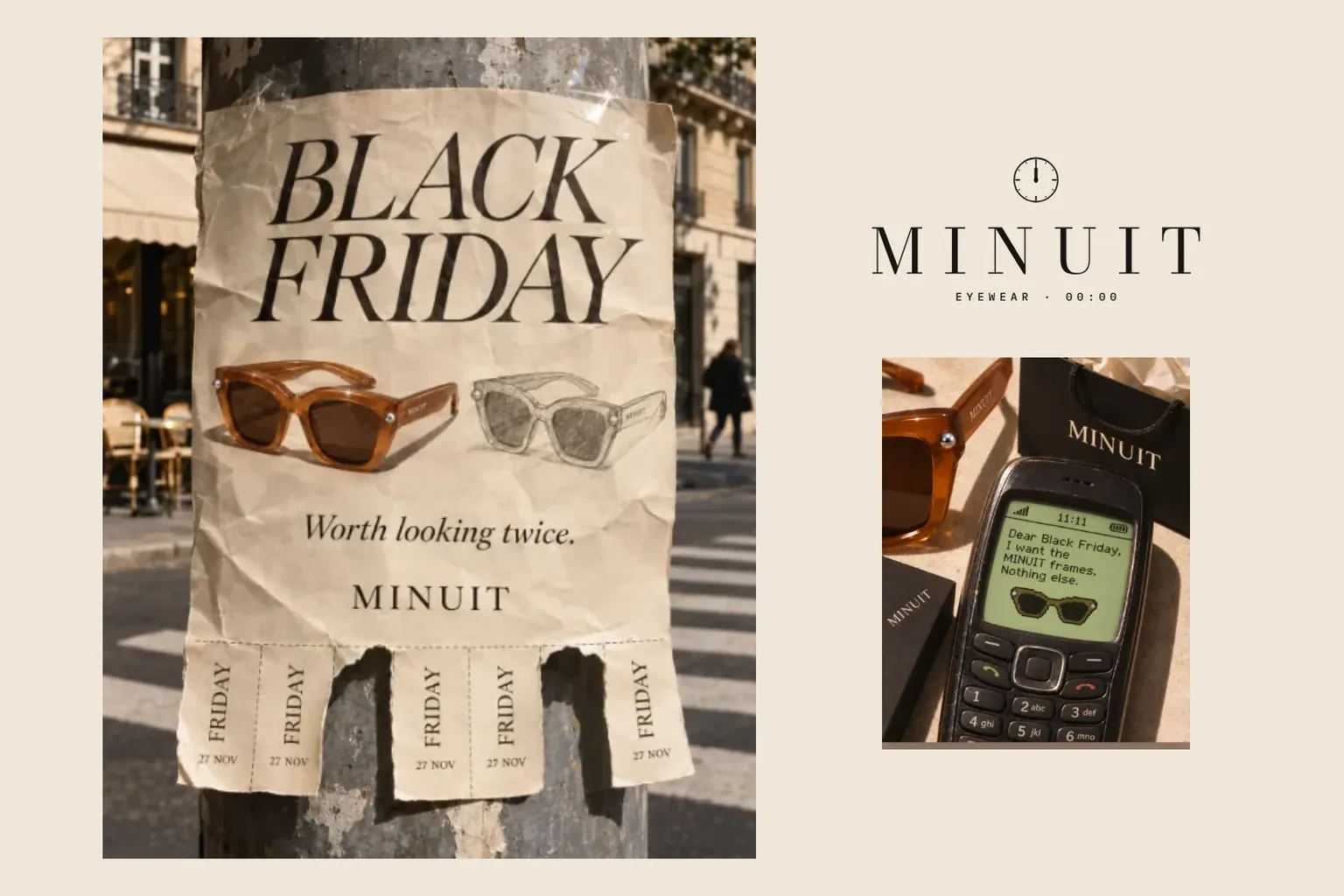
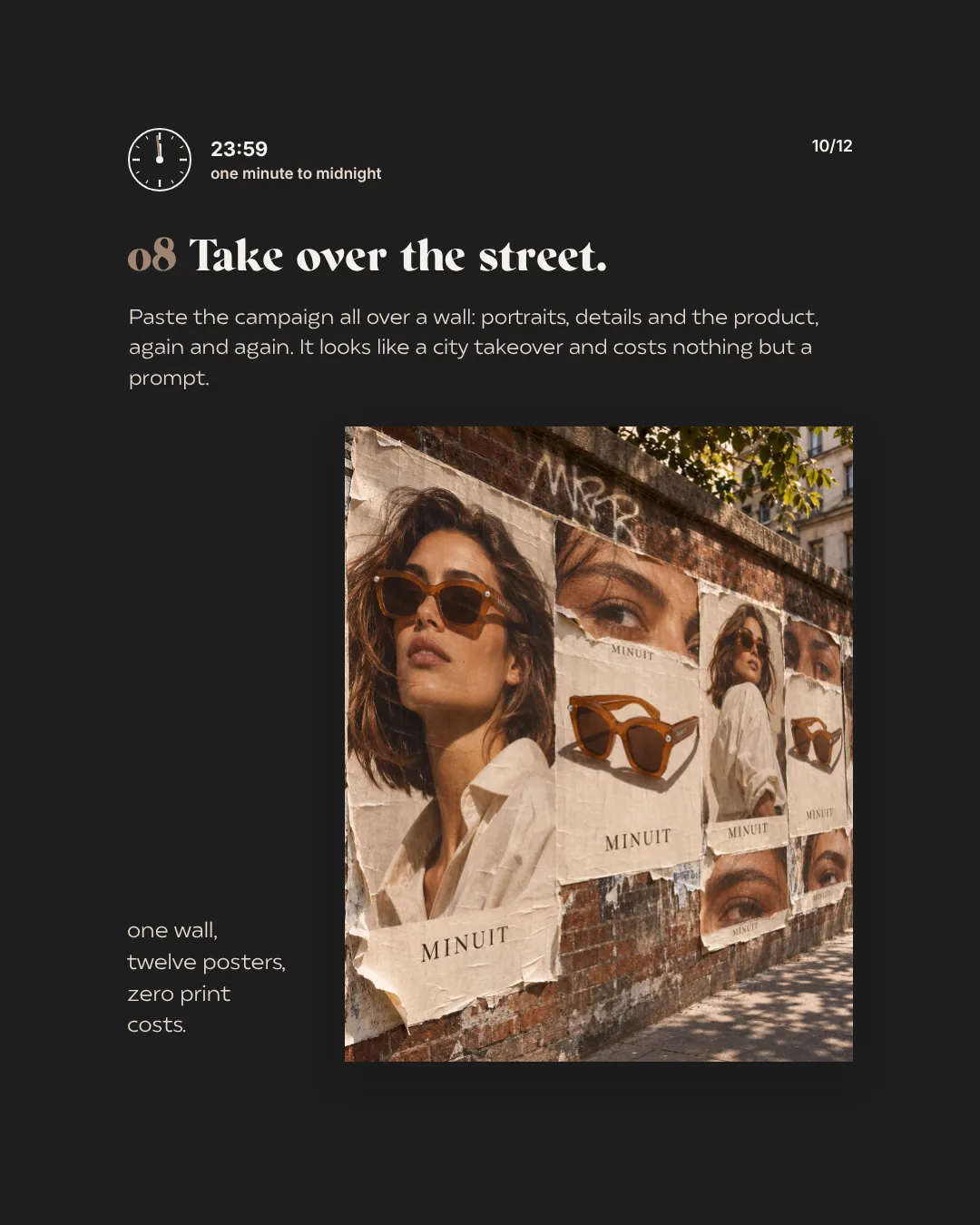
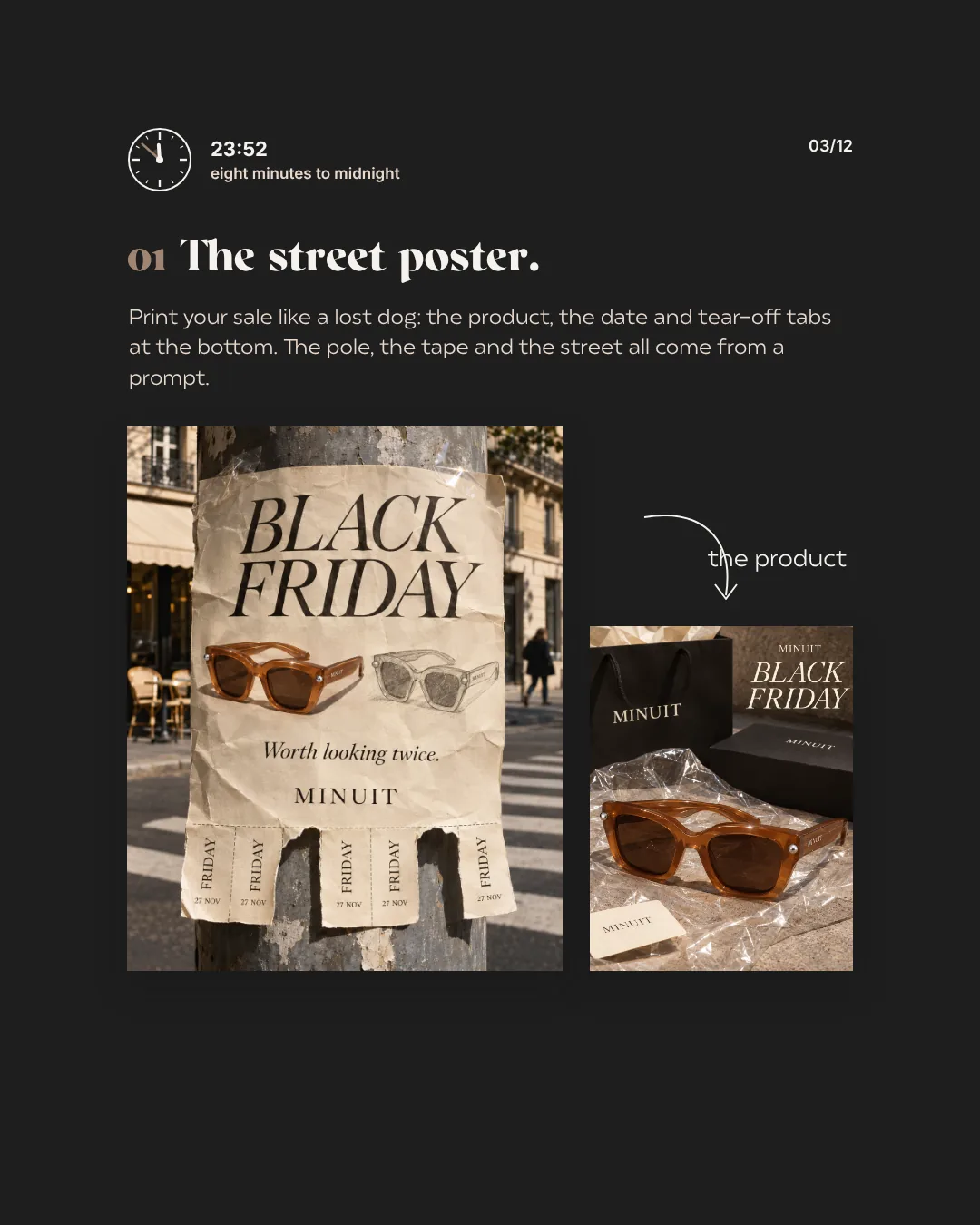
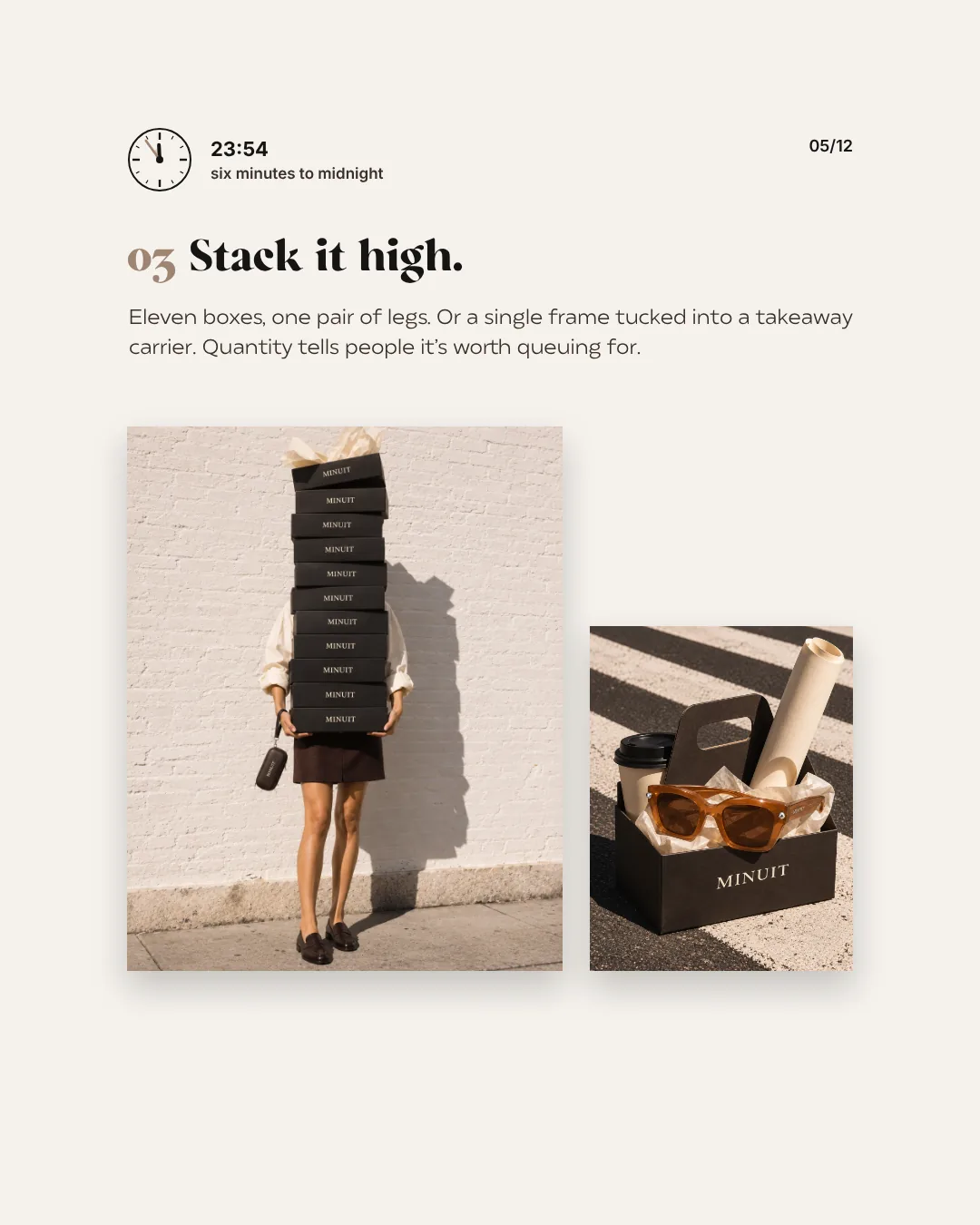
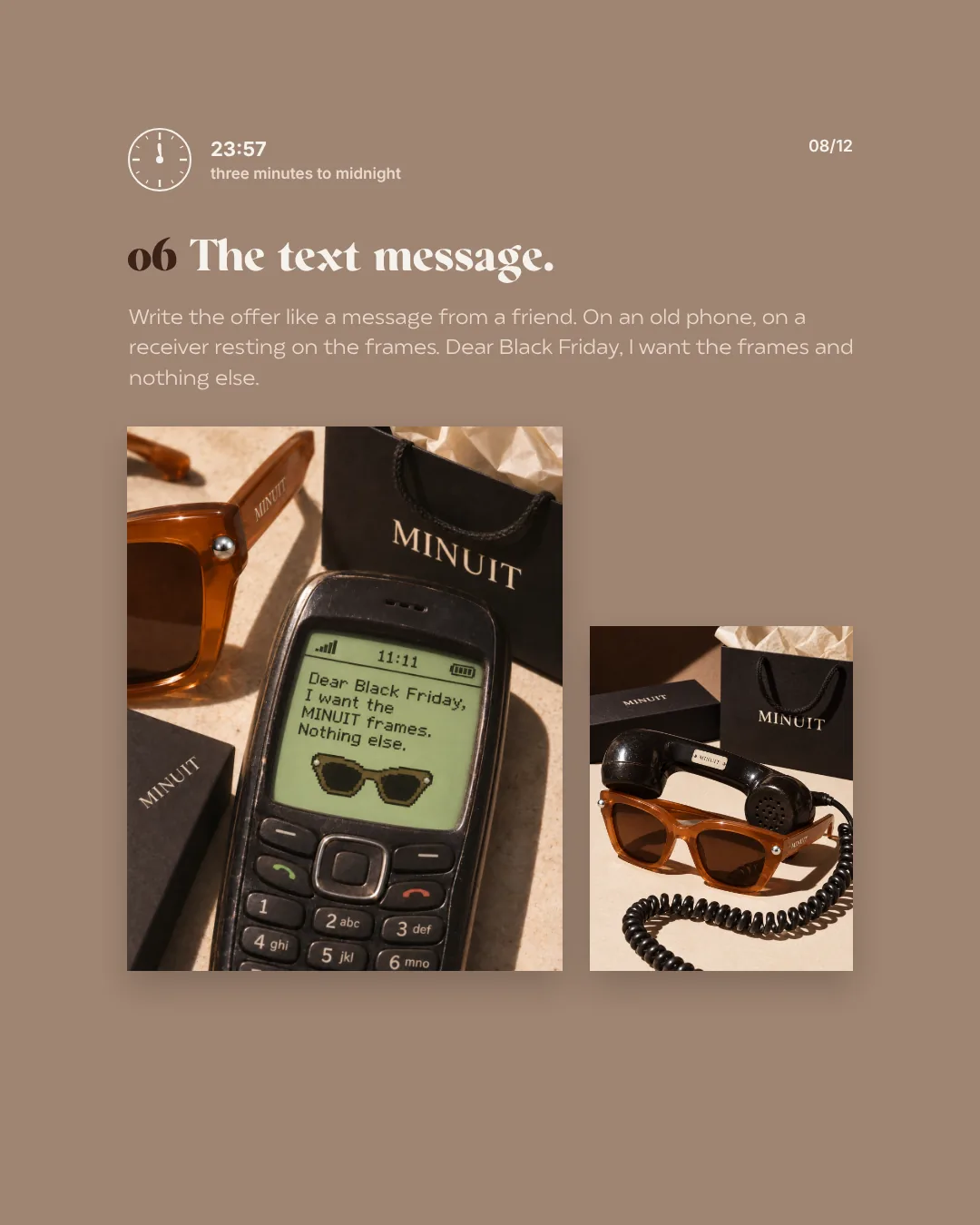
When everyone is shouting in red and black, quiet becomes noticeable. Instead of a bigger percentage sign, find an idea only your brand could own. For Minuit we developed eight Black Friday posts, and not one shows a discount in the image: a poster with tear-off tabs on a lamp post, an old mobile phone with the message ‘Dear Black Friday, I want the Minuit frames’, an entire wall pasted with posters. The discount lives in the caption. The picture is what makes people stop.
To find your own idea, ask a few questions. Where does your product turn up in everyday life? What would be an exaggerated but likeable gesture? Which object could tell the story of the sale without spelling it out: a note, a bag, a message? Keep the whole thing in your brand colours. A sale that looks like everyone else's does nothing for your brand.
Premium brands: Black Friday without a price war
For a premium brand, a deep discount often sends the wrong signal. If you stand for quality all year, a giant percentage can make you look smaller overnight, and it teaches customers to wait for November. There are more graceful options: a gift instead of a price cut, early access for loyal customers, a limited edition, or a service such as engraving or fitting. You can also decline to take part and explain why. Done well, that is a campaign in its own right.
The closing slide of the Minuit campaign puts it neatly: ‘Your sale doesn't need a bigger discount. It needs a better picture.’ When the picture is right, there is no need to raise your voice.
Plan your imagery early
Imagery is the part that needs the most lead time. Plan it for the formats where it will appear: portrait for feed and stories, landscape for website banners and newsletters, with room left in stories for text and stickers. If a photoshoot is no longer realistic, AI can help you test ideas and create scenes that are hard to photograph, such as a poster wall that never existed. That is how the Minuit images were made, all created with AI and art-directed by us. Either way, the product must look exactly like the one customers receive.
Staying fair: prices, newsletters, countdowns
In the loudest week of the year, honesty is a quiet advantage. A struck-through price should be one you genuinely charged before. In Switzerland, the price disclosure ordinance (Preisbekanntgabeverordnung) sets out when a comparison price may be shown, so check the details if you are unsure. Send newsletters only to people who have signed up. A countdown should be real and should not quietly restart once it reaches zero. And if your images were made with AI, say so wherever it matters to customers.
Plan it yourself or bring in help?
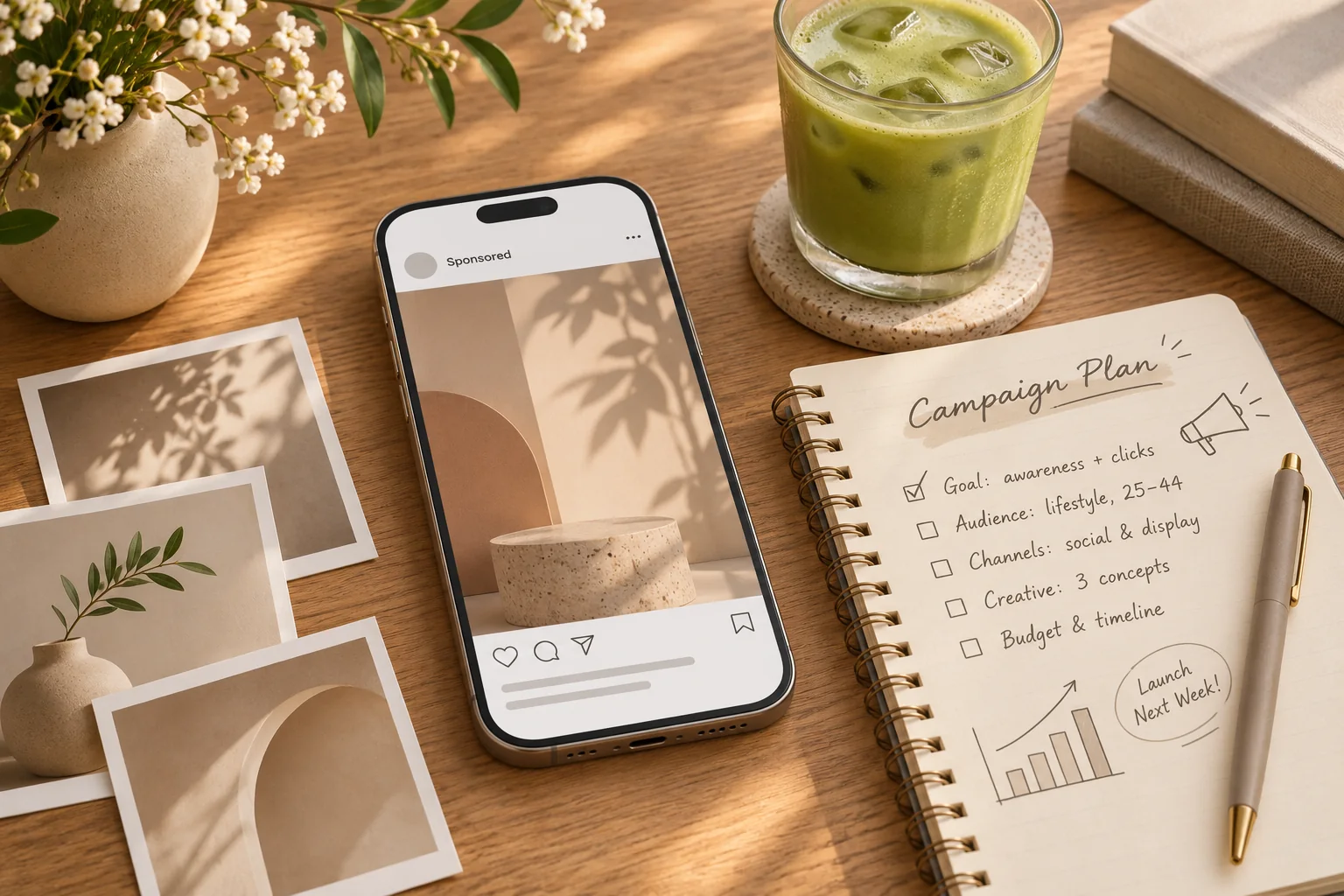
With a clear offer, a timeline and two or three strong picture ideas, you can run a Black Friday campaign yourself. The planning sheet above puts everything on one page. It gets demanding when posts, stories, newsletter, ads and website all need to line up and the images still have to be made. At wild & co. in Zurich we plan campaigns like this as part of our social media work, from the first idea to the last post, for brands across Switzerland.