Boost a post or build a campaign in Ads Manager? Here is how Instagram advertising works, which formats exist and how to set a sensible goal, audience and budget.
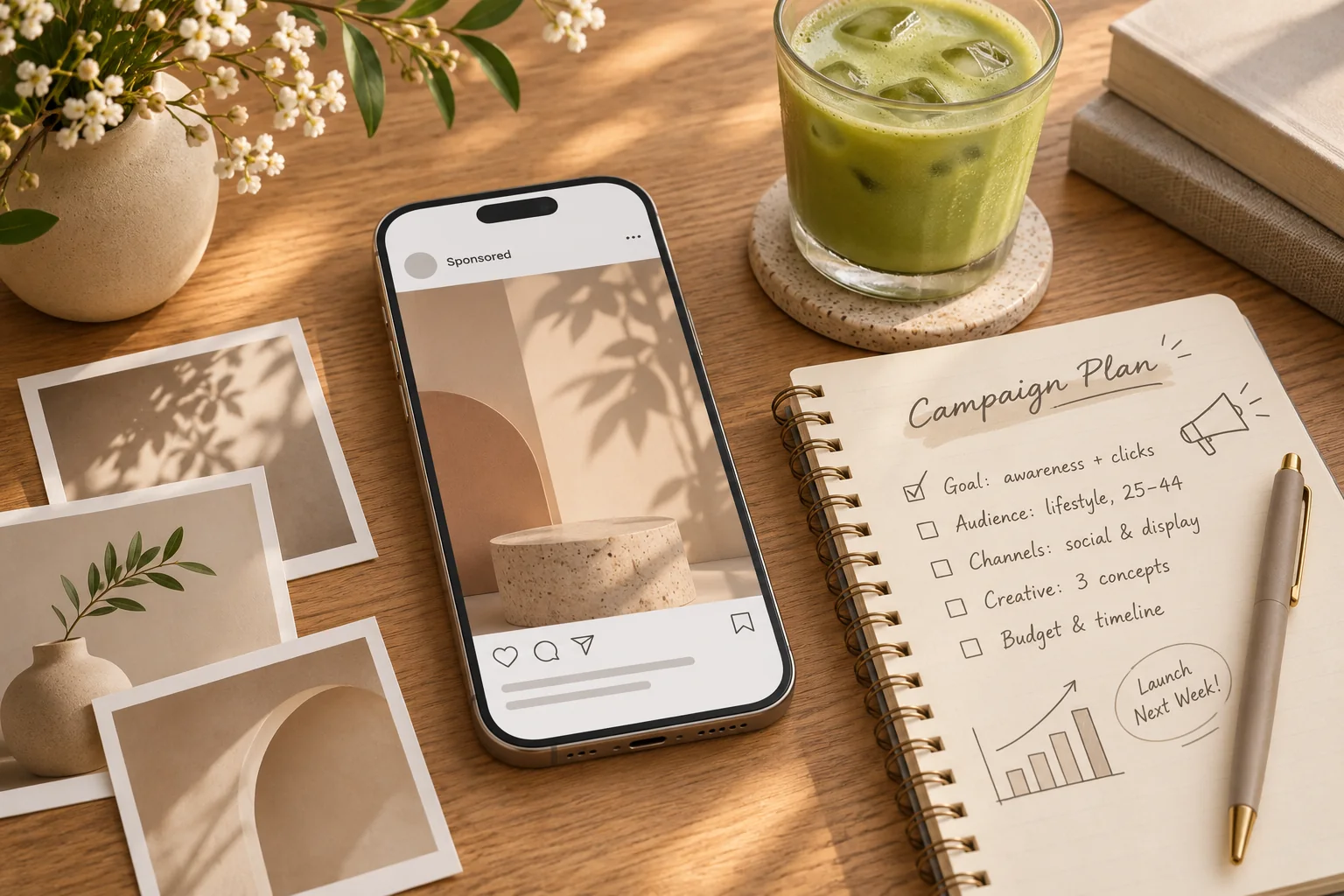
Instagram ads run from the app or Meta Ads Manager. Choose one clear goal, pick a suitable audience, design ads for Reels, Stories and the feed, and measure what belongs to your goal rather than likes alone.
You post regularly and the images look good, yet hardly any new people find you. Sooner or later the question comes up: should we run ads? Instagram ads can work very well when you know what they are meant to do. Without a goal they burn budget, because the platform will simply optimise for whatever is cheapest. Here we go through the key decisions in order.
What is Instagram advertising?
Instagram ads are paid posts, Stories or Reels that appear with a ‘Sponsored’ label. They reach people who do not necessarily follow you. Unlike a normal post, you decide who sees the ad, how long it runs and how much you spend. Instagram belongs to Meta, so its ads run on the same advertising platform as Facebook. If you are not yet sure Instagram is the right channel at all, our guide Which social media platform suits your audience? will help.
Boost a post or use Ads Manager?
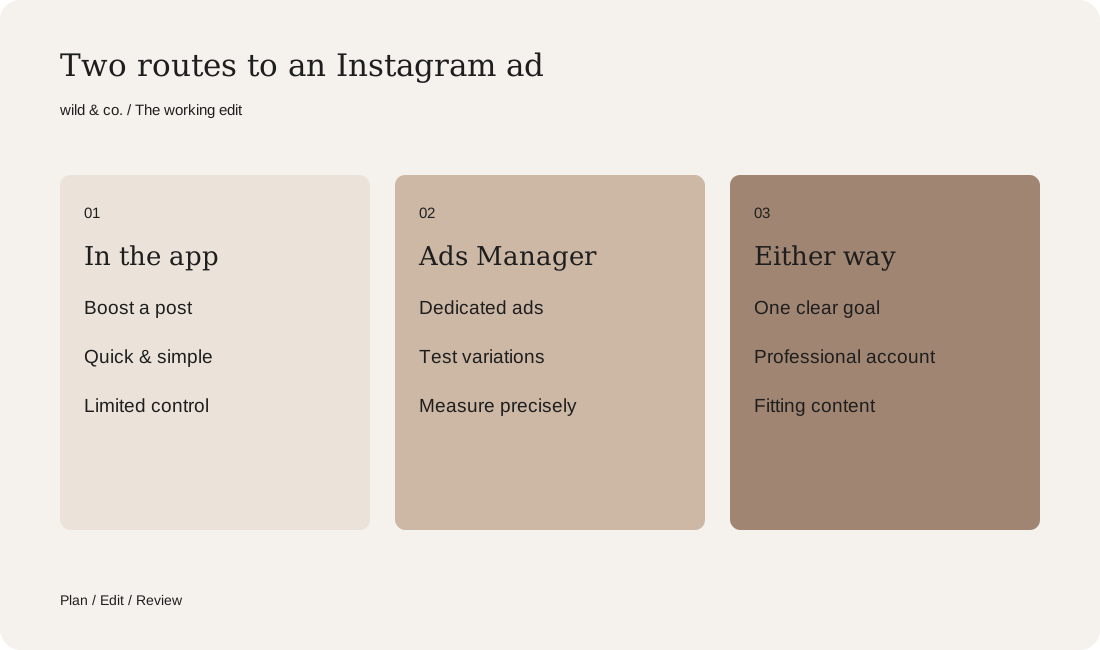
There are two routes. In the app you can boost an existing post or Reel in a few taps. That is quick, and enough to show a well-performing post to more people. Meta Ads Manager gives you far more control: you can create ads that never appear in your feed, test several variations, choose placements and measure more precisely. Boosting in the app is fine for a first try. For anything that should run regularly, Ads Manager is worth learning. Either way you need a professional Instagram account.
The campaign objective: what should happen?
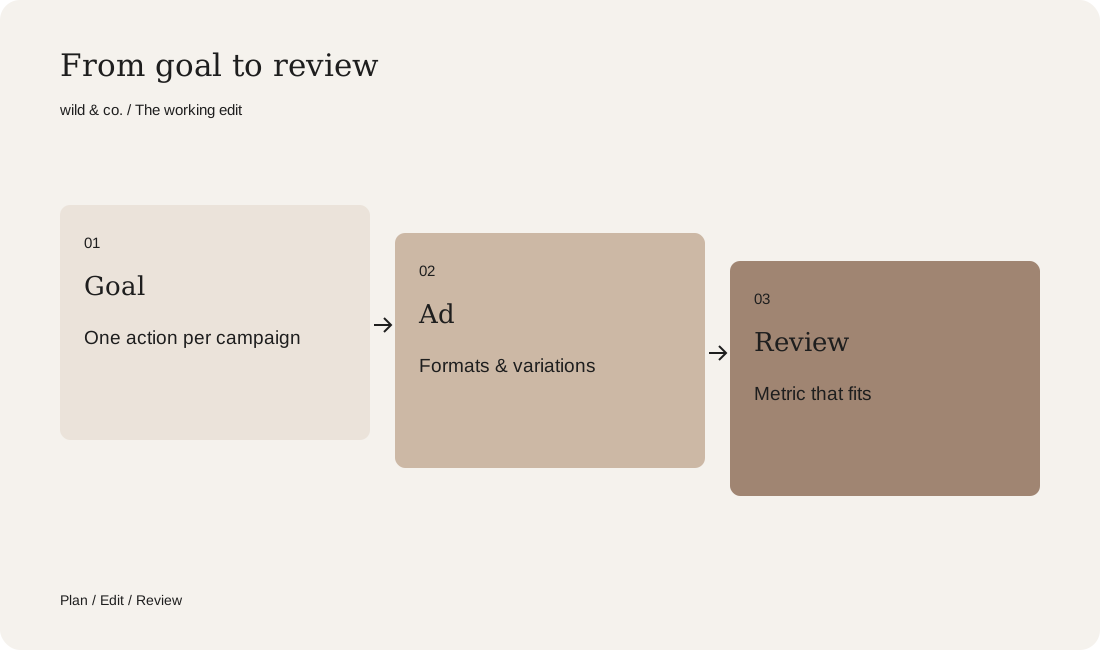
When you create a campaign, Meta asks for the objective first. This choice matters more than it seems, because the platform then shows your ad mainly to people likely to take that action. Do you want awareness, website visits, messages and enquiries, or sales in your shop? Choose one main objective per campaign. Asking for reach, followers and sales at once usually earns you a little of each and not enough of any.
Defining your audience
You can narrow an audience by location, age, language and interests, reach people who have already interacted with your profile or website, or let Meta find similar people. Meta now often suggests an automatic audience, which can work surprisingly well when the ad itself is clear. As a rule of thumb, a strong ad with a broad, sensibly limited audience beats an average ad with very fine targeting. For a local offer in Zurich, location still belongs in the setup.
Instagram ad formats
Your ad appears wherever people happen to be scrolling, so plan for several placements and formats from the start:
- Reels: vertical video where the first seconds decide. Sound optional, so plan subtitles.
- Stories: vertical, short, with a clear action at the end.
- Feed: image or video, square or portrait, with text that is readable at small sizes.
- Carousel: several images or videos, useful for products, steps or before and after.
- Explore: ads between content people are discovering.
Material from a shoot can be reused well here. We show how in Getting more from a shoot.
Designing good Instagram ads
An ad has to work within seconds. Show early what it is about: your product, your face, the result of your work. Say in one sentence why it matters to the viewer, and make the next step obvious. Ads that look like ordinary content often perform better on Instagram than polished advertising images. They still belong to your brand, so colours, typefaces and imagery should stay recognisable. Make two or three variations with different openings instead of the same image ten times with new copy.
Your campaign plan
Budget, duration and measurement
There is no fixed minimum budget that always works. What matters is whether enough is spent for Meta to learn and for you to read something useful. Plan one campaign with enough time rather than many small tests that stop after three days. These questions help when you review the results:
- Which metric belongs to your objective: clicks, enquiries, purchases or reach?
- Which variation performed better, and what is the likely reason?
- Do visitors arrive on your website and find what the ad promised?
- Is tracking on your website set up properly and mentioned in your privacy policy?
At wild & co. in Zurich we plan and manage Social & Google Ads together with the content they need, in person or remotely. Use the campaign plan above to sketch your first campaign before you spend a franc.