Understand the work behind a branding proposal: strategy, identity, applications, feedback and external costs. Includes a scope comparison worksheet.

Compare agreed deliverables before comparing totals. Strategy, applications, revisions and third-party costs shape the work. A universal Swiss price list would hide the differences that matter most.
Define the problem before comparing prices
A logo proposal and a complete brand identity cover different jobs. Your positioning may already be clear and you need a usable design system. Or the visual inconsistency may reflect an unresolved audience or offer. Write down what needs to change before asking for a number. The aim is a useful outcome for your business, rather than a large collection of files.
Understand the work behind the deliverables
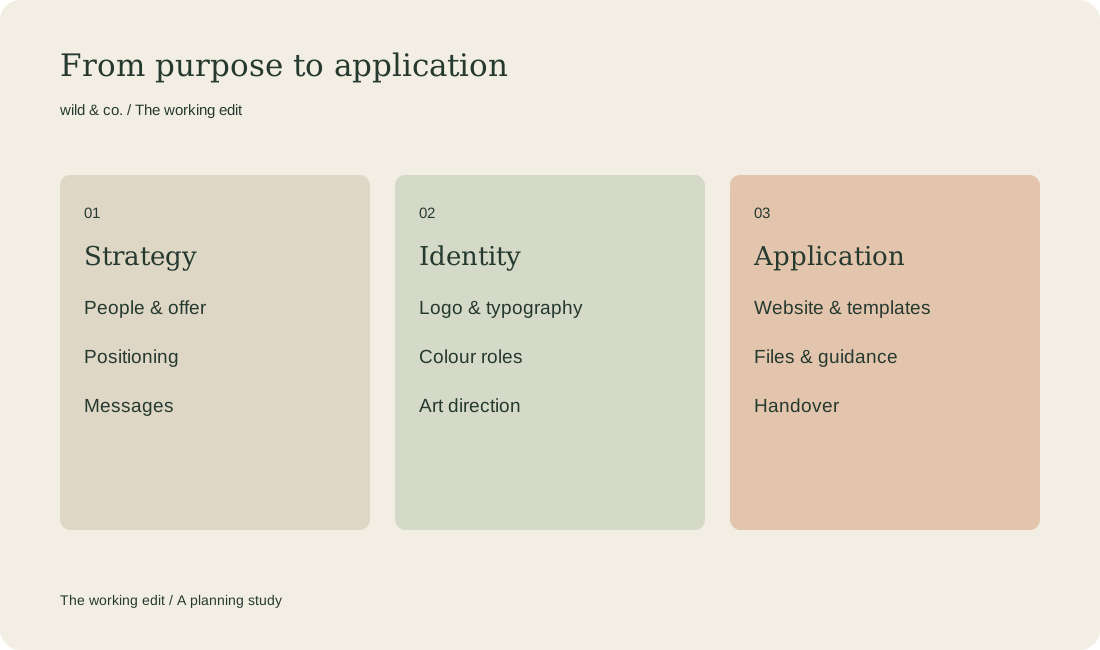
Work often starts before design: reviewing existing material, understanding the audience and defining a direction. Concepts, selection, refinement and applications follow. If you need a modest first release, describe it clearly. A lengthy guideline document is not inherently better than a concise system that your team can use confidently.
- Strategy: situation, audience, positioning and messages.
- Identity: logo variations, typography, colour roles and imagery.
- Applications: website, presentation, packaging or social templates.
- Handover: file formats, usage guidance and an introduction to the system.
Compare your proposals
Compare like with like
Consider an illustrative comparison. Proposal A includes a logo and three export formats. Proposal B also includes a workshop, a small identity family and presentation templates. A higher total does not by itself mean poorer value. Place the outcomes side by side and ask about missing items. Do not assume an unnamed deliverable is included. Use the worksheet to separate confirmed scope from questions.
Agree how feedback and decisions work
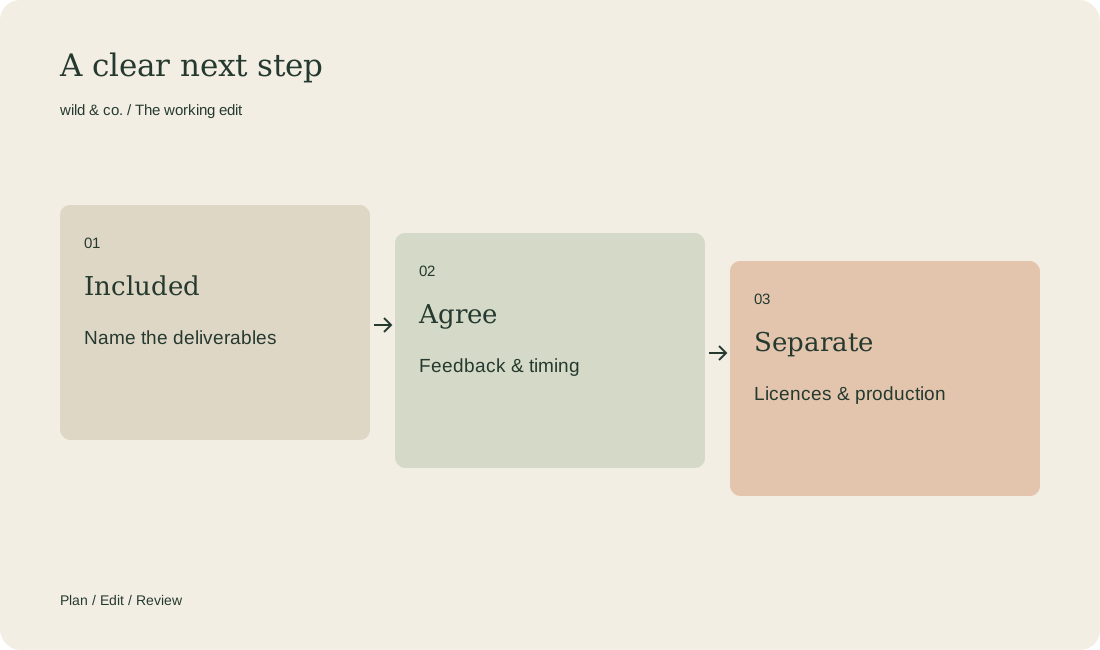
Who gathers comments, who makes the decision and what does a revision round cover? Separate feedback from a new creative direction. Five people requesting successive changes can turn one agreed task into several different ones. Set milestones and gather feedback in one place. Ask how additions and changes of direction will be proposed and approved before they become extra work.
Check external costs and intended use
Fonts, imagery, printing, production, hosting and photography may sit outside the design fee. Clarify what is included, who commissions suppliers and which recurring costs may follow. Discuss intended use and working files in writing. The particular rights and permissions belong in the actual proposal and agreement. This guide helps you ask questions; it does not replace a contract review.
Bring a clear first release to the conversation
Group the list into launch, later and undecided. Bring existing material, a realistic deadline and your available budget range. Knowing the boundaries helps both sides decide where effort matters most. We define the task, deliverables and collaboration before proposing a fee. Without that context, a universal price would be a guess rather than a meaningful proposal.