What an AI model is, what it suits and how it looks the same in every image. Plus the limits: when real people belong in the picture and how to stay honest.
An AI model is a digital face that stays the same across many images. It suits campaigns, lifestyle content and product worlds when your brand needs new images regularly. Consistency, real skin and honest communication matter more than the perfect prompt.
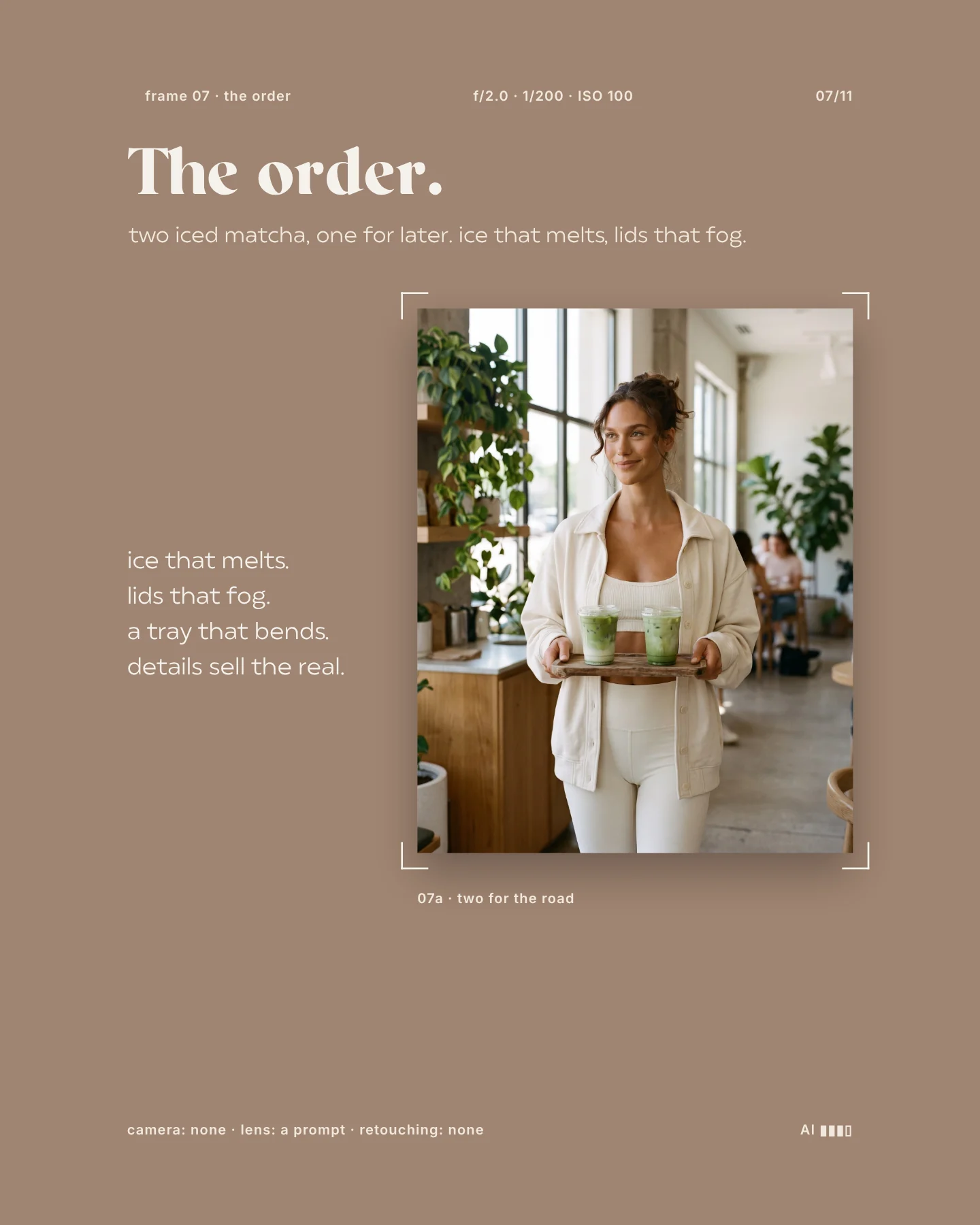
A face people recognise makes a brand approachable. Until now that meant booking a model, clarifying usage rights and organising a new shoot for every campaign. AI offers another route. For our independent yoga campaign we developed an AI model who stays the same person on the street, in the café and by the window. Here is how it works and when it makes sense for your brand.
What is an AI model?
An AI model is a digital person who does not exist. Face, hair, build and presence are defined once and then reused in every new image. Unlike a random AI image, the goal is not one beautiful frame but recognition across many images, places and months.
An AI model is not a virtual influencer with its own profile and an invented life story. It is a character for your visual world, much like a model who regularly appears for your brand, except there is no camera and the face stays exactly as you defined it.
What your own AI model is good for
An AI model pays off mainly when your brand needs new images regularly and should carry a particular mood. For example:
The model should fit your audience. Who should recognise themselves in it? Which age, which style, which attitude? We settle these questions up front so the face is not just attractive but belongs to your brand.
- Activewear, wellness and yoga: lifestyle scenes in the studio, on the move and at home.
- Cosmetics and skincare: images around rituals, routines and textures.
- Fashion and accessories: looks in different settings without new bookings every season.
- Drinks and food: moments in which your product simply belongs.
- Campaigns and launches: one story told across many posts.
Your AI model brief
A face that stays: how consistency is made
The biggest challenge is not the first image but the tenth. AI tools like to shift faces slightly: a different eye shape, a new nose, suddenly more make-up. To keep the model recognisable, we work with fixed features and check every image against them.
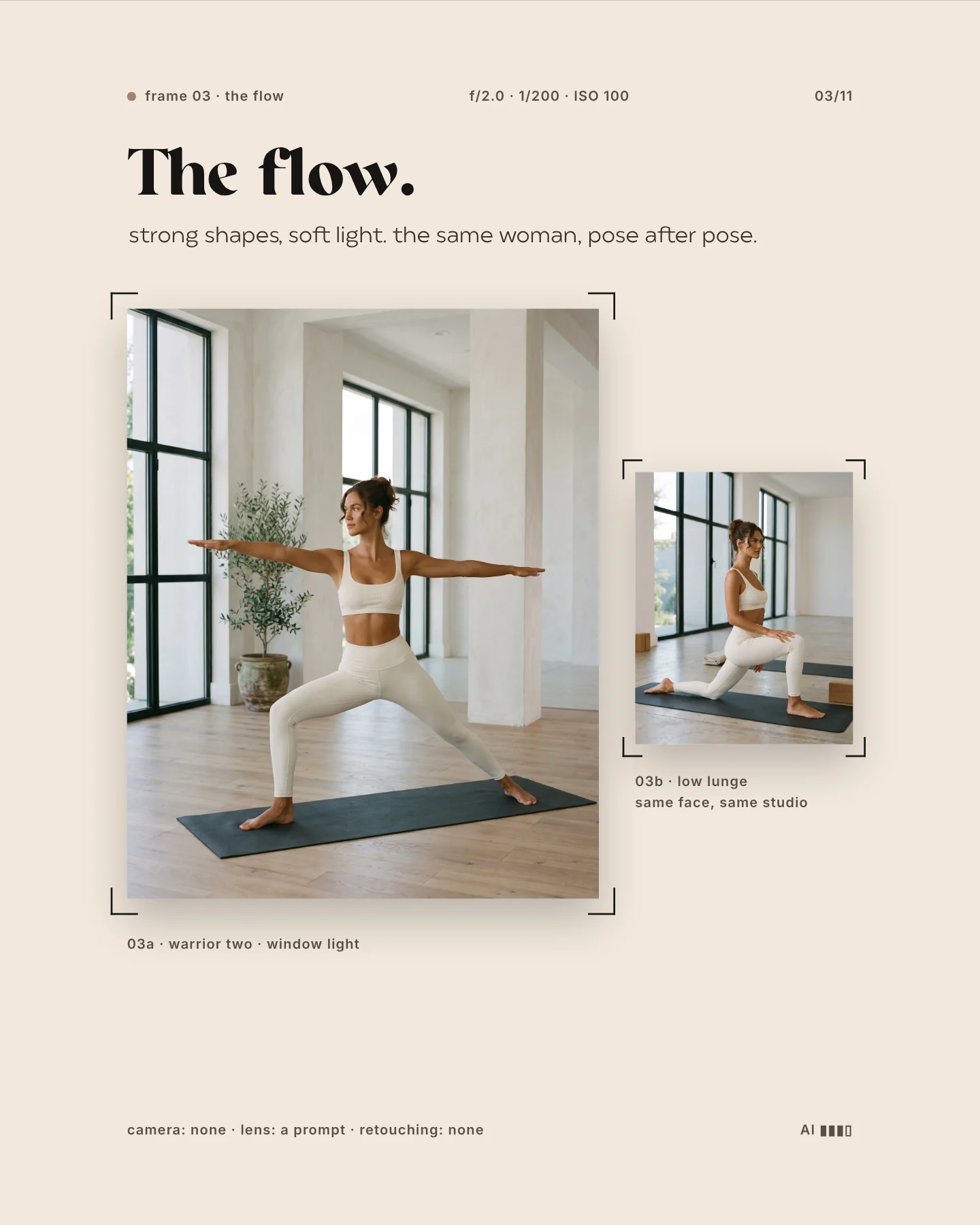
Light and surroundings support recognition too. When the model is lit similarly in every image and moves through a coherent world, the series feels of a piece. If light and style jump from image to image, people notice, even when the face stays the same.
- A profile for the model: face shape, eyes, hair, skin tone, typical features such as freckles.
- Recurring details: a headband, a piece of jewellery, a style that fits the brand.
- Reference images every new frame is measured against.
- A strict edit: an image with a slightly changed face is cut, however pretty it is.
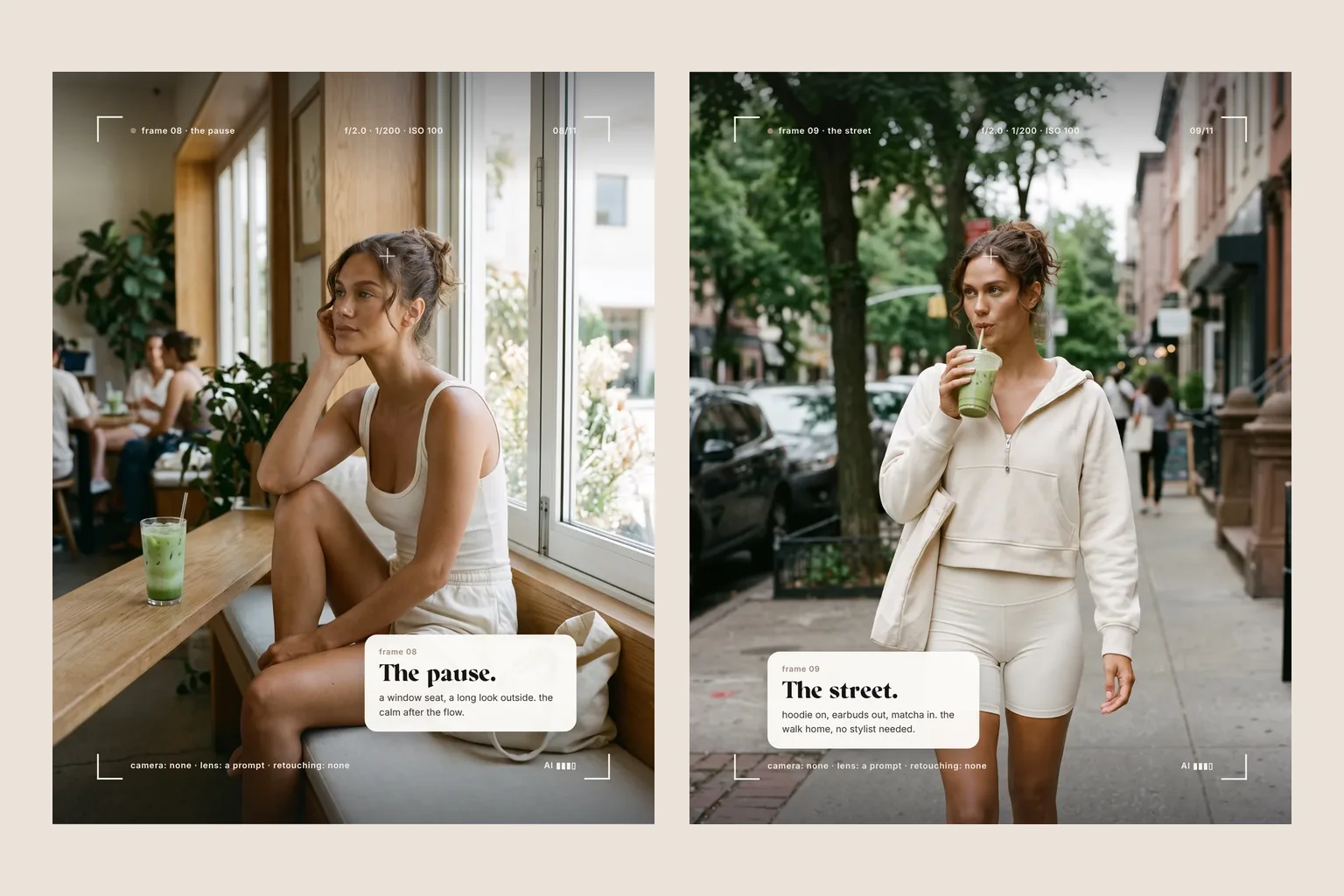
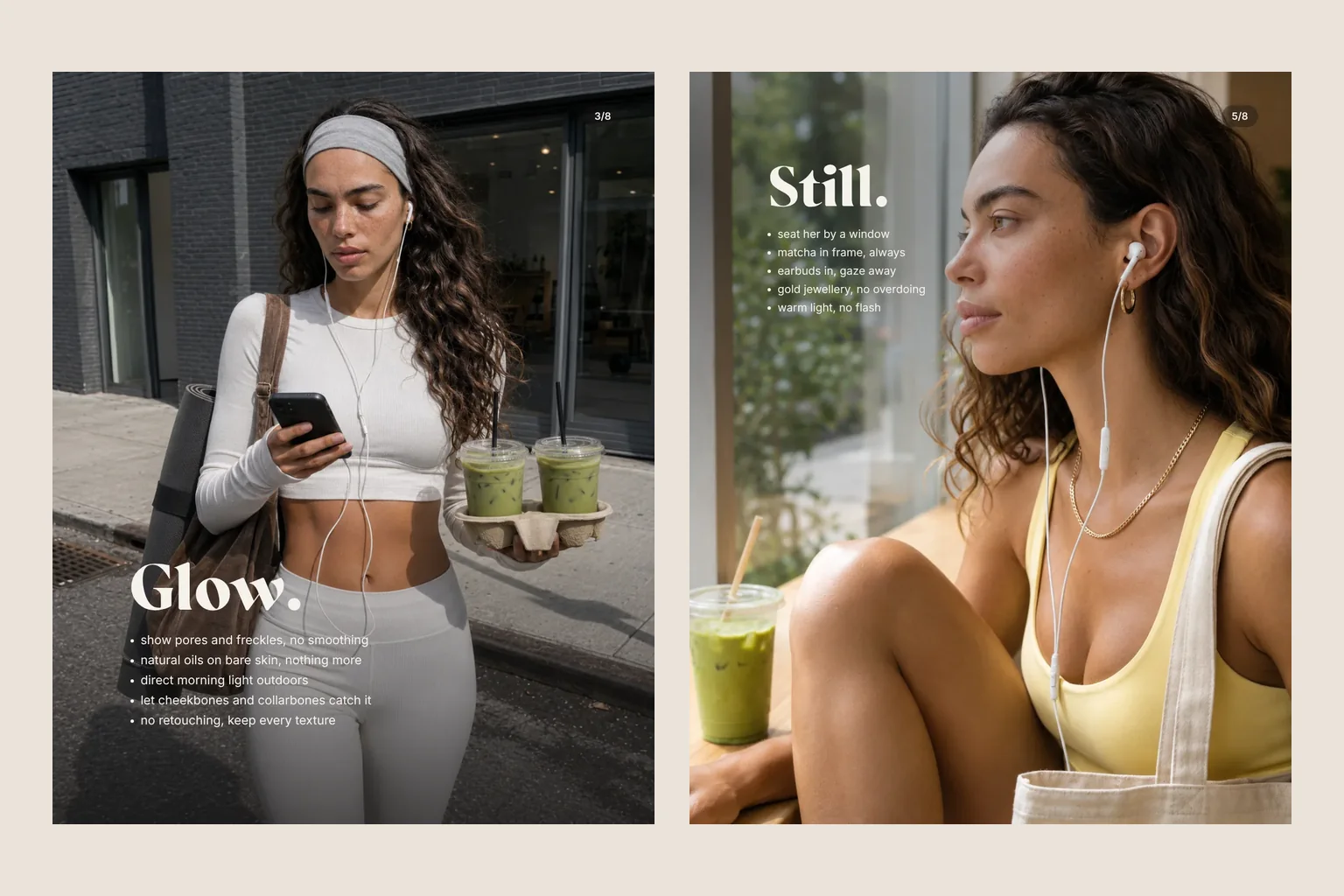
Our campaign ama studio shows what this looks like across locations: studio, café and street, one face.
Real skin, not plastic
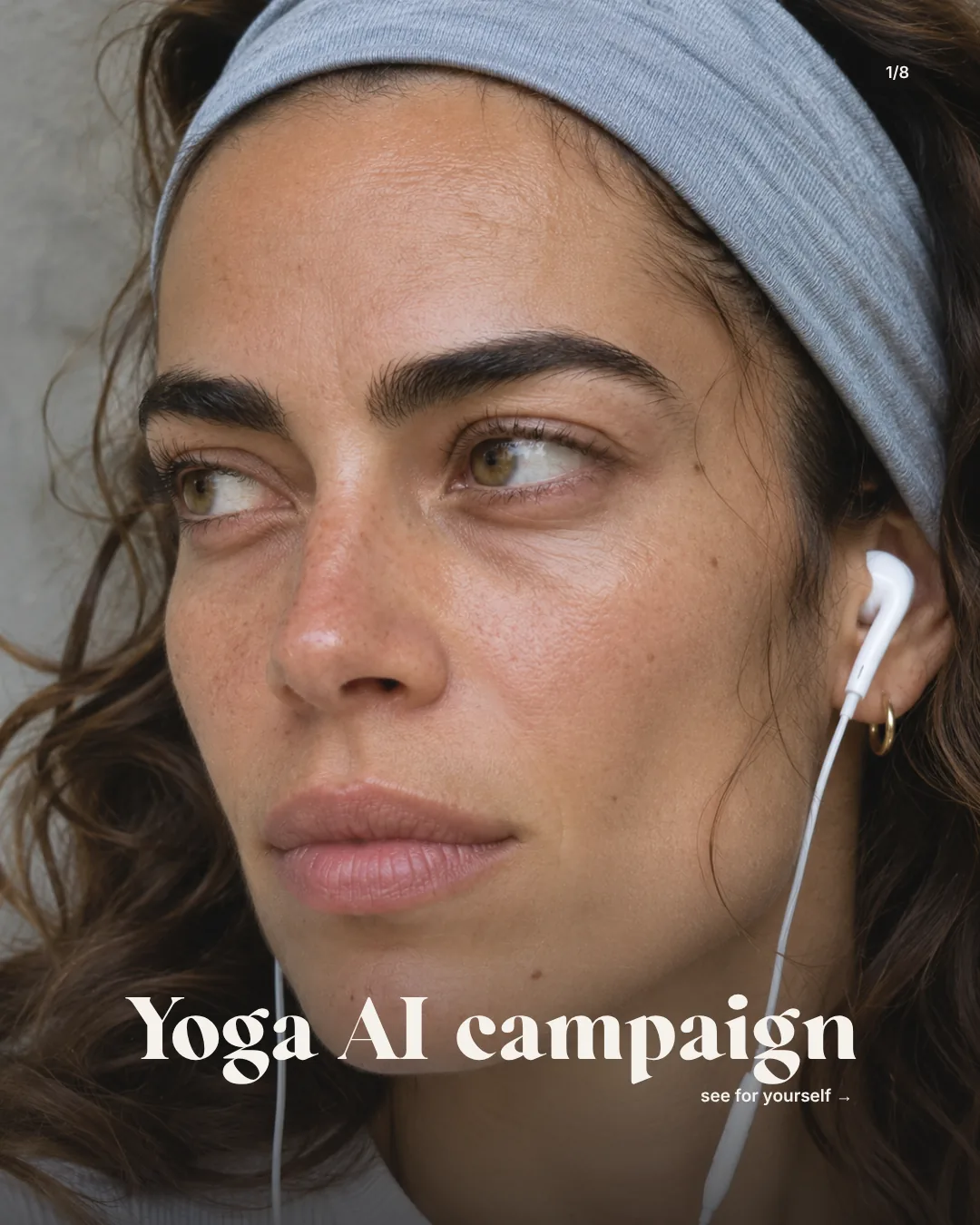
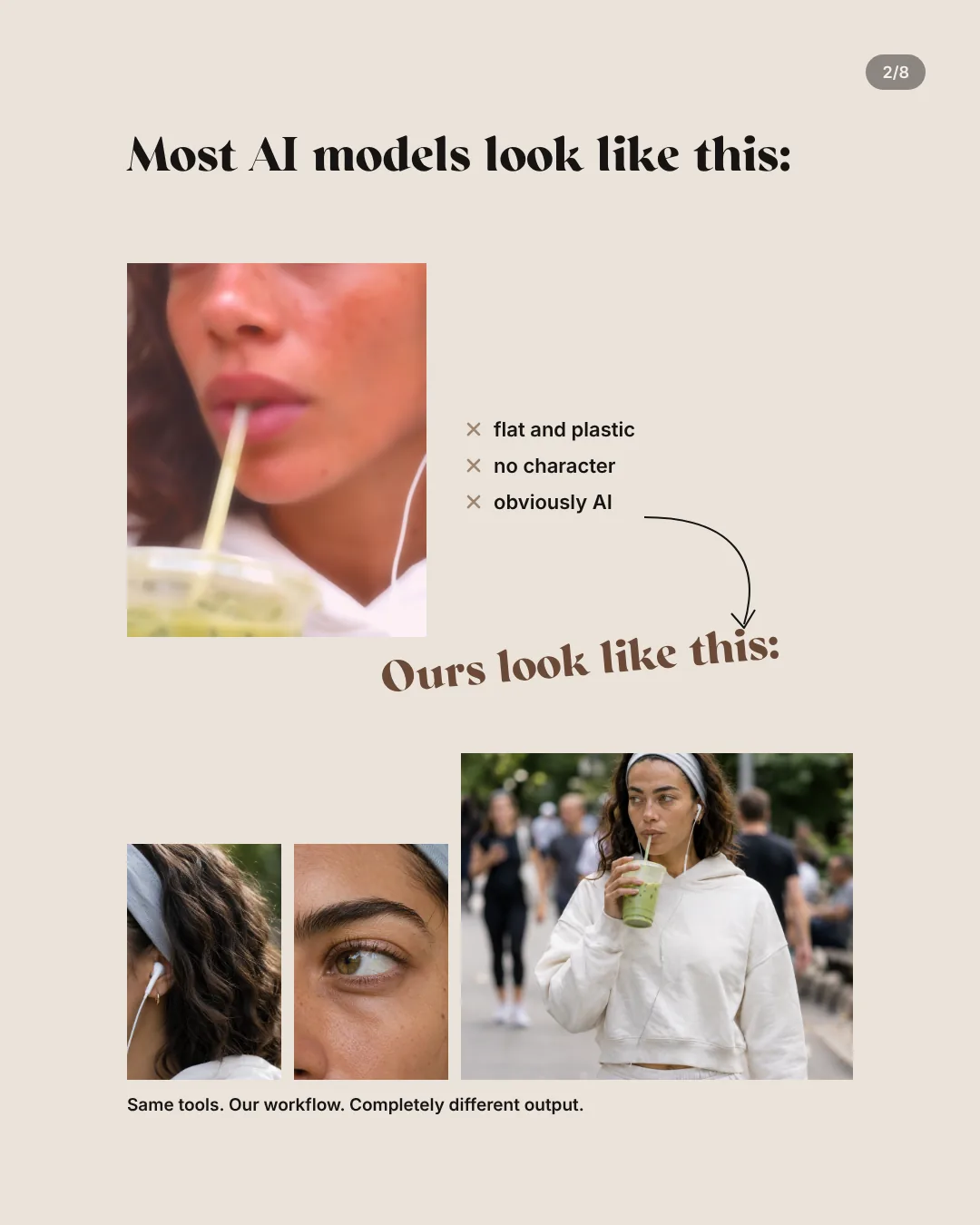
Many AI models look the same: smooth, glossy, without character. The eye notices immediately, even if you cannot name it. So we deliberately go the other way. Pores, freckles and baby hairs stay visible. Light comes through a window or from the street, not out of nowhere. And small imperfections such as slightly off framing make an image more human. Read more about our approach to lifestyle images in the guide to the AI photoshoot.
When real people belong in the picture
An AI model does not replace real people where trust is at stake. If you show yourself, your team, your customers or testimonials, you need real photographs. The same applies to images that have to prove something, such as how a garment fits or what a treatment result looks like. An AI model is a character for your brand's visual world, not a substitute for the people behind it.
Staying honest: labelling and expectations
We are not lawyers, and rules on labelling are evolving quickly. A few principles always help: never present an AI model as a real person with a real story. Do not let it testify to product effects. Label generated images wherever they could be taken as real. And read the terms of the tools you use. If in doubt, professional advice is worth it. More on rights and labelling in our guide to AI images for business.
How we develop an AI model for your brand
- Getting to know you: where the model will appear and which mood it should carry.
- Character: look, style and features that fit your audience and your branding.
- Test images: a first set in different situations shows whether the face works.
- Campaign: with the chosen model we create images for feed, website and campaigns.
- Continuity: for new campaigns we keep the same features so the face stays.
Would you like your own AI model? Our page on AI imagery and AI video shows how we work. And the guide to spec ads with AI shows how we develop whole campaigns for brands.