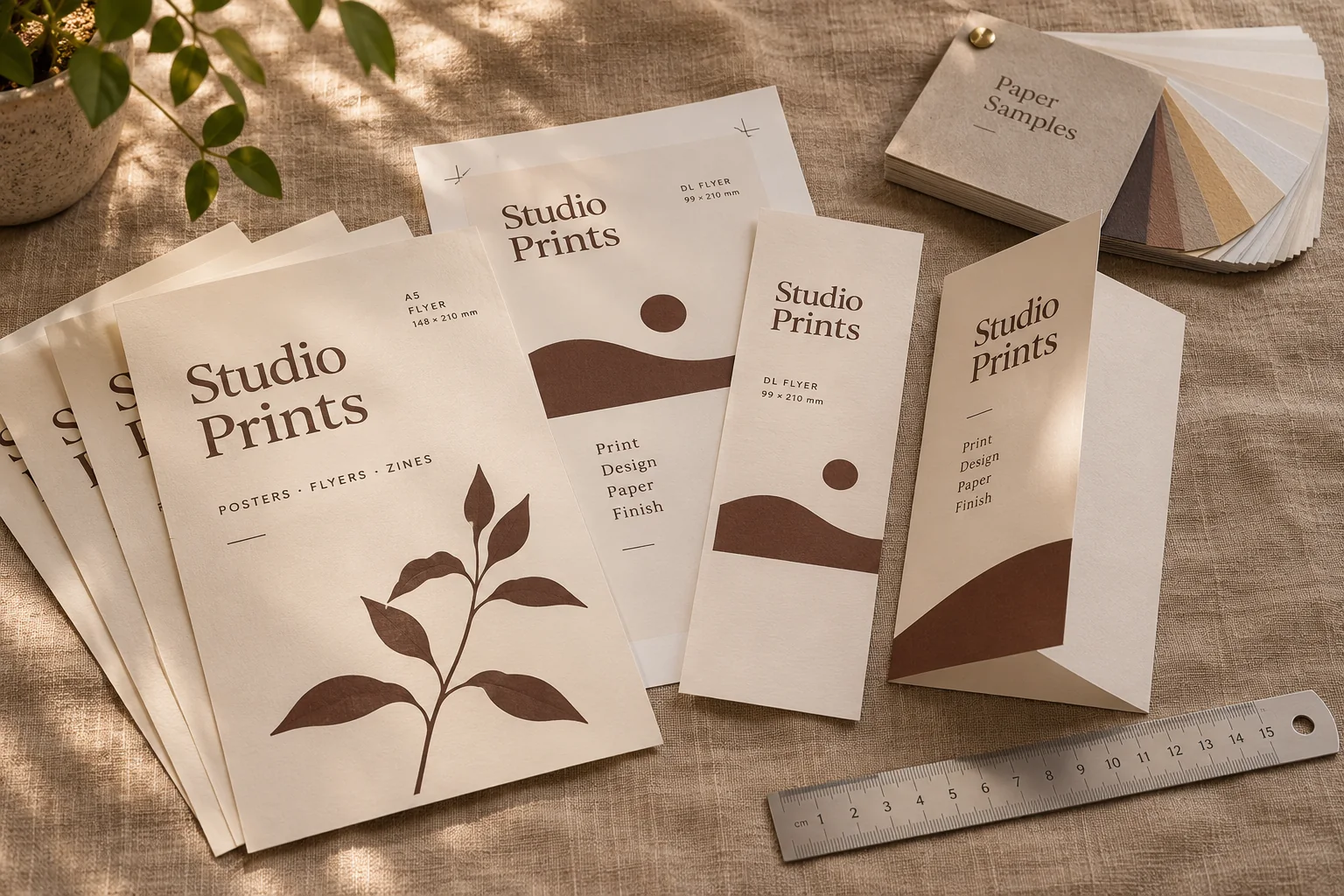
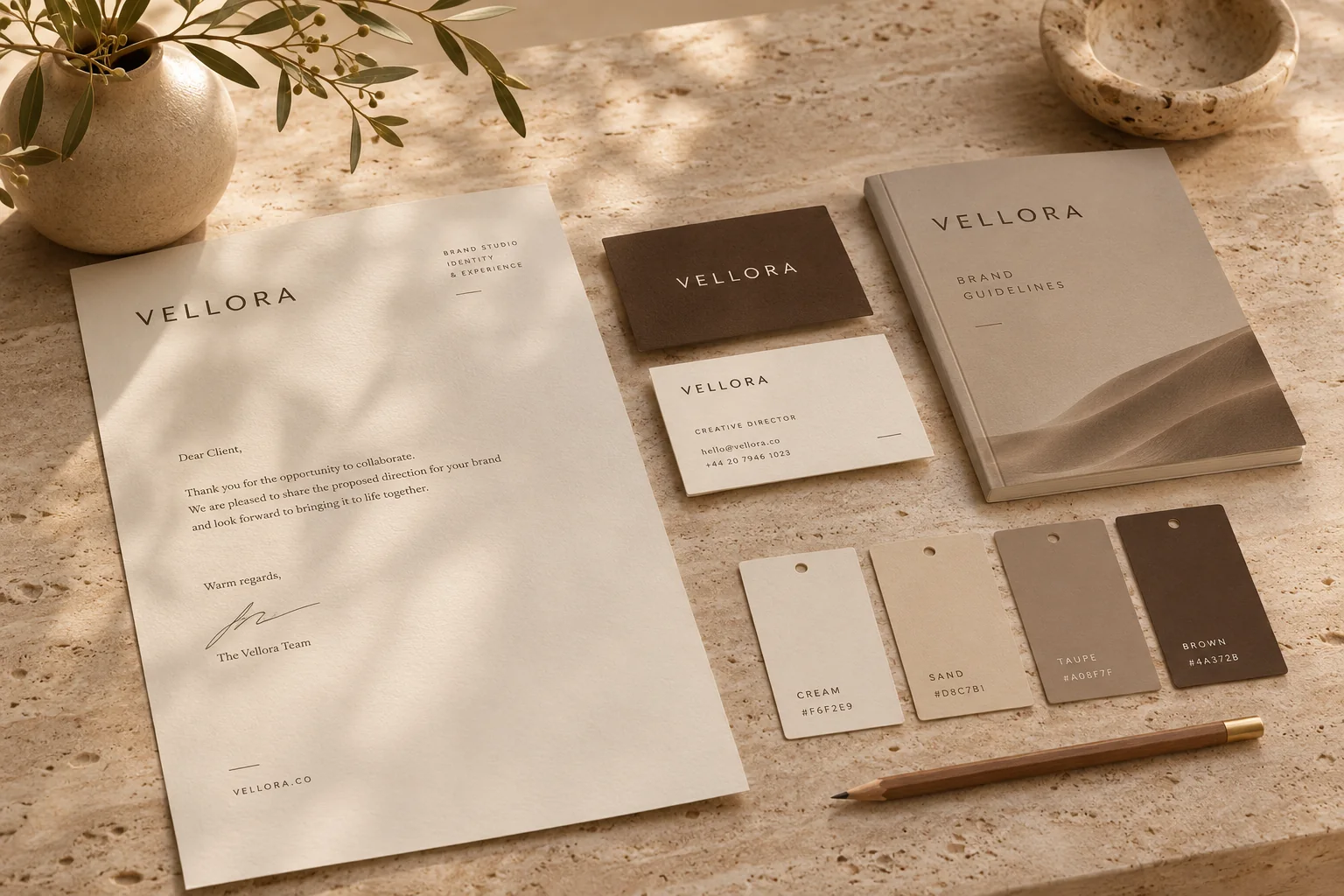
A business card is small, but it stays in a hand, a wallet or on a desk. Here is how to plan one so it suits your brand and prints cleanly.
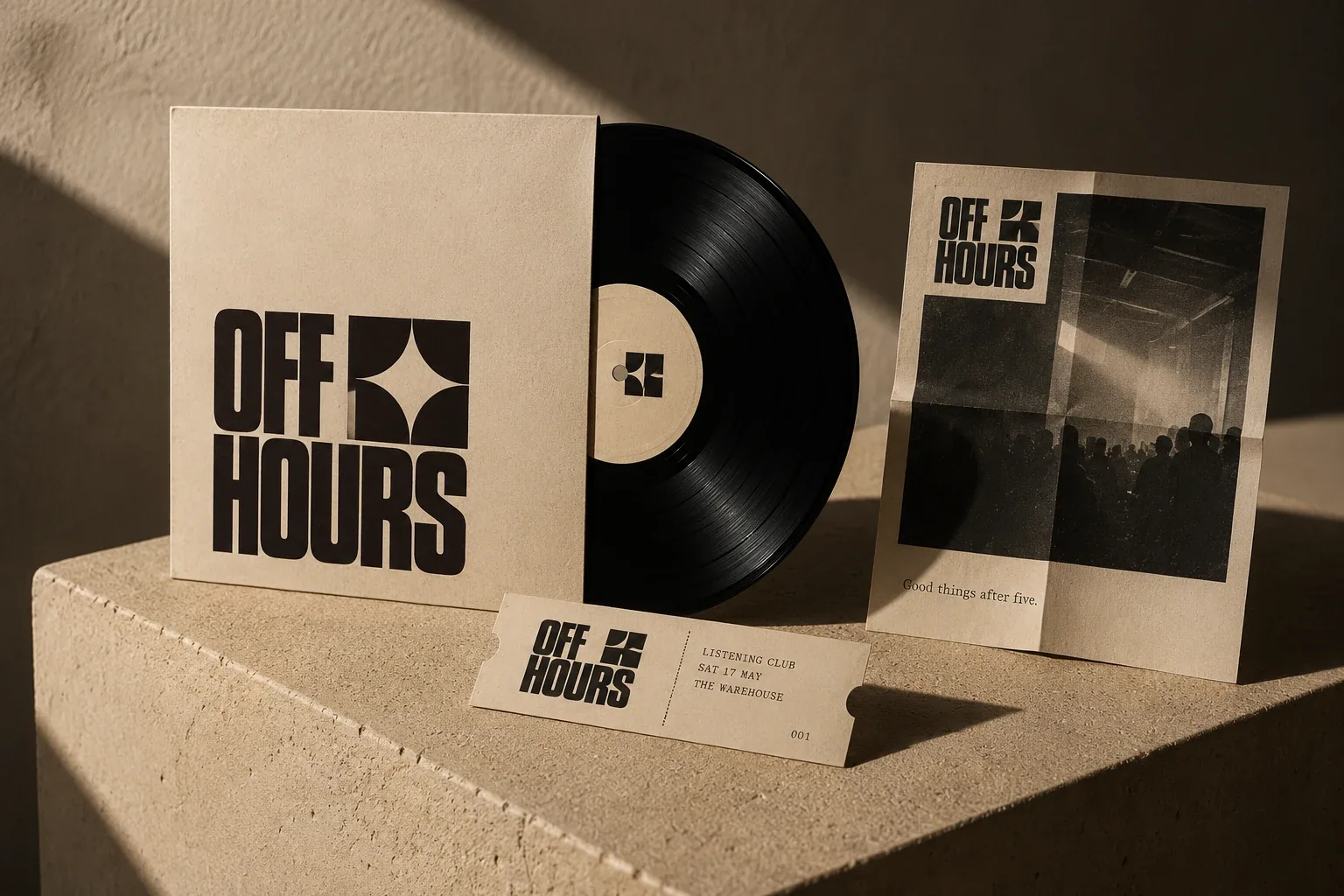
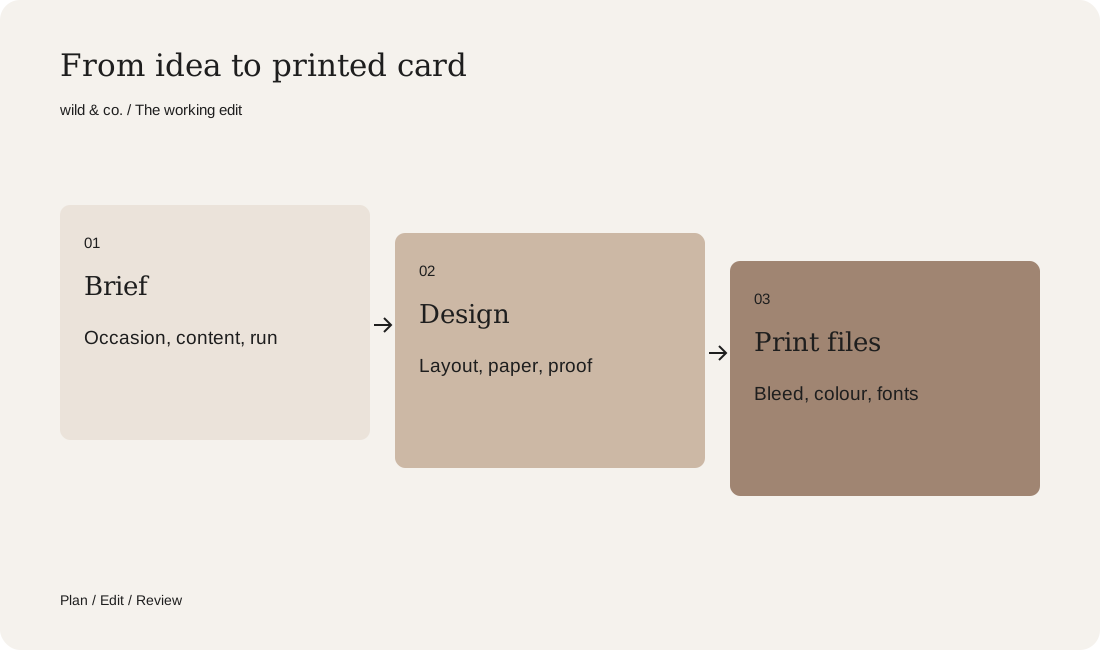
A good business card shows little, but the right things: name, role, one way to get in touch and your website. Settle content, format and paper before design, use your corporate design and have the print files set up with bleed, colour mode and fonts.
You might think business cards are a thing of the past. Yet they are still handed over at trade fairs, after meetings and across the shop counter, and that is exactly where they shape a first impression. A card that feels good and looks unmistakably like you is more likely to be kept than one that resembles a print-shop template. That takes no special effects, just a few clear decisions.
What is your business card for?
Start with the moment you hand it over. After a first meeting it should remind people of you and make contact easy. In a shop it can double as an appointment card, voucher or loyalty card. At a trade fair, a QR code that leads straight to your offer helps. The clearer the occasion, the easier it is to decide what goes on the card and what can go.
What belongs on a business card?
Less is almost always better here. Most cards need these details:
- Your logo or wordmark, easy to read but not the largest element.
- Your name and, if it helps, your role.
- One or two ways to get in touch: email and, if you want to share it, a phone number.
- Your website, short and without the ‘https://’.
- An address, if clients come to you.
- Optionally a QR code or a social profile, if there is genuinely something to see there.
The back is ideal for a single line, a pattern from your corporate design or a recognisable colour. It does not need to carry more information.
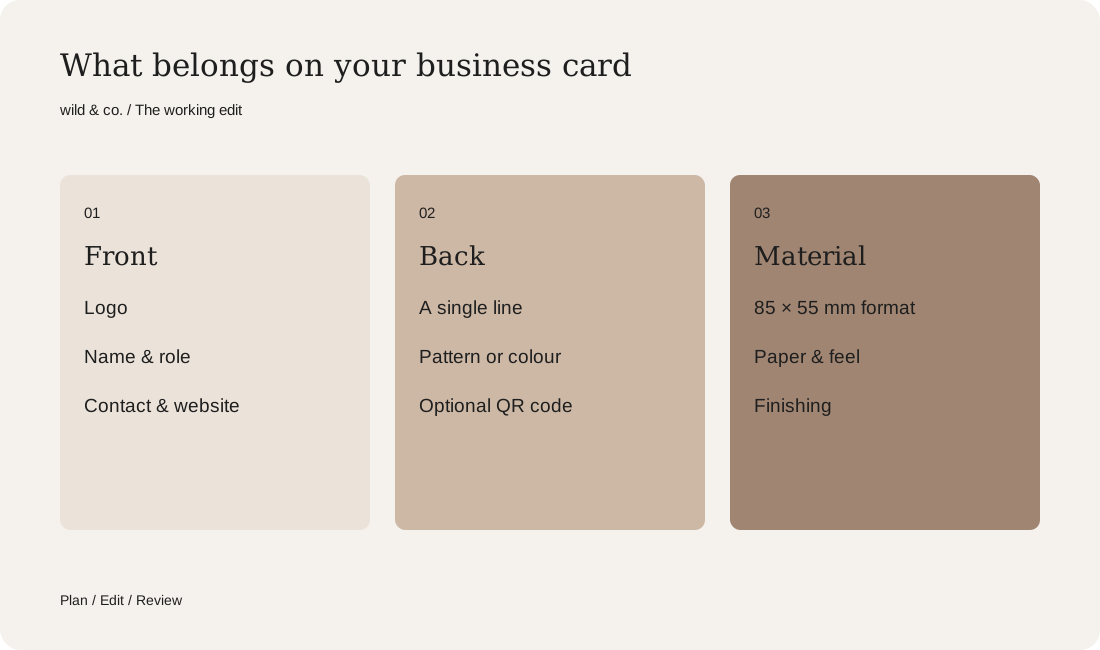
Your business card brief
Design: your corporate design in miniature
A business card is part of your presence, not a separate project. Use the colours, typefaces and elements from your corporate design and leave enough space around the edges. Small type needs contrast: light grey on beige looks elegant on screen and is barely readable in print. Always check sizes on a full-size proof. If your visual identity is not settled yet, start with our guide to having a corporate design created.
Format, paper and finishing
In Switzerland, 85 × 55 mm is the usual size; it fits card holders and wallets. Square or slimmer cards stand out but do not fit everywhere. With paper, the feel in the hand decides: heavier stock feels more valuable, uncoated paper feels natural and is easy to write on, coated paper shows colours and images more vividly. Finishes such as embossing, foil or coloured edges can make a big difference, but they should suit your brand rather than simply look expensive. Ask for paper samples or order a proof before printing a large run.
Setting up print files
Many print errors start in the file, not on the press. Agree the requirements with your printer beforehand. These points almost always apply:
- Bleed all round, so no white edges remain after trimming.
- A safety margin for text and logo, so nothing gets cut off.
- The right colour mode and, if needed, spot colours for your logo.
- Embedded fonts or text converted to outlines.
- Sufficient image resolution and a print-ready PDF to the printer's specification.
- A separate layer for finishes such as embossing or foil.
Our guide to having a flyer designed shows how this works for larger printed pieces.
Business cards for a whole team
As soon as several people need cards, a template in which only name, role and contact details change pays off. Decide how long names wrap, whether roles are in German or English and who orders new cards. That way, cards for new team members match the rest without being redesigned every time.
Design it yourself or have it designed?
A print-shop template gets you a card quickly, but it often looks like many others. Having it designed is worth it when the card should match your presence, when you want a special finish or when a whole team needs consistent cards. Use the brief above to note what belongs on your card. At wild & co. in Zurich we design business cards and other printed pieces as part of our graphic design work, in line with your corporate design.