What does it cost to have a website built? Learn what drives the price, which running costs follow and how to compare proposals fairly.
A website's price follows content, design and features. Clarify pages, copy, images, CMS, languages and running costs, then send every studio the same brief. That makes proposals comparable.
You want a website built and your first question is what it will cost. Fair enough. Ask three studios, though, and you may get three proposals so far apart that you start doubting all of them. Usually that is not because someone is inventing prices. Each studio has simply quoted for a different job. A website is not an off-the-shelf product; it is a set of decisions. Once you know what those decisions are, you can make sense of the numbers and compare proposals fairly.
What drives the cost of a website
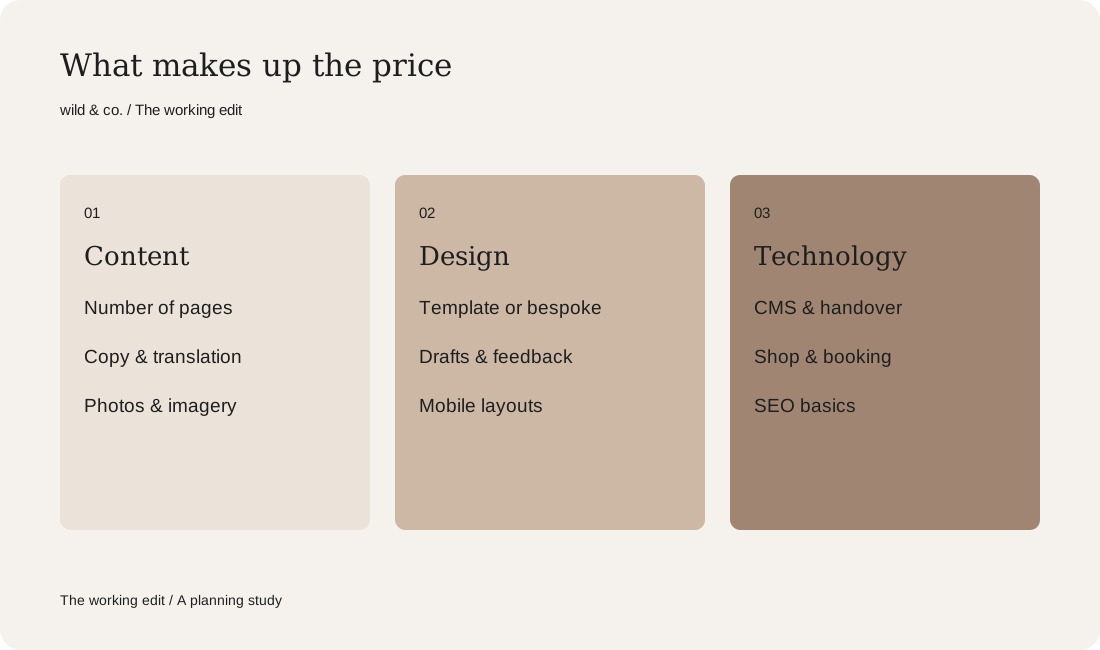
Whether it is a small site for your practice or a presence for a business with several locations, the price comes down to content, design and technology. How many pages do you need? Who writes the copy and where do the images come from? Is the design created for you, or is an existing template adapted? And what should the site actually do beyond looking good? Each answer shifts the effort. So rather than a price list, this guide covers the things that genuinely move the price.
Pages, copy and photography: content shapes the effort
The number of pages is the obvious factor, but not the only one. A home page, services, about and contact are quickly listed. It grows when every service gets its own page or a blog is planned. Just as important is who supplies the content. Arriving with finished copy is a different starting point from asking the studio to write or rework it. The same goes for images: your own photos, a shoot, stock or AI imagery. People often underestimate how long approvals take. Missing copy is one of the most common reasons projects stall.
Your website plan
Bespoke web design or a template?
A good template can be perfectly adequate for a first site. It is quicker to build and many questions are already answered. On the other hand, you may look like others, and special requests do not always fit the grid. Bespoke design is developed for your brand: layout, typography, imagery and details are tailored to you. That takes more concept work, drafts and discussion. Ask yourself honestly whether the site mainly needs to inform or whether it is central to your brand. Both are valid. What matters is that the proposal states clearly which route it covers.
Features: CMS, multiple languages, shop and booking
This is where things get technical and where many differences hide. If you want to update text and images yourself, you need a content management system and a short introduction to it. A second language means more than translation; it doubles the upkeep and needs a sound technical set-up. A shop or online booking brings payment options, legal pages and testing. SEO basics such as page titles, descriptions, structure and loading speed belong in the plan from the start.
- CMS: which content can you edit later, and is there a handover session?
- Languages: how many, and who translates and maintains the copy?
- Shop or booking: how many products or services, which payment methods?
- Forms and integrations: newsletter, calendar, CRM or other tools?
- SEO basics: titles, descriptions, structure, speed and redirects from old pages.
- Legal: imprint and privacy notice. Check the specifics with a qualified adviser.
Running costs: hosting, domain, licences and maintenance
The bill does not end at launch. Domain and hosting are charged yearly or monthly. Website builders, premium themes, plugins, fonts and booking tools often carry their own subscriptions. Then there are updates, security, backups and small changes. Ask which of these costs appear in the proposal and which you pay directly to providers, and in whose name the domain and accounts are registered. Ideally, yours.
Getting comparable website proposals
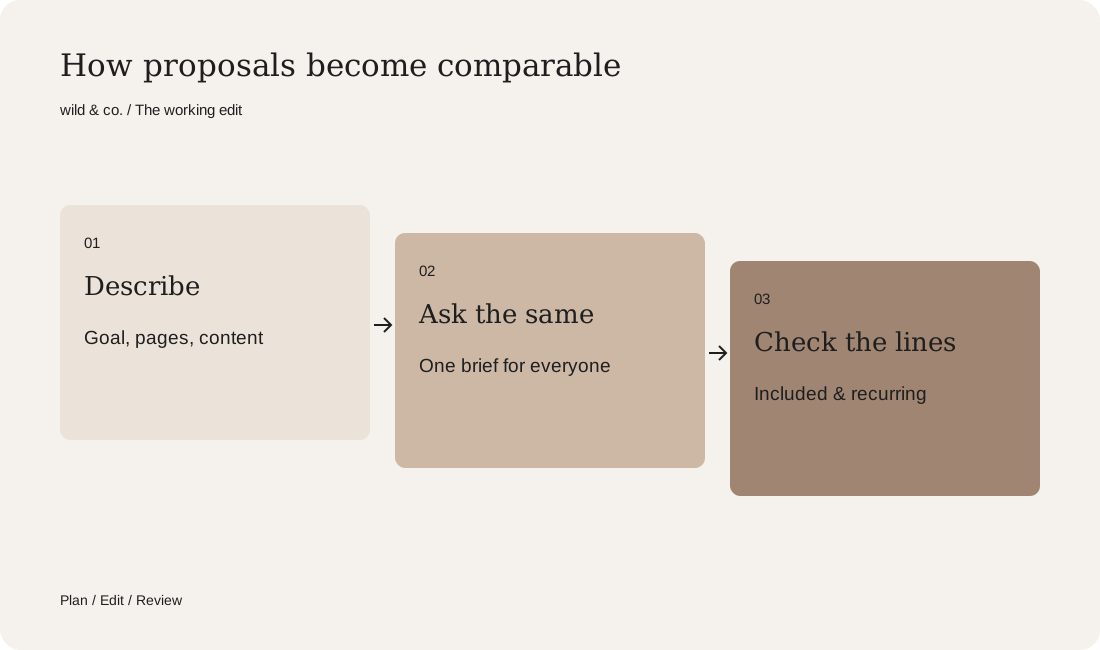
Comparable proposals start with a comparable request. Send every studio the same short brief. What is the site for? Roughly which pages do you need? What do you already have in copy, photos and logo? Which features are essential and which would be nice? When should it go live? Do mention a budget range; it helps everyone prioritise rather than weakening your position. As an illustrative example, proposal A covers five pages using your copy, while proposal B covers the same pages plus copywriting and a shoot. The higher total then tells you little about price and a lot about scope.
Questions to ask before you decide
Go through each proposal line by line and note what remains unclear. If something is not listed, assume it is not included. These questions help:
- How many feedback rounds are included, and what counts as additional work?
- Who produces copy and images, and what do I need to supply by when?
- Which platform does the site run on, and could I move it later?
- What happens after launch: maintenance, support and changes?
- What running costs should I expect, and who owns the domain and logins?
At wild & co. in Zürich, this is what we clarify before writing any proposal: the goal, the scope and what genuinely needs to be ready for launch. Use the plan below to note the same for your project. Take it into every conversation, with us or anyone else, and you will receive proposals you can actually compare.