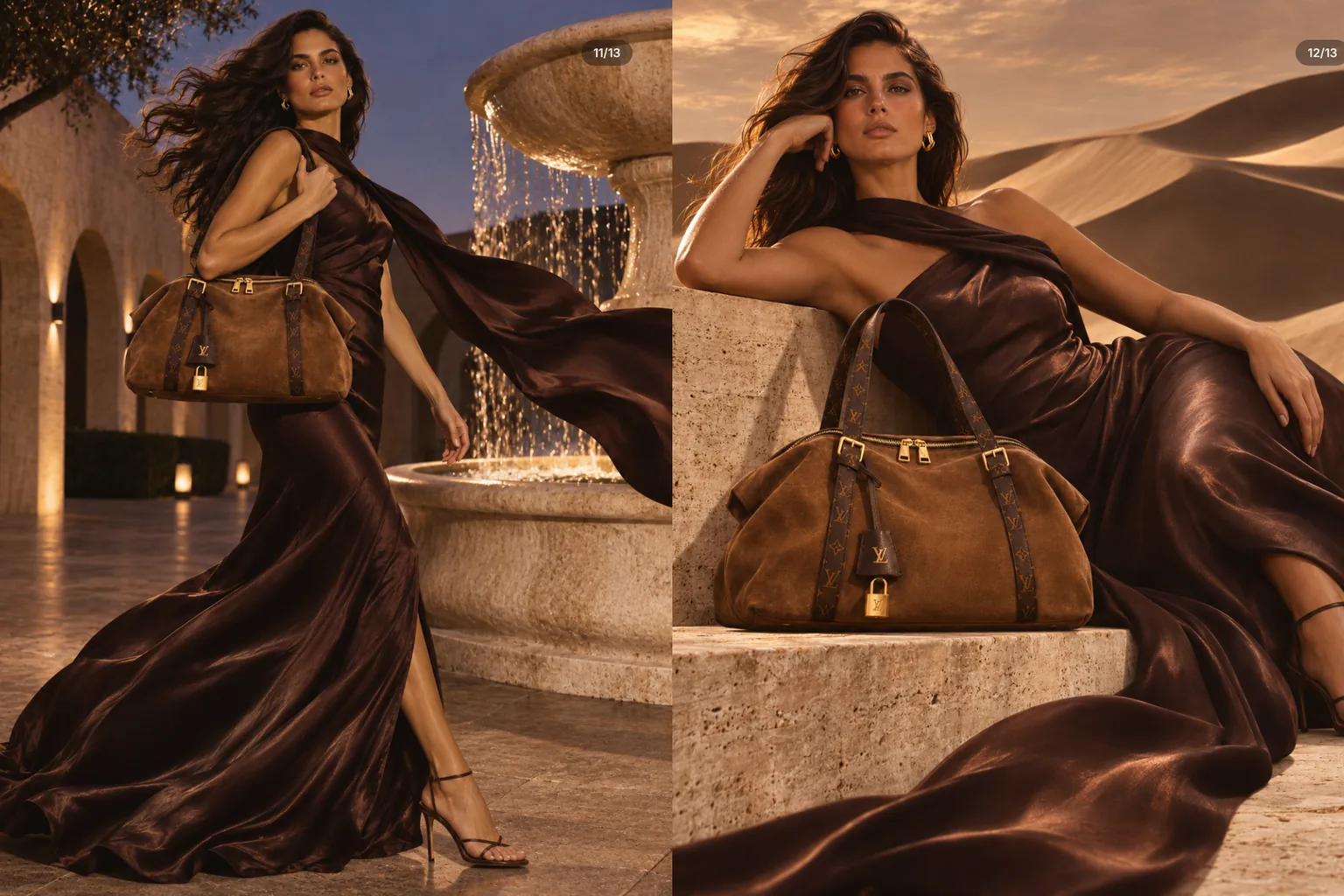
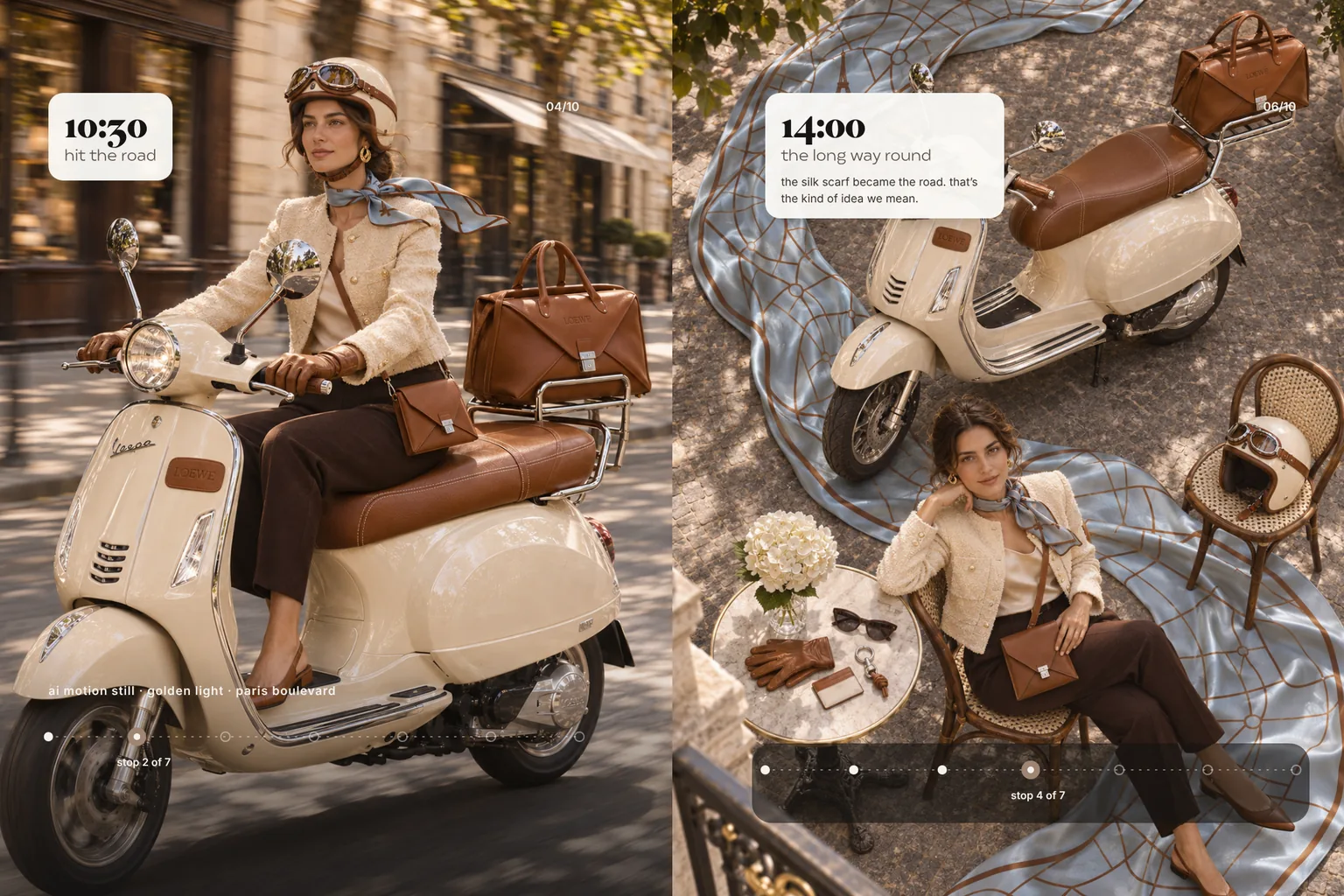
Some collaborations feel as if both brands had been waiting for each other. Others look like two logos on one sticker. Here is why, how to test a brand pairing, and how the idea turns into images, shown with two studies.
Co-branding works when two brands share a value, create a noticeable tension and meet as equals. A bridge of material, colour or place connects them in the frame, and a narrative device such as a night or a day gives each its moment. AI test images let you show the concept before anyone negotiates.
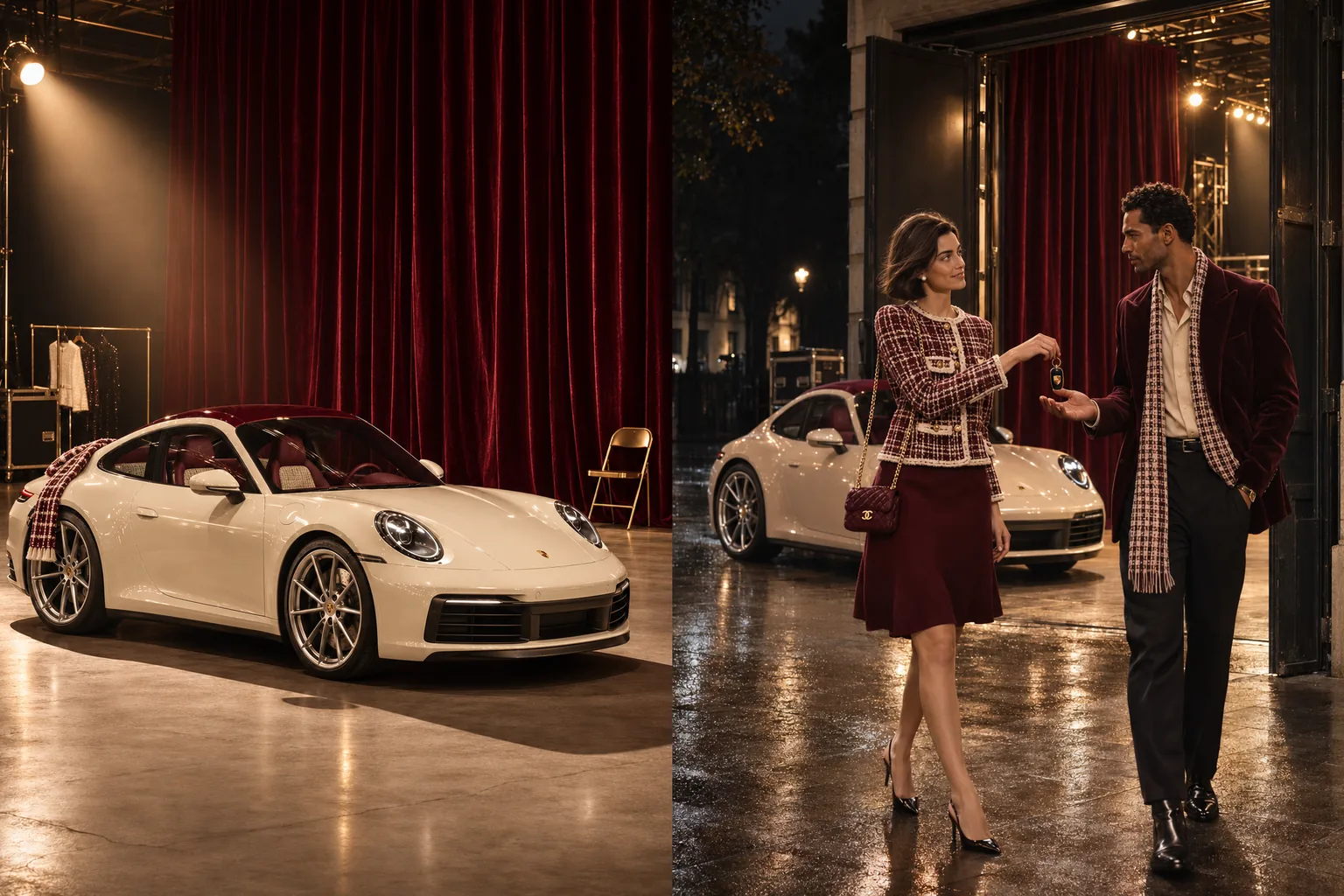
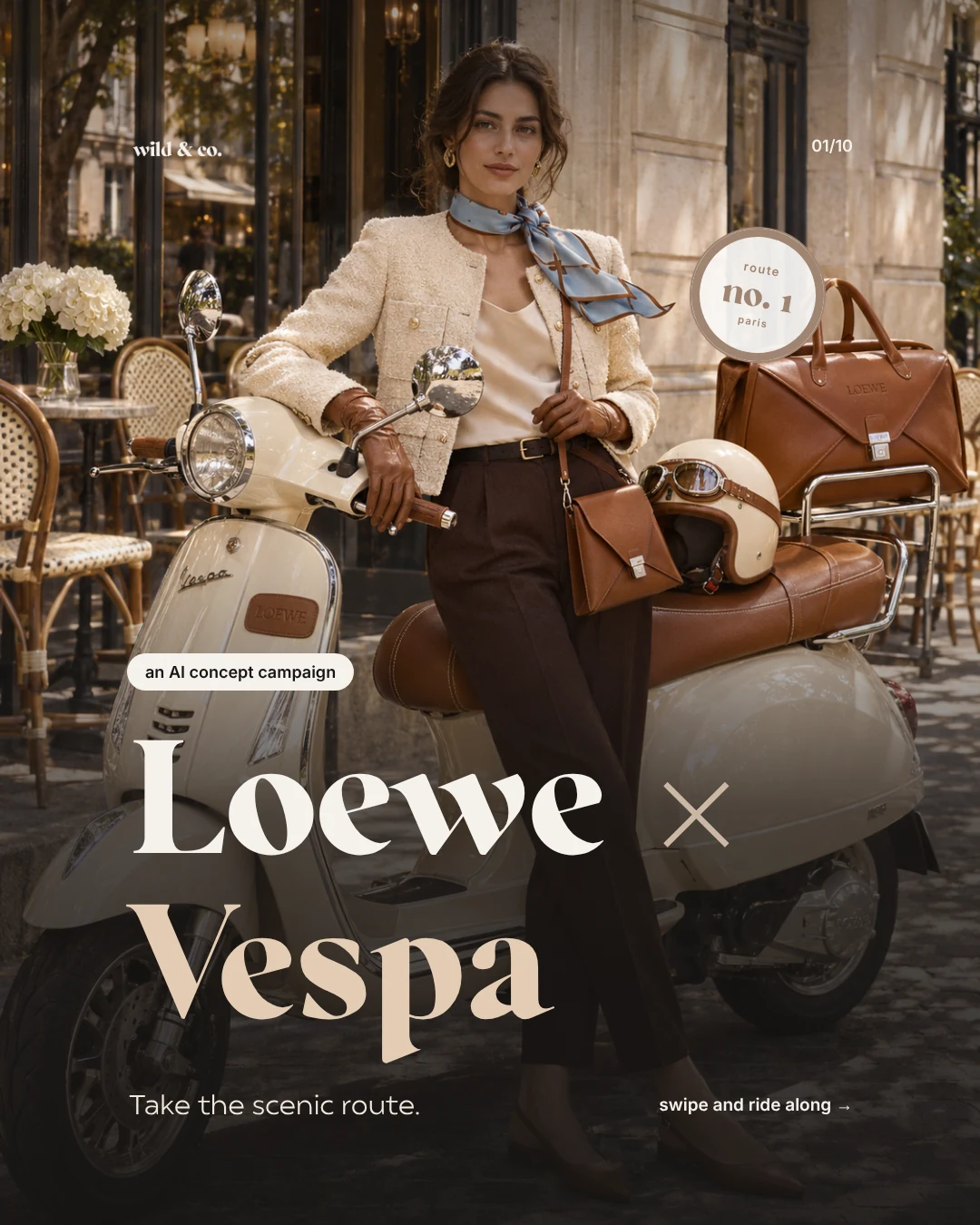
Fashion meets cars, trainers meet art, a café meets a skincare brand. Collaborations are everywhere, yet only a few stick. The good ones feel as if the two brands had always belonged together. We played through two collaborations with AI that do not exist: Chanel × Porsche and Loewe × Vespa. Both are unofficial concept studies by wild & co., not affiliated with or commissioned by the brands. Trademarks belong to their respective owners. Here in the journal we show the original images of the studies and explain why the pairs work and how to build a concept like this.
What co-branding is
In co-branding, two or more brands appear together. That might be a limited product, a capsule collection, a campaign, an event or a shared place such as a pop-up. Ideally each side brings something the other lacks: reach, credibility with a new audience, a craft, or simply a story neither could tell alone. This is not just for the big houses. A roastery and a bakery from the same neighbourhood, a yoga studio and a matcha bar, a designer and a hotel: the principles are the same.
Why a brand pairing works
You can often tell from the name alone whether a collaboration will carry. ‘A × B’ has to spark a small moment, an ‘of course’ or a curious ‘how would that work?’. These points help you test it:
- A shared value: both stand for craft, design or timelessness, for instance.
- A noticeable tension: soft and fast, fabric and lacquer, city and open road.
- Equal standing: if one side only borrows the other's reputation, people notice at once.
- A bridge in the frame: a material, a colour or a place that belongs to both.
- An audience that knows both, or would like to.
- A reason why this collaboration exists right now.
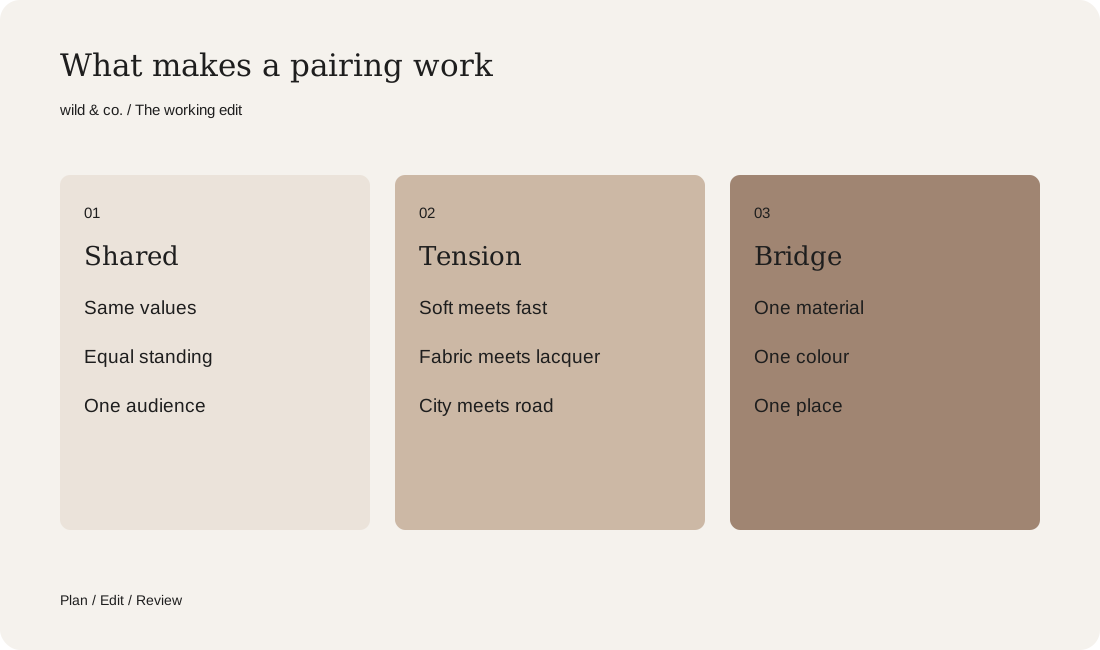
Your collaboration brief
Example 1: Chanel × Porsche, one night in three acts
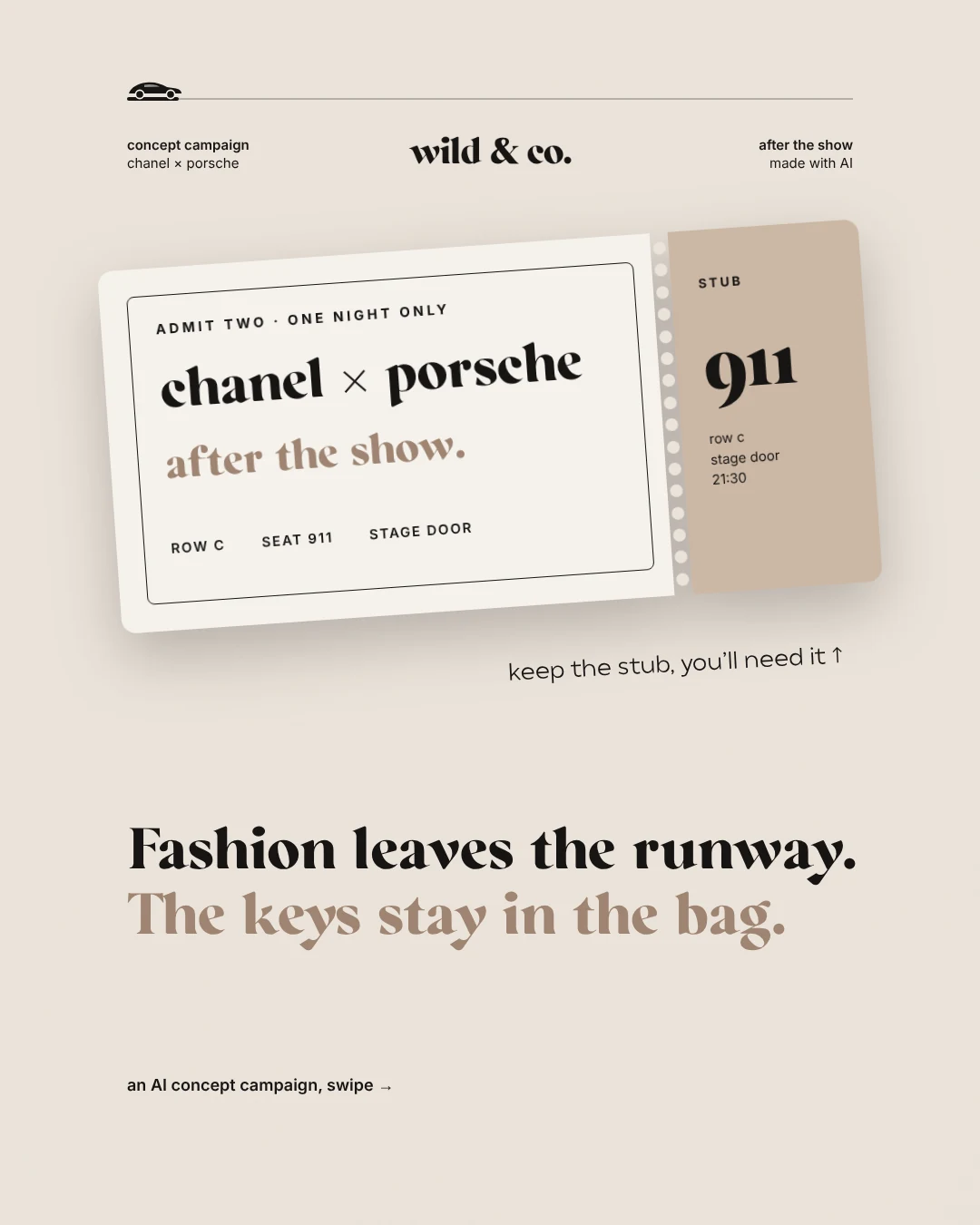
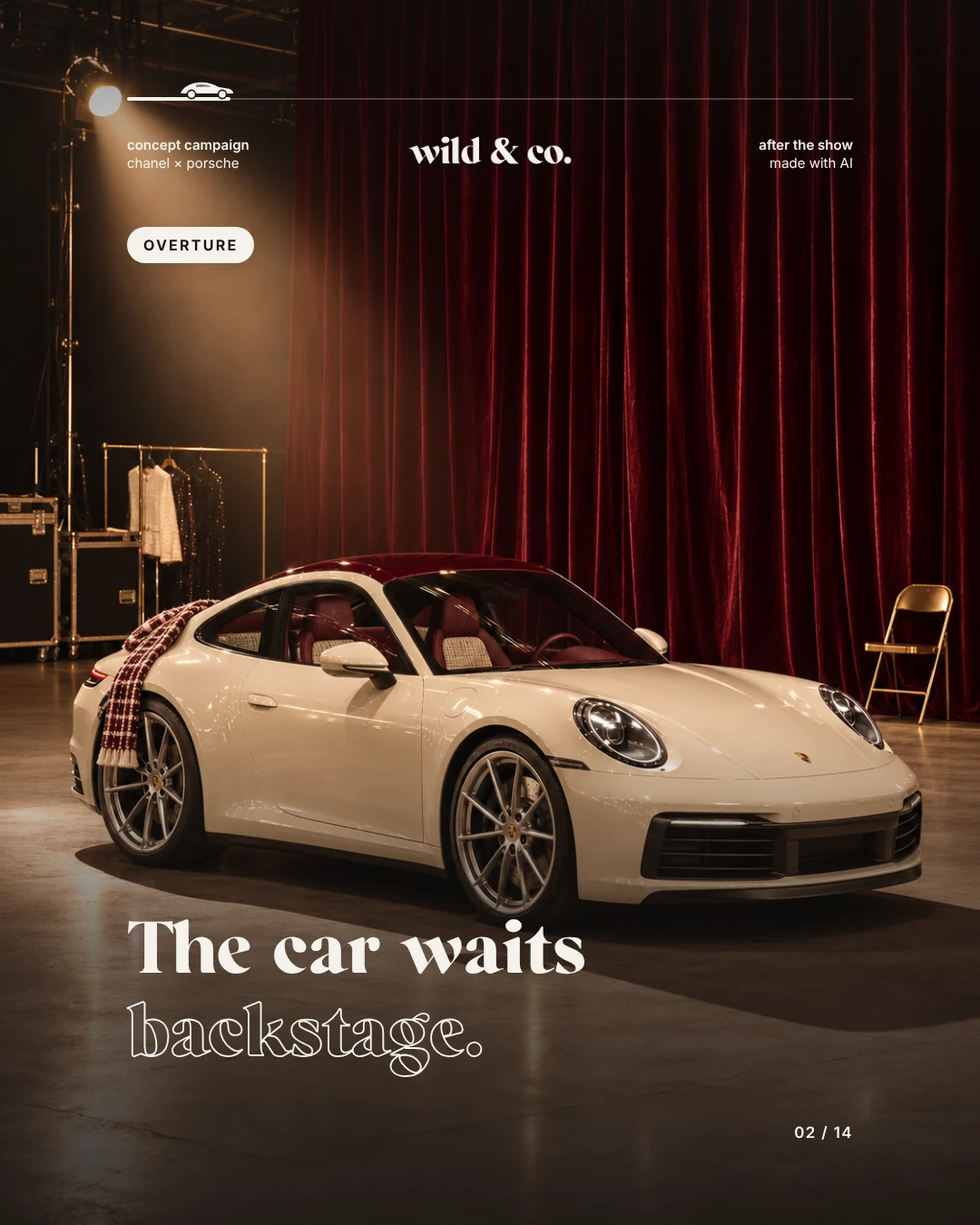
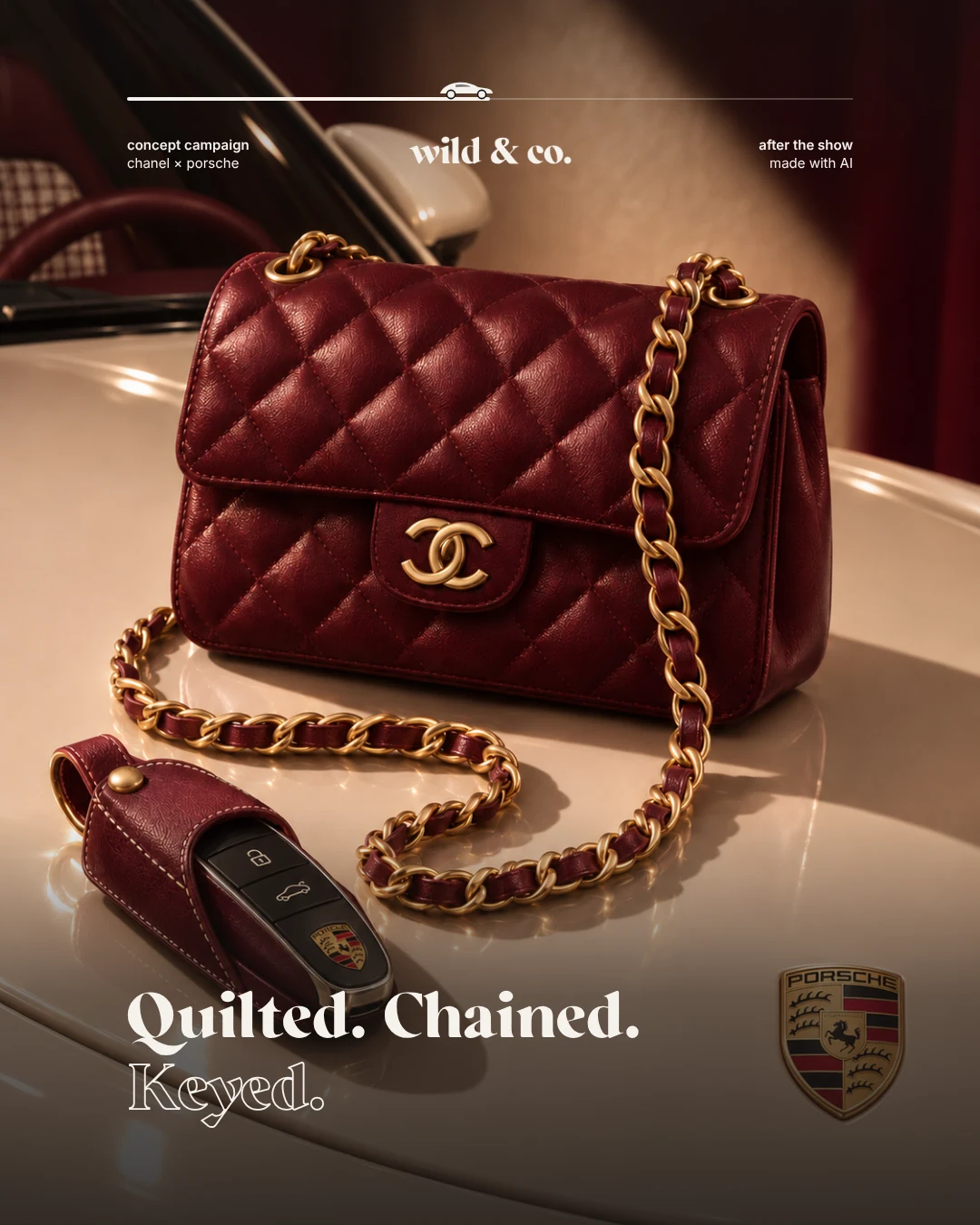
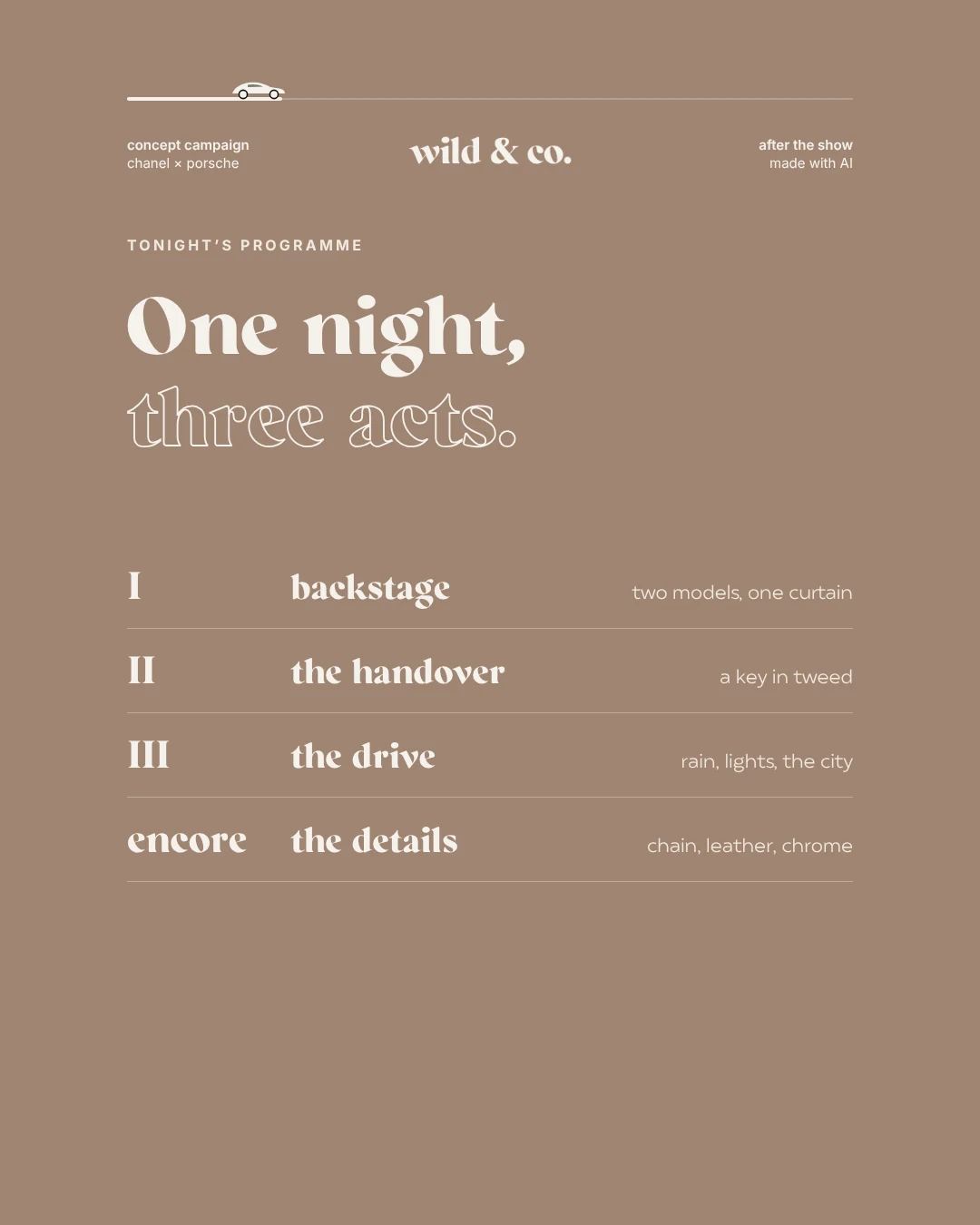
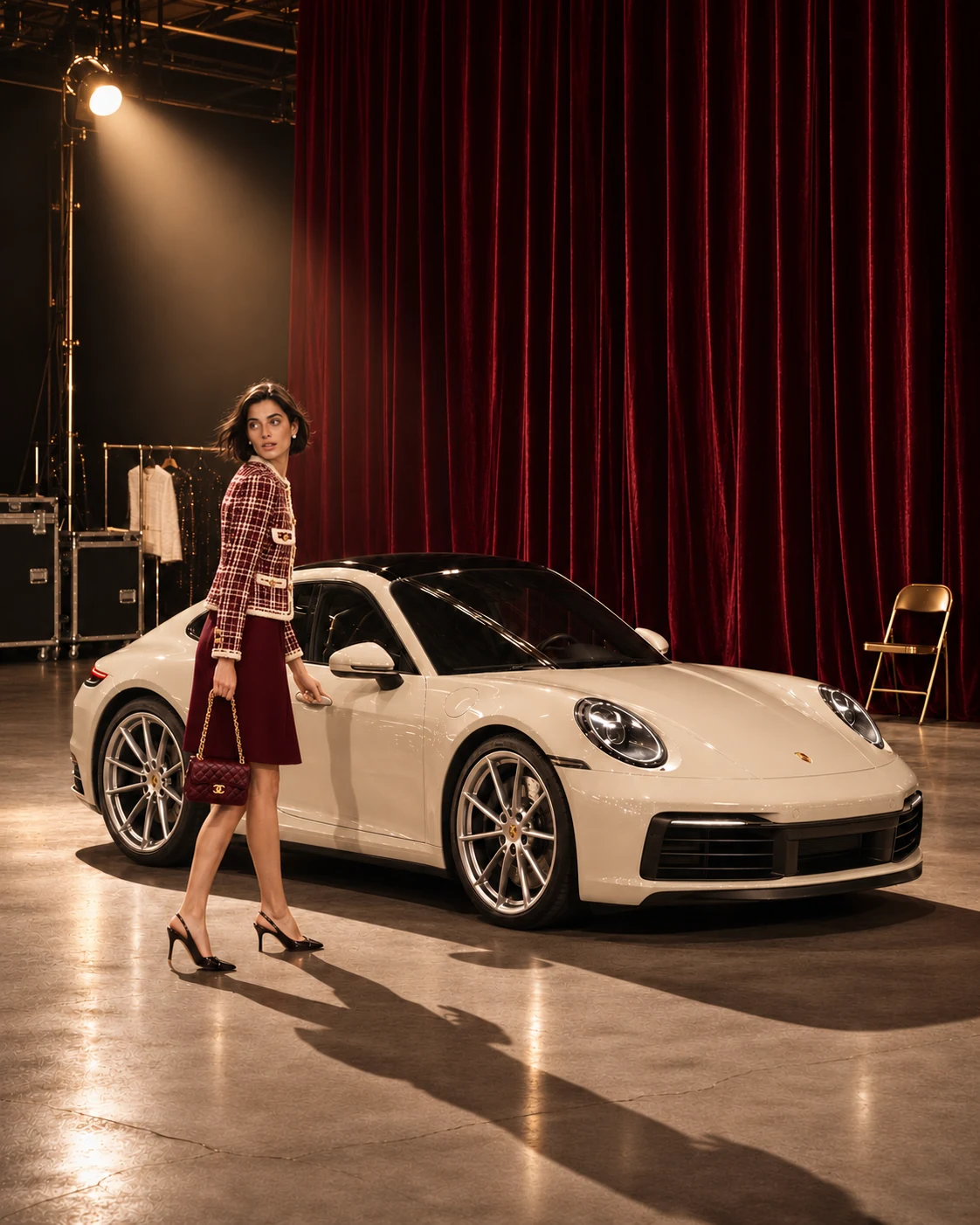
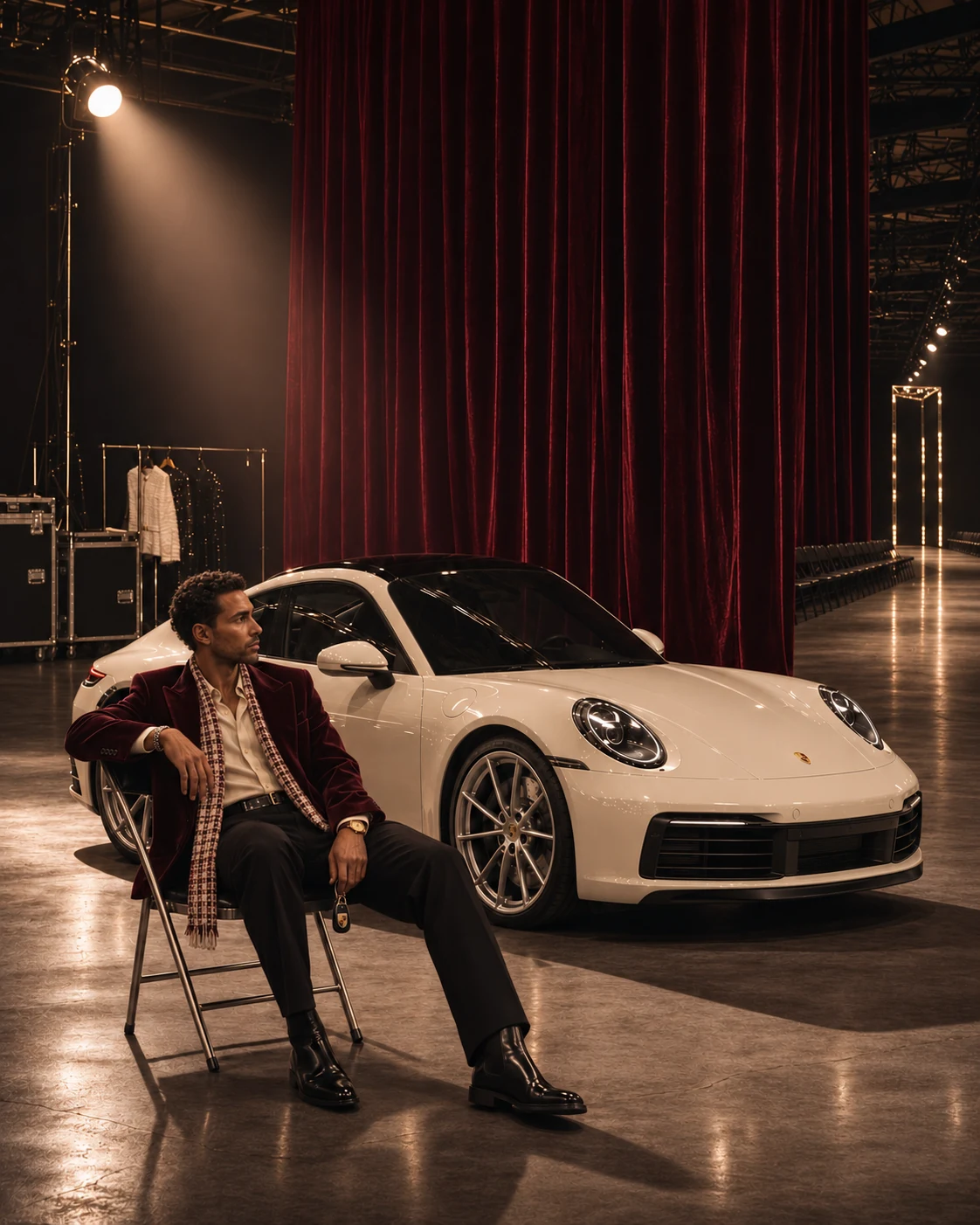
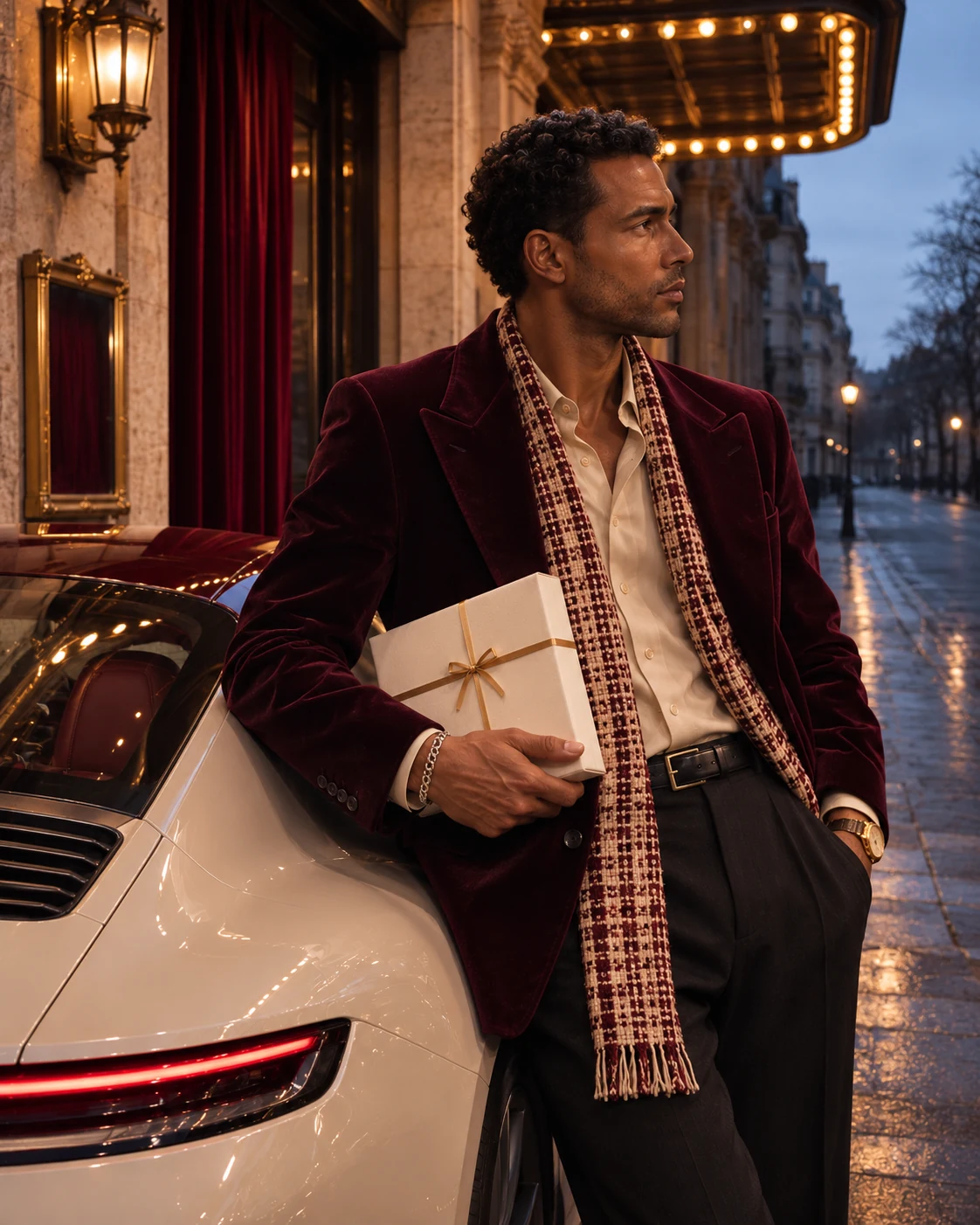
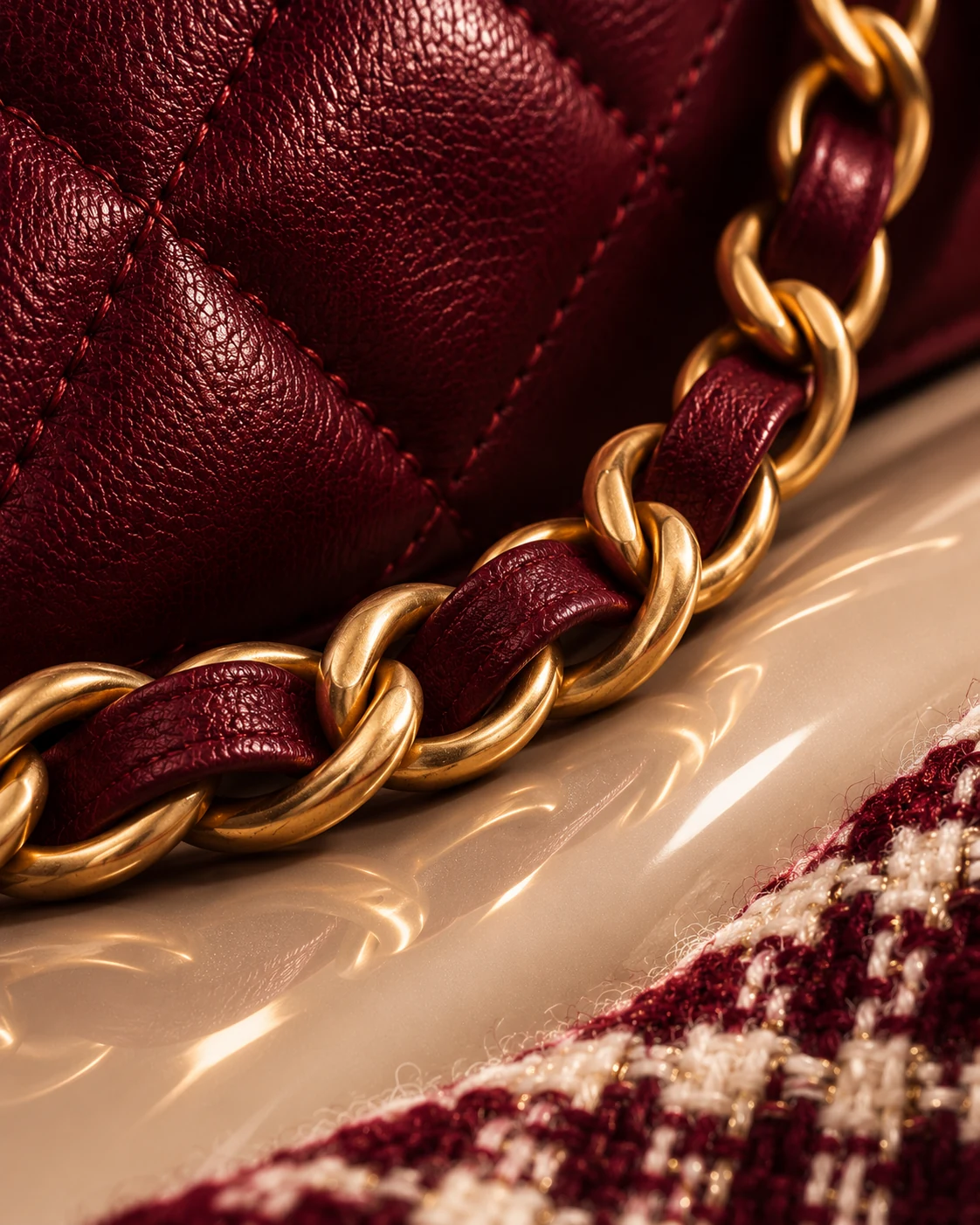
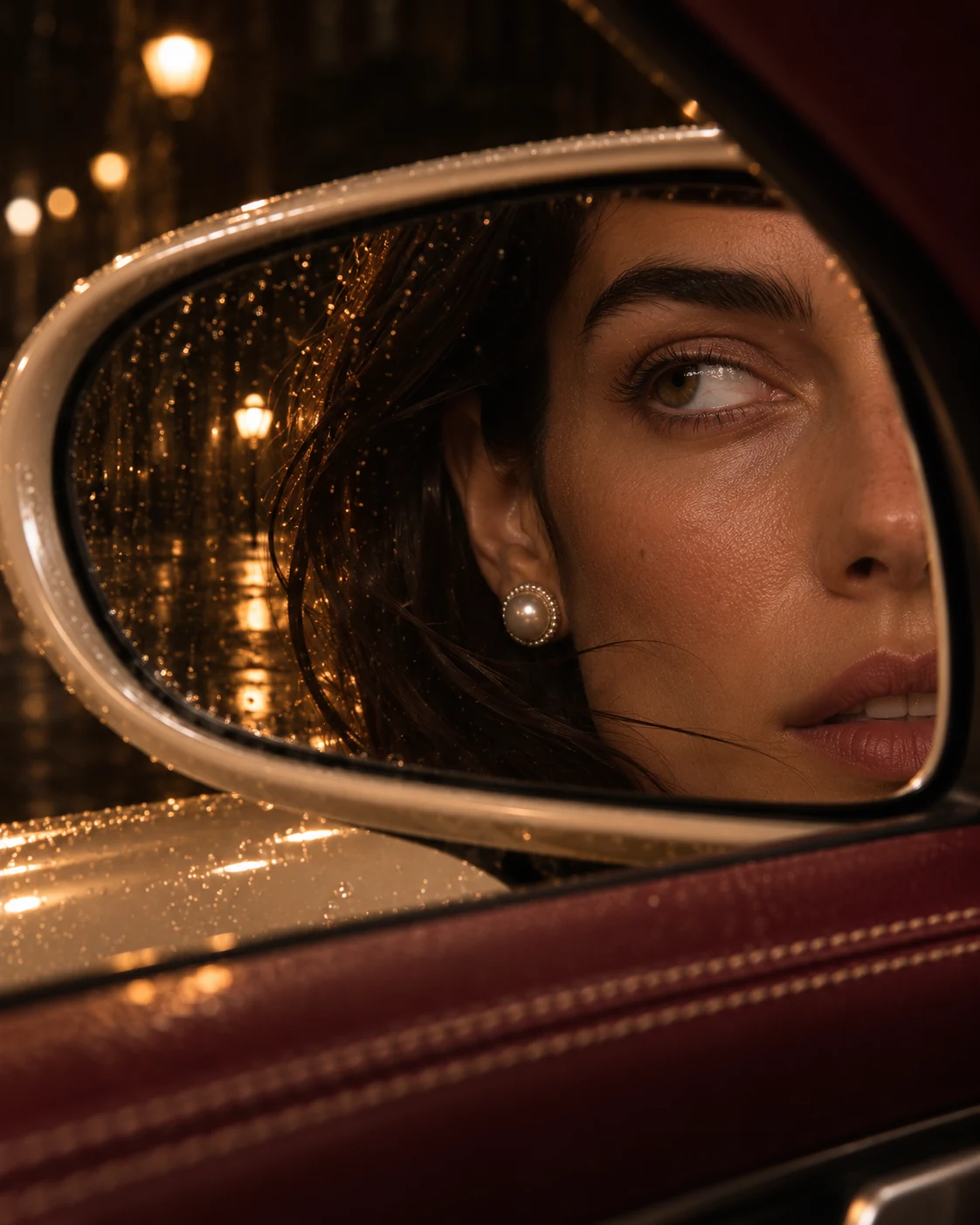
The idea starts with a question: what happens after the show? Our campaign carries the line ‘Fashion leaves the runway. The keys stay in the bag.’ and is structured like a theatre programme. In act one, a cream 911 waits behind the red velvet curtain: two models, one curtain. In act two, a key changes hands at the stage door. In act three, the drive heads into the city through rain and lights. The encore is all detail: chain, leather, chrome.
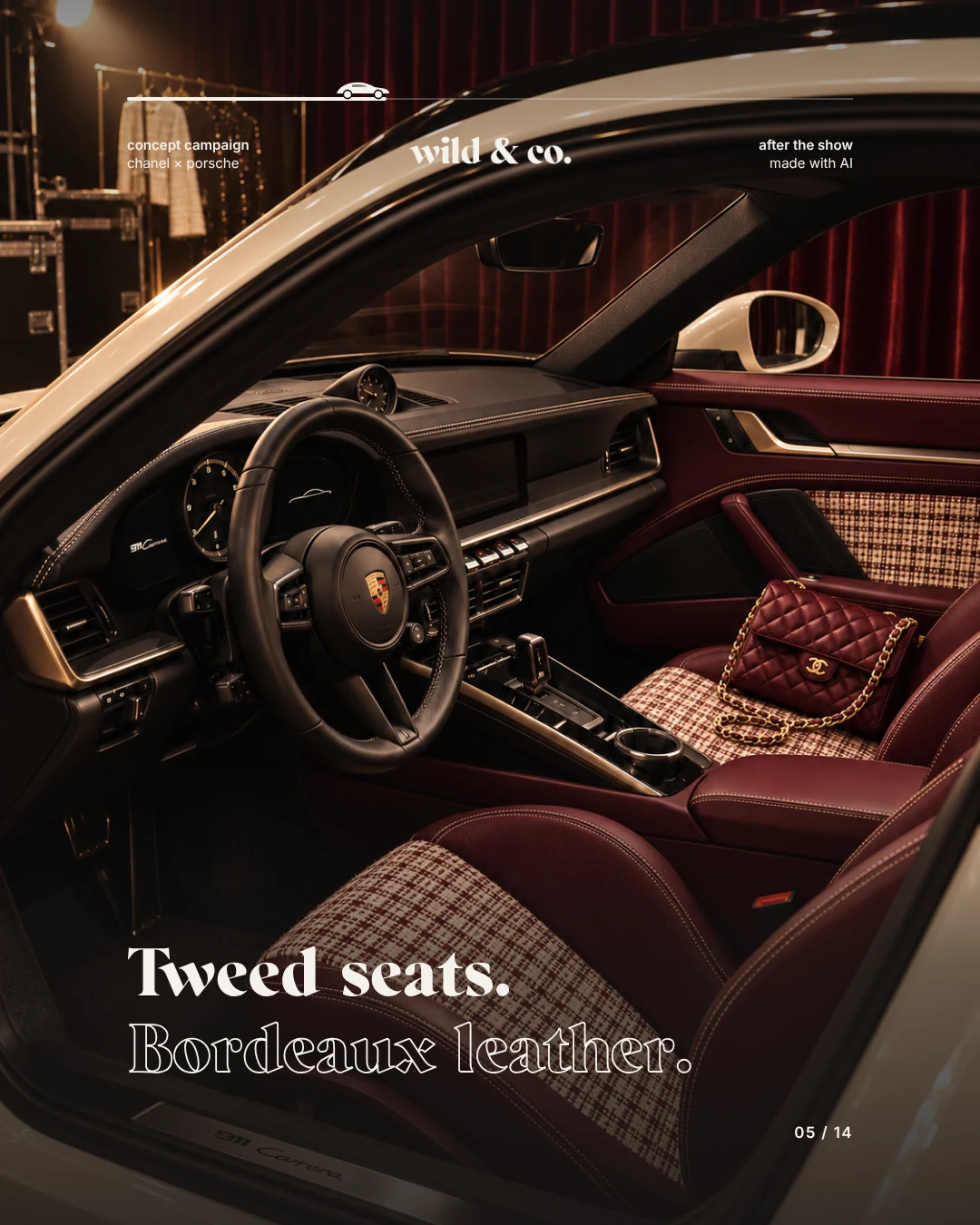
Why the pair works: both houses are icons with a clear design language, and both thrive on staging. A fashion show is theatre, and a sports car waiting backstage is a star with its own entrance. The bridge is in the material: tweed on the seats, bordeaux leather, a quilted bag with a gold chain on the passenger seat. The logos only appear late and small, on the bag and on the key. You understand who is meeting whom long before that.
Example 2: Loewe × Vespa, a day in Paris
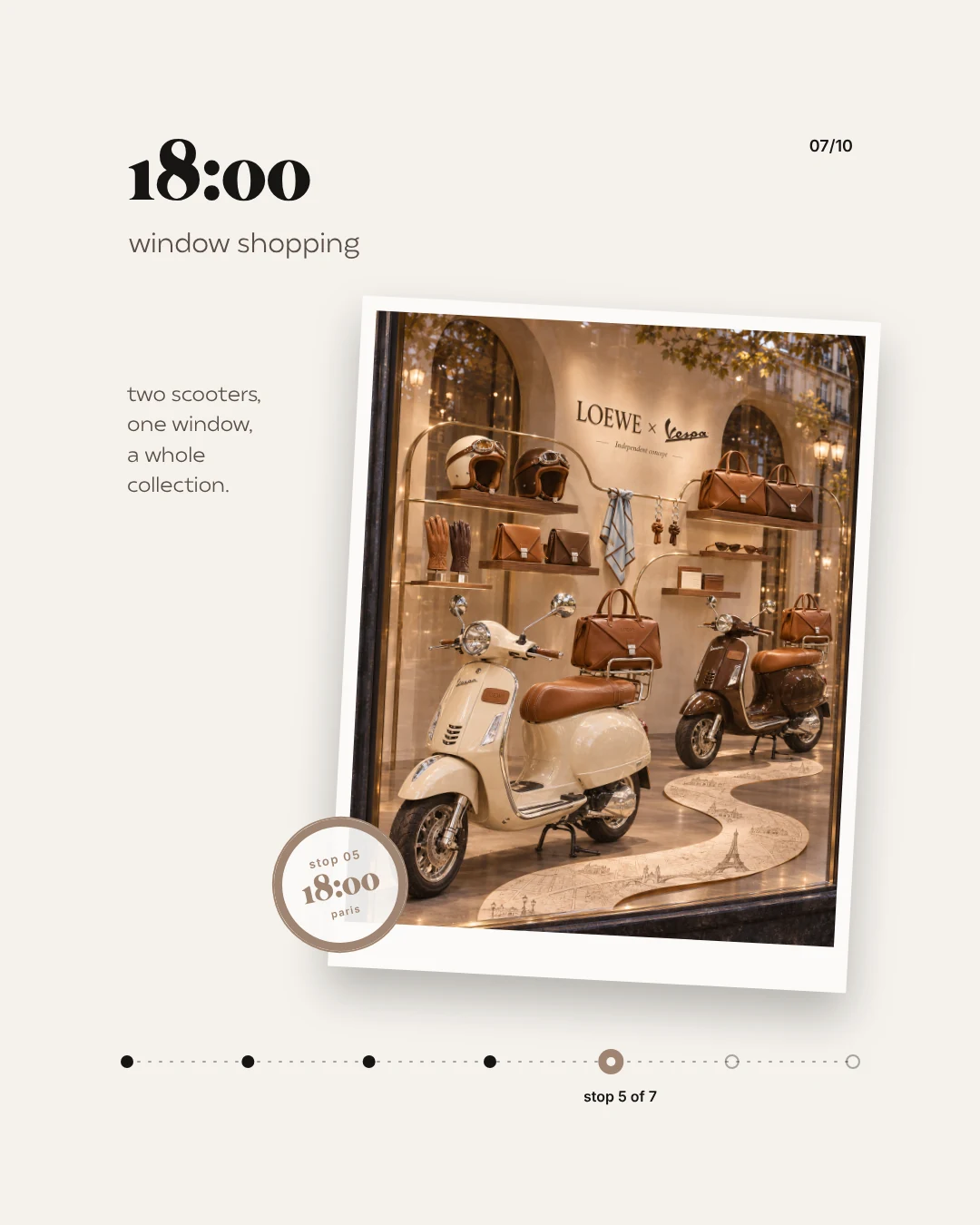
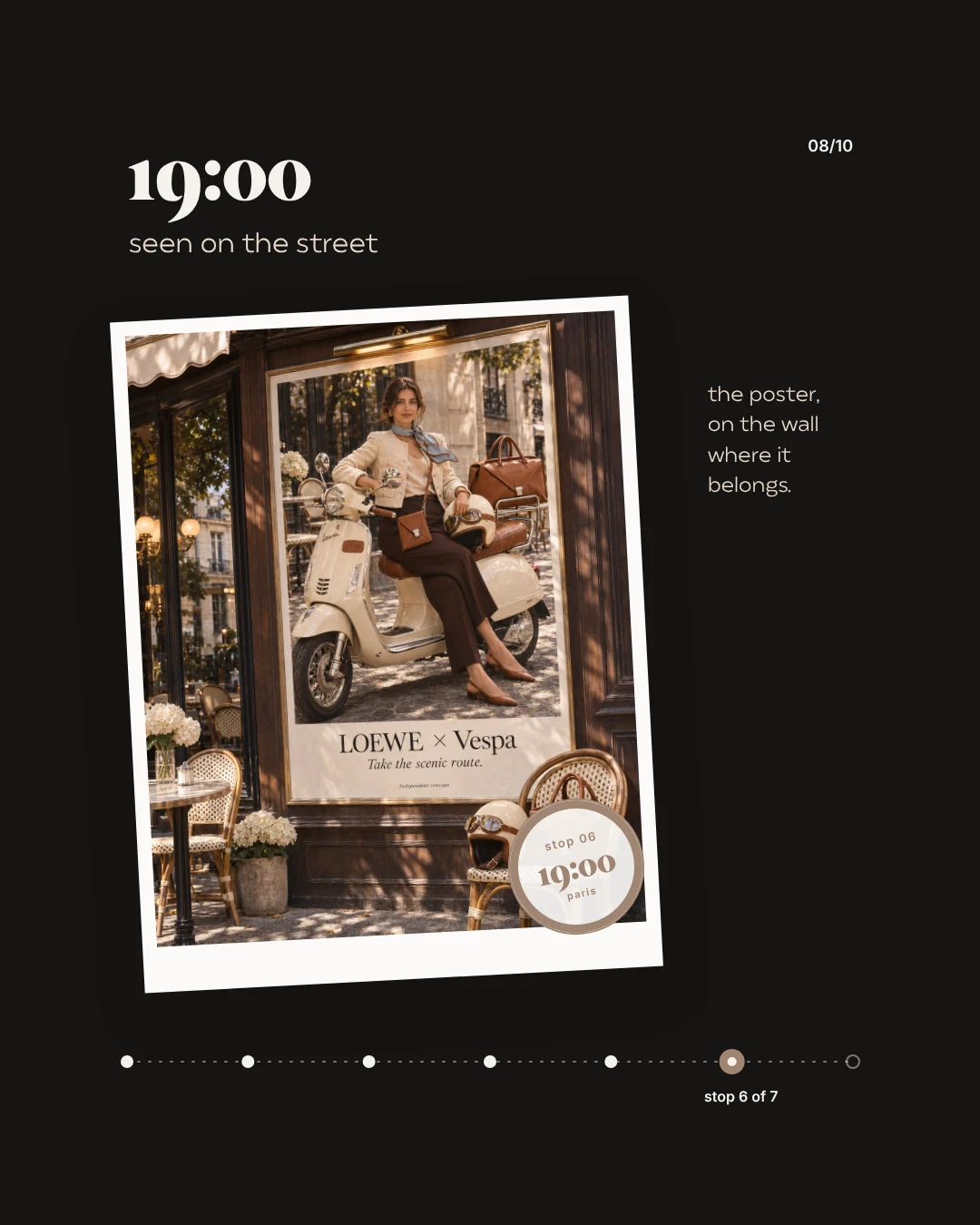
You may know the second study from our guide to spec ads with AI, where we tell the day in seven stops. Here we are interested in why the pair carries. A Spanish leather house and an Italian scooter share more than you might think: craftsmanship, an ease that smells of the south, and silhouettes you recognise from a hundred metres away. The scooter's saddle becomes an extension of the leather bag, the cream lacquer the colour of the jacket.
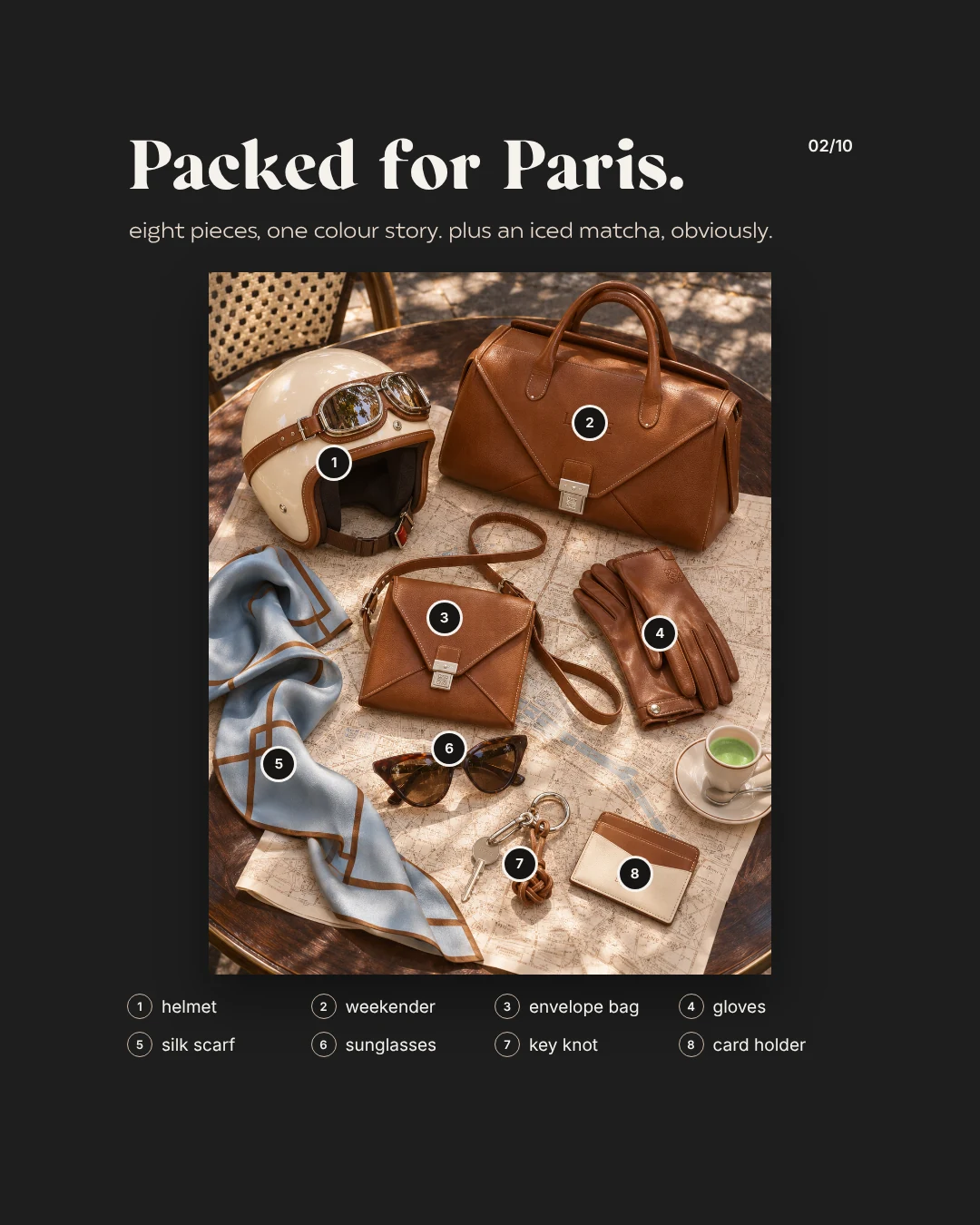
A collaboration gets exciting once it turns into a product family. Ours has eight pieces and one colour story: helmet, weekender, envelope bag, gloves, silk scarf, sunglasses, key knot and card holder, plus an iced matcha, of course. Cognac, cream and a pale blue hold it all together. That list is often the moment a lovely thought becomes a concept you can negotiate about.
From pairing to concept: how to go about it
Whether you are planning a collaboration for your own brand or want to show a potential partner what it could look like, the process is similar:
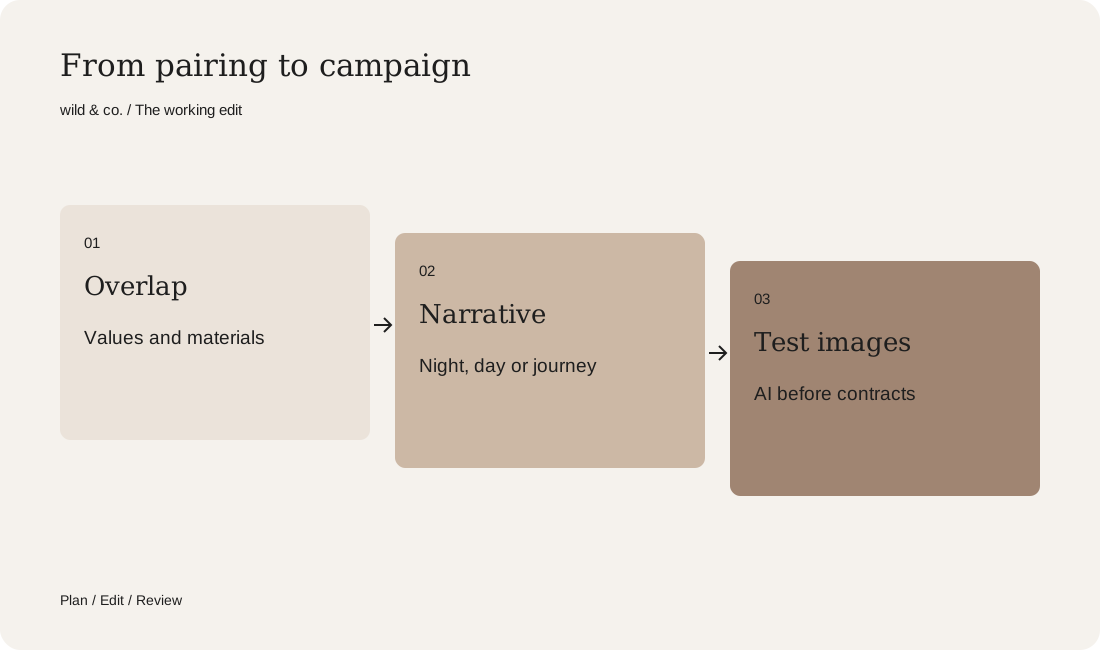
- Note the overlap: values, customers, materials, colours, places.
- Name the tension: what is surprising about this pair?
- Choose a narrative device: a night, a day, a journey, a ritual.
- Define the shared product, even if it is only a sketch at first.
- Derive one colour world from both brands, with a clear role for each colour.
- Create test images and share them before contracts and budgets come up.
Our guide to developing a campaign idea explains in detail how a sentence becomes an idea that holds up.
Who leads? Balancing two brands
The most common weakness in collaborations is imbalance. One brand swallows the other, and the second becomes a label. In images you can manage this. In our theatre study the car is the stage and the fashion performs on it. The programme hands out the roles, so each brand gets its act. A few simple rules have proved useful: one shared palette rather than two colour worlds, one hero per image in turn, neutral typography and a plain ‘×’ between the names. Logos the same size, or when in doubt, none at all.
What AI contributes at the collaboration stage
Collaborations usually start with a conversation and a presentation. This is where AI imagery shines: it makes an idea visible before a single product exists, and it lets you put two or three story worlds side by side. The real campaign follows different rules. A real partner's logos, products and details have to be genuine or approved by them, and a contract governs the rights to both brands. Test images with someone else's logos do not belong in your own advertising. That is why we only show studies like these labelled as unofficial concept studies, here in the journal and not in our portfolio.
Planning your own collaboration
With the brief above you can check in a few minutes whether your dream pairing holds up. If it does, it is worth turning the idea into images before you start the conversation. At wild & co. in Zurich we develop branding and concepts for brands and collaborations. Our guide to the concept campaign for a luxury house shows how a full campaign for a single house is built, and the wild lab collects studies for brands we invented ourselves.